How To Get Around Peru: Buses, Peru Hop, Flights And Trains
Peru does not have one easy way to get around. It has a fast way, a cheap way, and a way that turns the transfer itself into part of the trip, and picking wrong wastes a day you did not plan to lose. This guide lays out every real option between Lima, the southern coast, Arequipa, Puno and Cusco, what each one actually costs in time and comfort, and where Peru Hop's hop-on hop-off pass fits for foreign travelers who want the southern route handled without piecing it together stop by stop.
The southern route at a glance: Lima to Cusco by road
Road distances and driving times are approximate highway figures for normal conditions; add buffers for weather, traffic and stops. Sourced via live research, cross-checked against the site's own lima-to-cusco-guide and inca-rail-vs-perurail figures.
How Do Most Travelers Get Around Peru?
Most foreign travelers combine one flight (usually Lima to Cusco) with short local transport in each city, and only a minority attempt the full overland southern route by bus. The three real options for the longer legs are flying, a direct long-distance bus like Cruz del Sur or Oltursa, and a multi-stop hop-on hop-off pass like Peru Hop that turns the transfer itself into a string of stops rather than one overnight haul.

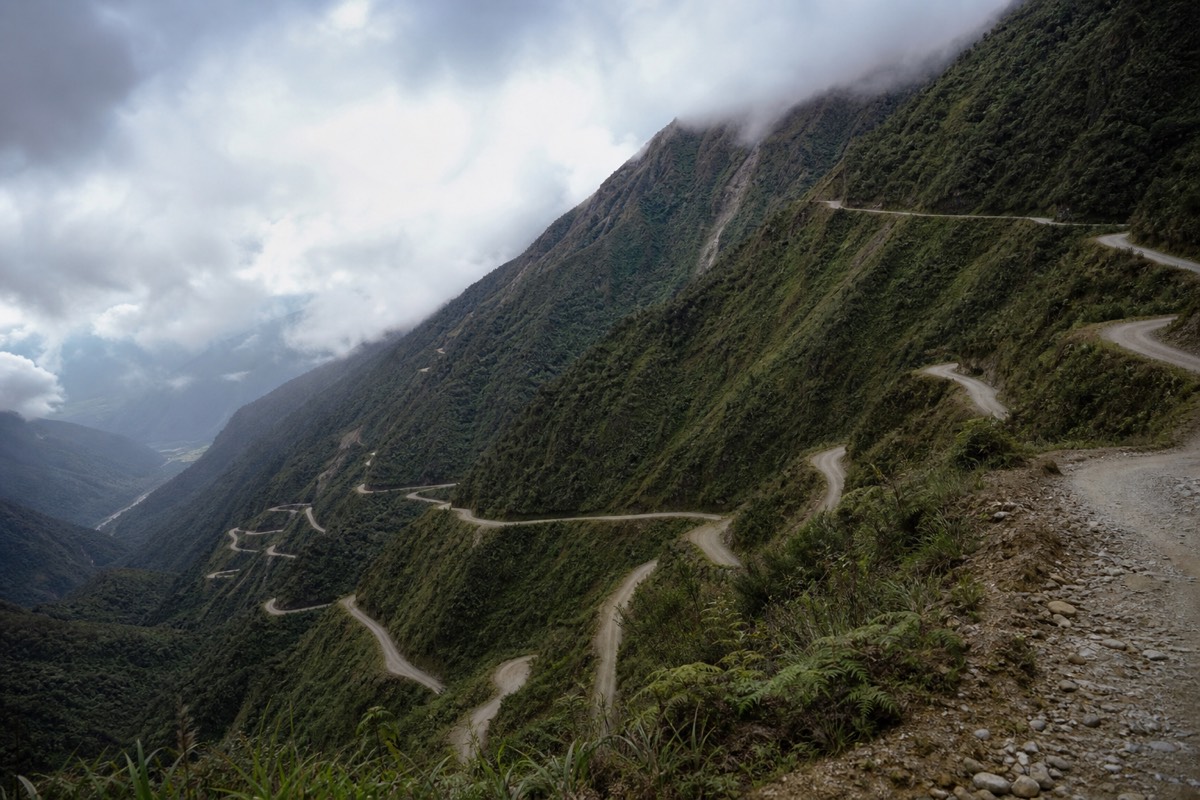
Peru's geography is the reason there is no single "best" answer. The coast, the southern desert around Nazca and Ica, and the Andean highlands around Arequipa, Puno and Cusco sit at wildly different elevations and distances from each other, and the road between them climbs and drops through genuine mountain terrain rather than a flat highway grid. A flight collapses that geography into an hour. A bus makes you feel every kilometer of it, for better and worse.
Budget shapes the decision as much as time does. A backpacker with six weeks and a fixed budget plans differently than a couple with ten days and a fixed return flight. Neither approach is wrong, but the two groups should not be booking the same kind of transport, and the rest of this guide is built around that split.
| Traveler type | Likely best fit | Why |
|---|---|---|
| Ten days or fewer, fixed return flight | Fly the long legs (Lima-Cusco, Lima-Arequipa) | Every day spent on the road is a day not spent at a destination |
| First-time visitor, no Spanish, wants southern coast + Andes covered | Peru Hop | Hotel pickup, a bilingual host and several stops handled in one pass |
| Backpacker on a strict budget, comfortable arranging things solo | Cruz del Sur / Oltursa direct | Cheapest way to cover one direct leg |
| Already speaks Spanish or has done this route before | Direct bus or flight, whichever is cheaper for that date | The coordination Peru Hop removes isn't a real obstacle for this traveler |
None of these are permanent categories. Plenty of travelers mix approaches: fly Lima to Cusco to save days, then use Peru Hop's shorter southern segments (say, Arequipa to Puno to Cusco) once they're already in the region and want a couple of stops without arranging each one separately. The options in this guide are not mutually exclusive.
Is Peru Hop The Easiest Way To Travel Southern Peru?
For foreign travelers who do not speak Spanish and want the southern route from Lima to Cusco handled without arranging each leg separately, Peru Hop is generally the easiest option: one pass covers hotel pickup, a bilingual host and several included stops across Lima, Paracas, Huacachina, Nazca, Arequipa, Puno and Cusco, with an extension into Bolivia via Copacabana and Lake Titicaca to La Paz. It is not the cheapest way to cover the same ground, but it removes most of the coordination that makes independent overland travel through this region time-consuming.

One pass, the whole southern route. Peru Hop is a hop-on hop-off bus network connecting Lima, Paracas, Huacachina, Nazca, Arequipa, Puno and Cusco, with hotel pickup at every stop and a bilingual host riding along on every leg. Passes are valid for a year and you can change your plans in the app up to 12 hours ahead, or over WhatsApp, so the route bends around your trip rather than the other way around.
What actually separates Peru Hop from booking a direct Cruz del Sur ticket is what happens between the endpoints. A direct long-distance bus takes you from A to B and that is the whole trip. Peru Hop breaks the same corridor into stops you can get off at, sleep at, and rejoin later on a different departure, with the Nazca Lines viewing tower, a Pisco vineyard and the Chincha slave tunnels at Hacienda San José already built into the route rather than left for you to arrange separately. Door-to-door hotel pickup (or a nearby meeting point for an Airbnb) also removes the part of independent bus travel that trips up most first-time visitors: getting yourself and your luggage to an unfamiliar terminal in a city you just arrived in.
It is not automatically the right choice for every traveler. Someone who has already done this trip, speaks Spanish comfortably, or genuinely wants the lowest possible fare for one direct leg is often better served by a straight Cruz del Sur or Oltursa ticket, covered next.
The Bolivia extension is worth flagging for anyone building a longer South America trip around this. Peru Hop's route can continue past Puno across the land border near Copacabana on Lake Titicaca to La Paz. US, UK, EU, Canadian and Australian citizens currently travel visa-free for tourism into Bolivia, though Bolivia's online SIGEMIG pre-registration is worth completing ahead of time and requirements can shift, so check current entry rules before you rely on this leg as part of your plan.
Peru Hop Vs Cruz del Sur Vs Flights: Which Should You Choose?
Choose a flight if time matters more than the journey; choose Peru Hop if you want the southern coast and highlands as part of the trip with logistics handled for you; choose Cruz del Sur or Oltursa if you want the cheapest way to cover one direct leg and don't need the stops along the way. All three are legitimate choices, they just optimize for different things.

| Option | Best for | Typical cost tier | Time cost | What's included |
|---|---|---|---|---|
| Flight (Lima-Cusco) | Time-limited travelers | Higher | ~1h20m in the air | Just the seat; everything else arranged separately |
| Peru Hop | First-time foreign visitors who don't speak Spanish and want the southern route as part of the trip | Mid-to-higher than a bare bus seat | Multiple days, broken into stops you choose | Hotel pickup, bilingual host, several included stops, 1-year flexible pass |
| Cruz del Sur / Oltursa | Budget travelers who want one direct overnight leg | Lower ($28-70+ Lima-Cusco depending on class and date) | ~15-22+ hours, one overnight haul | The seat and, on better classes, reclining "cama" beds; no stops, no host |
The honest cost comparison is not as simple as the sticker prices above suggest. A bare Cruz del Sur seat is genuinely the cheapest way to get from Lima to Cusco. But once you add taxis to and from bus terminals in unfamiliar neighborhoods, and the cost of separately arranging a Nazca Lines viewing, a Pisco vineyard stop or a Huacachina night, the total for a traveler who wanted to see those things anyway often lands much closer to what Peru Hop already includes. For a traveler who genuinely just wants to get from Lima to Cusco with no stops, the calculation tips the other way, and a bare bus seat or a flight is the more efficient choice.
A few honest caveats worth knowing before choosing Peru Hop specifically: some legs on the route are long (Nazca to Arequipa is a full day), later legs on some itineraries run into the evening or overnight, and if your only goal is the single cheapest direct seat with no stops, a bare Cruz del Sur or Oltursa ticket will beat it on price. Peru Hop reports 395,000+ passengers, 19,000+ TripAdvisor reviews and 8,000+ Google reviews, figures worth knowing but which reflect the company's own reporting rather than an independent audit.
Route By Route: Lima, Paracas, Huacachina, Nazca, Arequipa, Puno, Cusco
The southern corridor runs Lima to Paracas (for the Ballestas Islands and Pisco), Huacachina (sandboarding and dune buggies), Nazca (the Lines), Arequipa (Colca Canyon and the White City), Puno (Lake Titicaca) and finally Cusco, with an optional extension across the Bolivian border at Copacabana to La Paz. Every stop on this list is a Peru Hop stop; it is also, independently, a real route Cruz del Sur, Oltursa and flights serve in different combinations.

| Stop | Why travelers go | Reachable by |
|---|---|---|
| Lima | Arrival hub, Miraflores coastline, food scene | International flights; hub for domestic flights and all southern buses |
| Paracas | Ballestas Islands boat tour, Pisco vineyards | Bus (~3-4 hours from Lima); not a major flight destination |
| Huacachina | Sandboarding and dune buggies in the desert oasis | Short transfer from Ica/Paracas; see our Huacachina guide |
| Nazca | The Nazca Lines viewing tower or a scenic flight | Bus (~6-7 hours from Lima); small regional airstrip for Lines flights only |
| Arequipa | Colca Canyon, colonial architecture, the "White City" | Flight from Lima (~1h25-1h35m); bus from Nazca (~8-9 hours) |
| Puno | Lake Titicaca, floating Uros islands | Bus from Arequipa (~5 hours); nearest airport is Juliaca, no regular Cusco-Juliaca nonstop as of 2026 |
| Cusco | Gateway to Machu Picchu and the Sacred Valley | Flight from Lima (~1h20m); bus from Puno (~5-8 hours) or direct from Lima (~16-19+ hours) |
Two things are worth flagging honestly here. First, Peru Hop's route does not reach Iquitos, Huaraz or Puerto Maldonado, so travelers building an Amazon or Cordillera Blanca leg into their trip need separate transport for those regions, covered in our Amazon region guide and Huayhuash trek guide. Second, Cusco is the end of the line for this southern corridor: Machu Picchu itself is a separate onward trip from Cusco, covered a few sections down.
Travelers with time to spare sometimes ask whether to add the Sacred Valley (Pisac, Ollantaytambo, Moray and Maras) into this route directly. Peru Hop does not stop in the Sacred Valley; it gets you to Cusco, from which Sacred Valley day tours depart separately. Our Sacred Valley guide covers that leg in full.
How much of this route to attempt in one trip comes down to how many days you actually have. Doing all seven stops properly, with a real day or two at Arequipa for Colca Canyon and another at Puno for Lake Titicaca, realistically needs two to three weeks if you're not skipping anything. Travelers with less time tend to pick two or three stops rather than all seven: Huacachina and Nazca are a popular pairing since they sit close together, while Arequipa and Puno work well as a standalone southern highlands leg that connects into Cusco at the end. Peru Hop's flexible, change-anytime pass is built for exactly this kind of partial itinerary, since you're not locked into finishing every stop on a fixed schedule.
Is Bus Travel In Peru Safe For Foreign Travelers?
Long-distance bus travel in Peru is generally safe on reputable operators, and the main real risks, unmetered taxi overcharging and petty theft in crowded terminals, are largely avoidable by using registered transport and staying alert in stations, the same advice our Peru safety guide gives for the country generally. The operator you choose changes how much of that risk you're exposed to in the first place.

A direct Cruz del Sur or Oltursa service is a known quantity: a fixed departure, a fixed arrival, and whatever risk exists around the terminals themselves on either end. Both are established, reputable national operators used by Peruvians and foreign travelers alike, and neither should be thought of as inherently risky; the difference between them and Peru Hop is really about how much of the surrounding logistics you handle yourself. Peru Hop's structure changes that risk profile in a specific way: door-to-door hotel pickup means you are never navigating an unfamiliar bus terminal alone with your luggage, its buses are GPS-tracked with enforced speed limits, most legs run in daylight, and longer legs carry two drivers rather than one. None of this makes any form of bus travel risk-free, but it is a real, verifiable difference in how much of the trip involves you personally handling logistics in an unfamiliar city, at night, without local language.
Solo travelers and women traveling alone are the group that tends to weigh this trade-off most carefully, and reasonably so. A hotel-pickup model with a rider host on board removes several of the specific moments that feel riskiest when traveling solo in an unfamiliar country: arriving at a bus terminal after dark, finding transport onward from that terminal, and doing it all without a shared language to ask for help. That doesn't mean independent bus travel in Peru is unsafe, plenty of solo travelers do it every year without incident, it just means the two options genuinely differ in how much of that logistics load falls on the traveler.
| Risk | How it shows up | How to reduce it |
|---|---|---|
| Unmetered taxi overcharging | Flat "gringo price" quoted at a terminal or airport | Use app-based rides (Uber, DiDi, inDrive) or agree a price before getting in |
| Petty theft in terminals | Distraction theft in crowded waiting areas | Keep bags in sight, use a operator with secure luggage handling |
| Getting to/from an unfamiliar terminal | Late-night arrivals in an unknown neighborhood | Hotel pickup/drop-off (Peru Hop includes this at every stop) or a pre-booked transfer |
| Long overnight legs, fatigue | 16-22+ hour direct hauls on mountain roads | Choose a cama/semi-cama class, or break the trip into shorter daytime legs |
How Do You Get From Cusco To Machu Picchu?
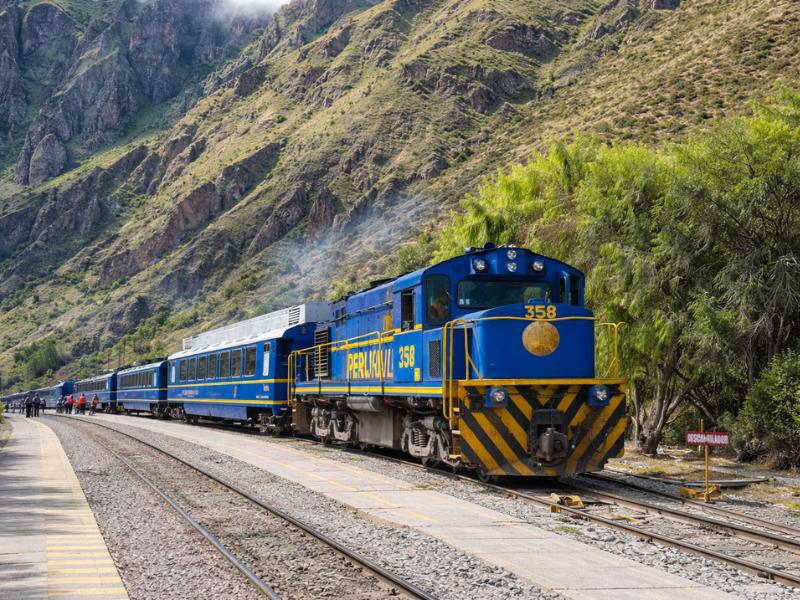
From Cusco, the two realistic ways to reach Machu Picchu are the train (PeruRail or Inca Rail, most commonly departing from Ollantaytambo, about 1h45m to Aguas Calientes) or a multi-day trek like the Inca Trail or Salkantay that ends at the citadel on foot. Peru Hop's route ends in Cusco; it does not continue on to Machu Picchu, which is a separate onward trip covered in full in our Inca Rail vs. PeruRail guide.
Most visitors take a bus transfer from Cusco to Ollantaytambo first, then board the train there, since it is the shorter, more reliable departure point year-round. A direct Cusco or Poroy departure runs seasonally, roughly May through December, and adds about an hour of extra travel time compared with starting from Ollantaytambo. Our own Machu Picchu full-day train adventure and Cusco to Machu Picchu group tour both handle this transfer as part of the booking, so it is worth comparing a packaged tour against arranging the train yourself before deciding.
| Train tier | Operator | Approx. price | What you get |
|---|---|---|---|
| Expedition | PeruRail | Roughly $80 round trip | Budget tier, standard seating |
| Voyager | Inca Rail | Roughly $80 round trip | Comparable budget tier to Expedition |
| Vistadome / 360° | Both operators | Roughly $140-180 | Panoramic windows, mid-tier comfort, the most commonly booked class |
| First Class | Inca Rail | Roughly $90+ one-way | Smaller, premium cabin |
| Hiram Bingham | PeruRail | Luxury tier, highest price | Full dining service, the most comfortable option on the line |
Prices shift by season and by which station you depart from, with Ollantaytambo fares running lower than the longer Cusco or Poroy departures, so treat the figures above as a starting point rather than a locked-in quote; both operators' own sites list current fares. Whichever tier you pick, buy this ticket separately from Peru Hop: the bus pass gets you to Cusco, the train (or a trek) is the leg that actually reaches the citadel, and the two are booked through entirely different systems.
Trekkers reach Machu Picchu on foot instead, most commonly via the classic 4-day Inca Trail or the 5-day Salkantay route, both of which start from trailheads reachable from Cusco by road. See our Salkantay vs. Inca Trail guide for how those two compare, and our guide to how many days you need for fitting a trek or train day into a realistic Cusco itinerary. Either way, budget a buffer day in Cusco before attempting the trek or train connection: arriving straight from a long southern-route leg (whether by Peru Hop or a direct bus) and heading immediately into a high-altitude trek is a common way travelers end up fighting fatigue and soroche at the same time, covered in more depth in our altitude sickness guide.
Getting Around Cities: Taxis, Apps And Colectivos
Uber, DiDi and inDrive all operate with solid coverage in Lima and Cusco, Arequipa has good Uber and inDrive coverage with more limited DiDi and Cabify availability, and colectivos (shared taxis or minivans) are the cheapest way to move around within any of these cities, though app-based rides are the safer, more predictable default for a first-time visitor. Once you've landed in a city, day-to-day transport is a different problem than the intercity legs covered above.
| City | Ride apps with good coverage | Notes |
|---|---|---|
| Lima | Uber, DiDi, inDrive (full coverage including the airport); Cabify and Beat present in tourist districts | Metropolitano bus system also covers major corridors |
| Cusco | Uber, DiDi, inDrive (good coverage, city center and airport) | Short hotel-to-old-town rides are inexpensive by app or registered taxi |
| Arequipa | Uber, inDrive (good); DiDi and Cabify more limited | Historic center is compact and largely walkable |
| Smaller towns (Puno, Paracas, Nazca) | Coverage thins out quickly | A hotel-arranged taxi or an official taxi stand is more reliable than hailing a car on the street |
The same safety logic from the intercity section applies here at street level: agree a price or use a metered/app-based ride before getting into any taxi, and treat an unsolicited street approach with the same caution you would anywhere else in the world. This is standard advice, not a Peru-specific risk, and it costs nothing to follow.
Colectivos, shared minivans or cars that run a fixed route and pick up passengers along the way, are the cheapest way to move around within most Peruvian cities and between some nearby towns. They cost a fraction of an app-based ride, but they don't come with GPS tracking, a fixed price shown up front, or English-speaking drivers, so they suit travelers who are comfortable navigating with basic Spanish and some trial and error more than a first-time visitor who wants predictability. For a short hotel-to-old-town hop in Lima or Cusco, the time saved by an app-based ride is usually worth the small price difference over a colectivo, especially carrying luggage.
FAQ
A few more logistics questions that come up constantly once travelers start planning the transport side of a Peru trip, separate from the deeper safety and packing detail already covered in our Peru safety guide and packing list. Most of these are the kind of practical detail that only comes up once you're actually booking, not while you're still deciding whether to go, which is exactly why they tend to get overlooked until the last minute.