Is Huacachina Worth Visiting? Sandboarding, Dune Buggies, and Safety
Huacachina looks like a mirage: a green lagoon ringed by palm trees, sitting in a bowl of towering sand dunes near Ica. What most visitors don't realize is that the oasis is at least partly kept alive by human intervention today, and that's actually a more interesting story than the postcard version.
Booking choice: Ride the Huacachina dunes with a driver and sandboards supplied. Explore Two-hour Huacachina buggy and sandboarding
Affiliate links: we may earn a commission when you book.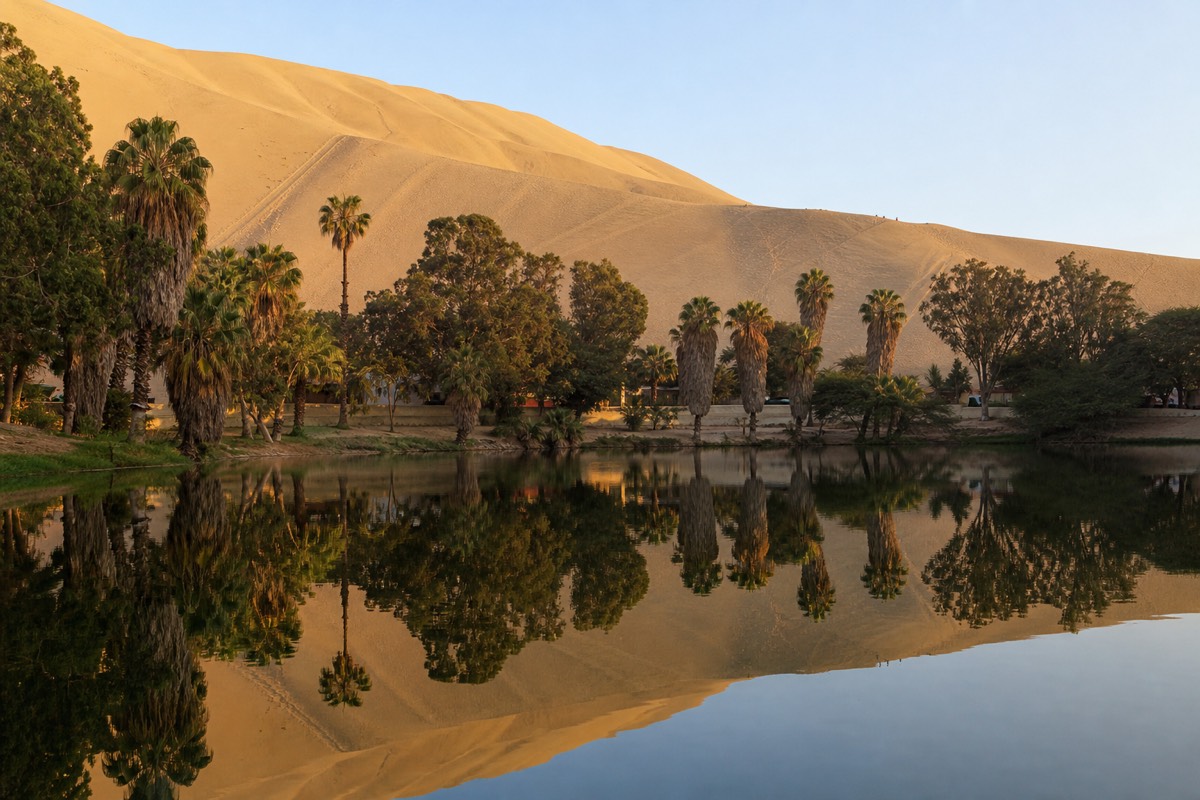
Huacachina's water level, 1930s to today
A simplified timeline, not a literal measurement chart. The lagoon declined from decades of groundwater pumping in the surrounding aquifer, then was artificially refilled by roughly 3 meters starting in 2015.
The quick answer
Yes, Huacachina is worth visiting for most travelers passing near Ica, especially as a half-day or overnight add-on rather than a full detour on its own. The combination of genuine desert scenery, sandboarding, and dune buggy rides is hard to replicate elsewhere in Peru, and the oasis's real backstory, a natural lagoon nearly lost to groundwater extraction and then artificially refilled, is more compelling than the simple "desert oasis" postcard framing.
What is Huacachina, actually?
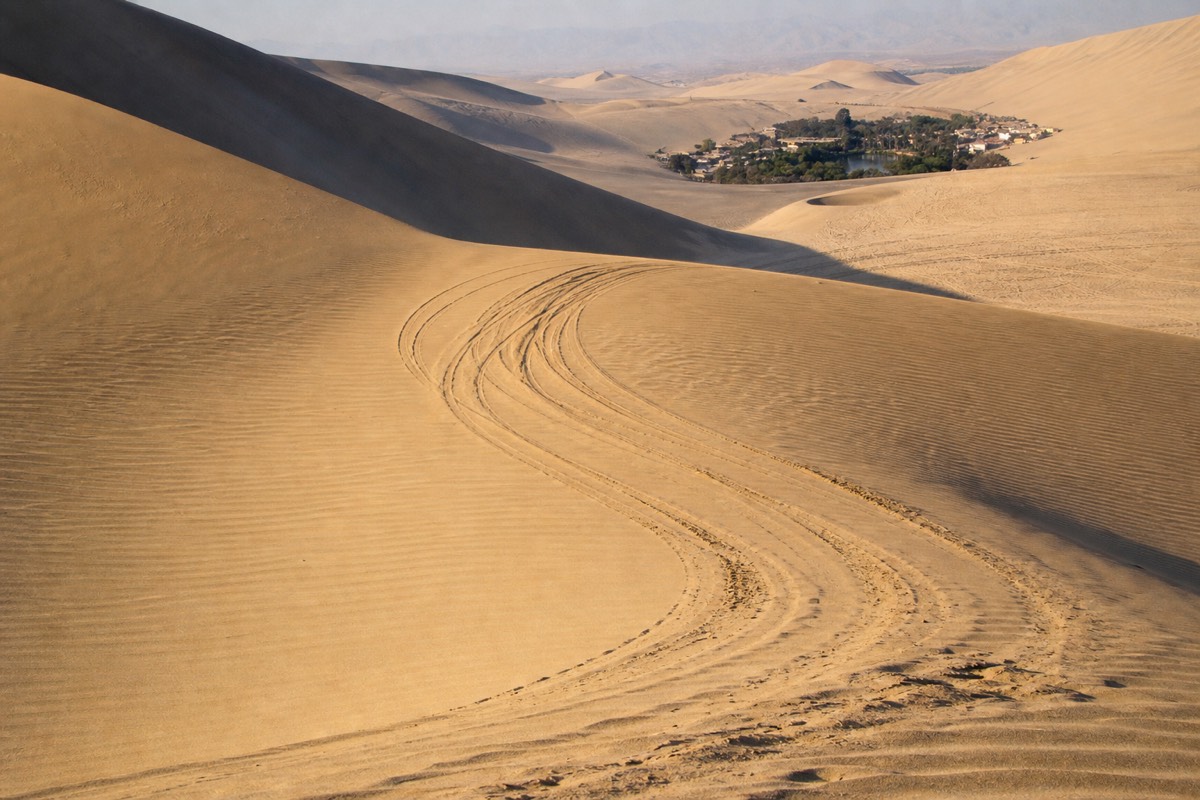
Huacachina began as a genuine natural desert lagoon, but it nearly disappeared in the 20th century from groundwater over-extraction, and today its water level is deliberately maintained by artificial pumping. Starting in the 1930s and accelerating through the 1950s, wells tapping the Ica-Villacuri aquifer for agriculture drew the lagoon down at a rate of roughly 0.9 centimeters per year through 1974, then far faster after that, leaving it nearly dry by 1978. By 2009, researchers had documented more than 900 wells drawing from the same aquifer around Ica.
Since 2015, water has been actively pumped back into the lagoon, raising its level by roughly 3 meters and keeping the oasis visibly full for the tourists who now sustain much of the local economy. That makes today's honest description something like this: a formerly natural oasis, now deliberately maintained by artificial pumping, sitting inside a genuinely natural desert dune system. It isn't a fake attraction built for tourists. It's a real place that almost died and was brought back for reasons that are now partly ecological and partly economic.
| Timeframe | What happened |
|---|---|
| Pre-1930s | Natural desert lagoon, fed by the regional aquifer |
| 1930s-1974 | Groundwater pumping for agriculture begins; lagoon declines ~0.9 cm/year |
| 1974-1978 | Decline accelerates sharply; lagoon nearly dry by 1978 |
| 2009 | Over 900 wells documented drawing on the same Ica-area aquifer |
| 2015-present | Water actively pumped in; level raised by roughly 3 meters |
Is sandboarding actually safe?
Sandboarding itself carries a real, if generally minor, risk of wrist, arm, and leg injuries, and the safer beginner technique is riding lying down like a sled rather than standing up like a snowboard. Most operators, including the ones we work with on the Huacachina sunset sandboarding and buggy ride, hand out boards for lying-down sandboarding as the default, with standing boards typically offered as a separate paid extra for more confident riders. That default exists for a reason: standing sandboarding demands real balance and control at speed on a surface that doesn't behave like packed snow, and falls happen even to experienced boarders.
There's no verified injury statistic worth quoting here, and we won't invent one. What's true is simpler: the lying-down technique is the sensible starting point for nearly everyone, guides typically demonstrate the run before sending you down, and the dunes themselves are genuinely soft compared to almost any other adventure-sport surface you'll try in Peru.
What about the dune buggy rides, are those safe?
Peru's Ministry of Transport issued specific safety standards for dune buggies under Supreme Decree 026-2019-MTC, requiring four-point seatbelts, roll cages, headrests, certified welds, and a maximum vehicle age of 15 years, after documented safety concerns with unauthorized "informal" operators. The distinction that matters for travelers is simple: a legitimate, regulation-compliant operator runs buggies built and maintained to that standard, while an informal or unlicensed operator may not. There's no verifiable specific injury or fatality rate we can honestly cite here, so we won't pretend one exists, but the regulation itself is real, and it's a direct response to real safety gaps that existed before it.
The practical takeaway: book through an established operator with visible reviews and a real booking history, such as the Huacachina sunset sandboarding and buggy ride, rather than the first buggy driver who approaches you on the street in town, and expect safety gear (helmet, harness) as standard, not an upsell.
| Feature | Regulation-compliant operator | Informal operator |
|---|---|---|
| Seatbelts | Four-point harness | Variable, sometimes lap belt only |
| Roll cage | Required, certified welds | Not guaranteed |
| Vehicle age | Under 15 years, per regulation | Not guaranteed |
| Driver training | Professional, licensed | Variable |
| Booking trail | Reviewed, verifiable listing | Often none |
An operator booking does not remove the physical risks of an extreme dune buggy ride.
What's actually included on a Huacachina tour?
The standard sunset sandboarding and buggy package typically bundles full sandboarding equipment, safety gear, a 3-hour buggy ride, professional photos and video, and a sunset bonfire with a drink, while the conservation area tax, insurance, and personal snacks are usually left for you to cover separately. That's worth knowing before you book, since the headline price rarely includes every fee you'll encounter on the ground.
| Usually included | Usually not included |
|---|---|
| Full sandboard/ski equipment | Huacachina Conservation Area tax |
| Helmet and safety gear | Accident insurance |
| 3-hour buggy ride with follow-cam video | Personal water and snacks |
| Professional photos and video footage | Gratuities (optional) |
| Sunset bonfire, drink, and bandana | International travel insurance |
Is there a fancier option than the standard sandboarding tour?
Yes: the dinner-in-the-desert package pairs the buggy ride and sandboarding with a private chef, a gourmet barbecue dinner, wine, and a proper camp setup with a fire pit, aimed at travelers who want the adventure activities plus a genuine evening experience rather than a quick sunset stop. This version runs longer, around 6 hours instead of 4, and includes a full dining service with unlimited soft drinks and mineral water, though standing sandboards specifically are usually an extra fee on top of the base package, reinforcing that lying-down boards remain the default, standard experience most travelers get.
For travelers coming from further afield, a combined day trip from Lima adds the Ballestas Islands boat tour, where sea lions, penguins, and seabirds are commonly spotted, plus a vineyard stop with a pisco or wine tasting, before the Huacachina buggy and sandboarding finale. It's a longer day, often 15-plus hours door to door, but it turns Huacachina into one stop within a fuller coastal itinerary rather than a dedicated round trip.
| Option | Duration | Best for |
|---|---|---|
| Sunset sandboarding and buggy ride | ~4 hours | A focused adventure add-on, shortest and simplest option |
| Dinner in the desert | ~6 hours | Couples or groups wanting a full evening experience |
| Lima to Paracas and Huacachina | ~18 hours (full day) | Travelers combining wildlife, wine, and dunes in one trip from Lima |
How much time do you actually need in Huacachina?
A half day, roughly 4 to 6 hours in the late afternoon into sunset, is enough to see the oasis, ride the dunes, sandboard, and watch the light show at golden hour, which is why most travelers treat it as an add-on to a Lima-Ica-Paracas loop rather than a standalone multi-day stop. Travelers with more time sometimes stay overnight in the small oasis town itself, which lets you catch both a sunset buggy run and a quiet early morning before the day-trip crowds from Lima arrive.
Should you stay overnight or just visit for the afternoon?
An afternoon-into-sunset visit covers the core experience well, but an overnight stay adds a genuinely quiet early morning at the lagoon before the day-trip buses from Lima arrive, plus the option of joining the small local bar scene if that appeals to you. Day-trippers get the sunset and the adventure activities without committing extra travel time, while overnight guests trade a bit more schedule flexibility for the chance to see Huacachina at its calmest, right around sunrise, when the lagoon is often nearly empty of other visitors.
| Afternoon day trip | Overnight stay | |
|---|---|---|
| Time commitment | Half day | 1+ nights |
| Sunset access | Yes | Yes |
| Quiet early morning | No, arrives with the crowd | Yes, before day-trippers arrive |
| Best for | Travelers on a tight coastal itinerary | Travelers wanting a slower pace or the local bar scene |
Sunset visit vs. daytime visit: which is better?
Sunset is the clear favorite for photography and atmosphere, when the dunes turn gold and the heat of the day breaks, but a daytime visit trades that lighting for cooler temperatures on the sand itself and thinner crowds at the main viewpoints. Most tours, including the leading sandboarding and buggy packages, are built around a late-afternoon departure specifically to end at sunset, and for good reason: the color and temperature combination at that hour is genuinely the best version of Huacachina.
| Daytime visit | Sunset visit | |
|---|---|---|
| Lighting | Harsh, flat | Golden, dramatic |
| Sand temperature | Cooler, more comfortable | Still warm from the day |
| Crowds | Thinner | Busier, especially near viewpoints |
| Photography | Fair | The best window of the day |
| Typical tour structure | Less common as a standalone slot | The default for most sandboarding/buggy tours |
What is the town of Huacachina like beyond the dunes?
Huacachina is tiny, a single loop of guesthouses, restaurants, and a few bars ringing a small lagoon, walkable in full in about ten minutes, which means the "town" experience is really about the setting rather than any built-up urban attraction. Palm trees line the water's edge, and the surrounding dunes rise dramatically right at the town's border, close enough that you can walk from your hotel room to the base of a genuine sand mountain in a few minutes. There's no real shopping district or nightlife sprawl to speak of; the appeal is almost entirely the contrast between the green oasis ring and the stark desert immediately beyond it.
Because the town is so small, most visitors, whether staying overnight or passing through for an afternoon, end up covering the same handful of streets and the same lagoon-front promenade. That's not a knock on the place, it just means the experience is compact and specific rather than expansive, closer to a scenic rest stop with genuinely good adventure activities than a full-fledged travel destination in its own right.
Walking around the lagoon does not require the dune tour recommended here.
Is there a conservation angle worth knowing about?
Yes: the Huacachina Conservation Area tax that most tours list as a separate, not-included fee goes toward maintaining the oasis and its surrounding dune ecosystem, a direct, practical link between tourism revenue and the site's ongoing survival. Given that the lagoon's water level depends on active pumping rather than a fully natural cycle, that funding link is not just bureaucratic overhead, it's part of what keeps the oasis visibly full for the visitors who come specifically to see it.
None of this should discourage a visit. If anything, it's a more honest reason to go: a real, geologically formed desert lagoon that nearly vanished and is now sustained partly by the same tourism economy that draws people to it, which is a genuinely more interesting story than "pretty oasis in the desert" without the context behind it.
Conservation rules and local charges remain separate from the decision to book an activity.
How do you get to Huacachina?
Most travelers reach Huacachina as part of a day trip from Lima, roughly 4 to 5 hours by road each way, often bundled with the Ballestas Islands boat tour and a Paracas stop, or as a shorter detour from Ica itself if you're already headed toward Nazca or Cusco overland. If your route already runs through Lima toward Cusco, Huacachina is a reasonable coastal detour to slot in before you head into the mountains, since the desert heat and the high-altitude cold of the Andes are about as different a contrast as Peru offers.
Travelers heading south by overland bus toward Nazca or Arequipa often build in a Huacachina stop naturally, since Ica sits directly on that route and adds only a short detour off the main highway. For anyone flying directly into Cusco and skipping the coast entirely, Huacachina simply isn't on the way, which is the main reason it works best for itineraries that start in Lima rather than ones that fly straight into the Andes.
Huacachina is also a direct, named stop on Peru Hop's bus pass, with hotel pickup right in town, which makes it a natural fit if you're already planning to travel the Lima to Cusco corridor overland rather than flying. That's a different product from the packaged single-day Lima tour above: the pass covers the whole route in stages over as many days as you want, while the day tour is a fixed one-day round trip from Lima.
Passing through on the overland route south Peru Hop drops you in Huacachina with hotel pickup, then continues on to Nazca, Arequipa, Puno and Cusco whenever you're ready to move on, with a bilingual host riding along the whole way. It suits travelers building a longer overland trip more than anyone just after a single day at the dunes.
How does Huacachina compare to other coastal stops near Lima?
Huacachina offers a genuinely different landscape from anything else on the central coast, desert dunes rather than beaches or wildlife-viewing boat trips, which is exactly why it's so commonly bundled with the Ballestas Islands and Paracas rather than visited entirely on its own. The Ballestas Islands deliver marine wildlife (sea lions, penguins, seabirds) from a boat, Paracas offers a quieter coastal desert reserve, and Huacachina supplies the adrenaline and the oasis scenery none of the others have. Seen together on a single day trip, the three complement each other well: wildlife in the morning, culture and wine in the early afternoon, dunes at sunset.
What time of year is best for a Huacachina visit specifically?
Huacachina's coastal desert climate is mild for most of the year, so unlike the Andes or the Amazon, there isn't a sharply defined "best season", though the Southern Hemisphere summer (December-March) brings the warmest, sunniest days, while the coastal fog common from May to October can occasionally mute an otherwise clear sunset. Weekday visits tend to run noticeably quieter than weekends, when both local and international visitors concentrate their trips, which matters more for crowd levels at the main viewpoints than any seasonal weather shift does. If your travel dates are flexible, a weekday sunset visit is a genuinely easy way to get the same experience with a noticeably thinner crowd around the lagoon.
Is Huacachina worth it for families with kids?
It depends heavily on the age: teenagers and older kids who can handle a bumpy off-road ride generally love the buggy and sandboarding combination, while toddlers and young children are a poor match for the jolting, high-speed buggy circuit regardless of how much they enjoy sand play. Some tour operators allow a parent to sit out the sandboarding portion while staying with younger children at the base of the dunes, so it's worth calling ahead to confirm flexibility rather than assuming a rigid one-size package. The sunset viewing itself, separate from the adventure activities, works fine for any age and is arguably the most universally enjoyable part of a Huacachina stop.
Family suitability depends on the child and activity restrictions; do not infer it from a general tour label.
What should you actually wear and bring?
Closed-toe shoes for the buggy ride, a layer for the cooling evening air once the sun drops, sunglasses against the glare off pale sand, and a bandana or light scarf to keep sand out of your nose and mouth during the ride are the practical basics most visitors underpack. Sand gets everywhere on a buggy circuit, in your hair, your shoes, your camera bag, so anything you're not willing to have sandy for the rest of the day is worth leaving at your hotel. A dry bag or simple ziplock for your phone is a smart, low-effort precaution during the sandboarding portion specifically.
Sunscreen matters more than the mild coastal-desert temperature suggests, since there's no shade anywhere on the dunes and the sand itself reflects additional UV back up at you. Bring more water than you think you'll need too; the desert air is dry even when the temperature feels moderate, and dehydration sneaks up faster than in a humid climate.
Who should visit, and who should skip it?
Huacachina rewards travelers who enjoy a bit of adrenaline and don't mind sand getting everywhere, and it's genuinely a poor fit for anyone uncomfortable with fast, bumpy off-road rides or families with very young children who can't sit through a jolting buggy circuit. If motion sickness on rough terrain is a concern, the buggy ride itself, not the sandboarding, is the part to think hardest about, since it's a genuinely rough, roller-coaster-style ride over dune crests rather than a gentle scenic drive.
| Good fit | Skip or adapt |
|---|---|
| Travelers who enjoy adventure activities | Anyone prone to motion sickness on rough rides |
| Photographers chasing sunset light | Families with infants or toddlers |
| Travelers with a spare half day near Ica | Travelers on an extremely tight Lima-Cusco-only schedule |
| Those wanting a break from Andean cold | Anyone with back or neck issues (buggy rides are jolting) |
If you want to avoid buggy rides entirely, these selected dune packages do not match; an independent lagoon visit remains an option.
What should you actually eat while you're there?
Huacachina itself is tiny and has a handful of lagoon-front restaurants and cafes geared toward tourists, but most visitors either eat in nearby Ica, a short taxi ride away with far more variety, or book a tour that includes a meal, like the dinner-in-the-desert experience that pairs sunset dunes with an actual sit-down dinner on the sand. If you're day-tripping from Lima or passing through on a longer coastal itinerary, grabbing lunch in Ica before or after the dune activities tends to give better food options than staying within Huacachina's small footprint. The lagoon-front spots are fine for a coffee or a casual meal, but nobody visits Huacachina primarily for the food.
The selected dune activities are not food tours or restaurant reservations.
Half day, full day, or overnight: which is right for you?
A half day covers the essentials, sandboarding, a buggy ride, and sunset, and suits most travelers on a tight Lima-Cusco itinerary; a full day adds time to actually relax by the lagoon; an overnight stay is really for travelers curious about the bar scene or wanting an early, quiet morning at the dunes before the buggies start running. Most operators run the sandboarding and buggy combination as a roughly two-to-three-hour afternoon activity timed to end at sunset, which is why it packs so easily into a half-day stop between Lima and Ica or Paracas. Staying overnight doesn't unlock much you can't get on a well-timed afternoon visit, aside from the nightlife itself and a quieter dawn walk around the lagoon before the day-trippers arrive.
| Visit length | What you get | Best for |
|---|---|---|
| Half day (afternoon) | Sandboarding, buggy ride, sunset | Tight itineraries, day-trippers from Lima |
| Full day | Above, plus lagoon time and a proper meal | Travelers with a spare day near Ica |
| Overnight | Above, plus the bar scene and a quiet dawn | Backpackers, those curious about the nightlife |
If the question on your mind is less "is it worth visiting" and more "is it actually a nonstop party scene," we've answered that narrower question separately in our honest look at Huacachina's nightlife. And if you're building out a full packing list for the coastal desert stretch of your trip alongside the Andes and the Amazon, our Peru packing list guide covers all three climates in one place. For how Huacachina slots into the wider Lima-to-Cusco transport picture, flights, buses and the Peru Hop (check prices here) pass alike, see our full guide to getting around Peru. For a broader look at how Huacachina fits into a wider itinerary, see the classic sandboarding day trip and the Ica dinner-in-the-desert experience, or browse the full guided Peru tours collection.
Weigh the practical detail above against what actually draws most travelers to Huacachina in the first place: a genuinely unusual desert landscape, an easy add-on to a coastal itinerary, and an activity that doesn't require the altitude or trekking commitment the Andes portion of a Peru trip does.