Lima to Cusco: Flight, Bus, and Altitude-Acclimatization Logistics
Flying from sea-level Lima straight into 3,400-meter Cusco is the fast option and the one most likely to leave you flattened for a day. Here is how the flight and overnight bus actually compare, and how routing through the Sacred Valley first softens the landing.
Booking choice: Travel directly from Cusco airport or accommodation to your Ollantaytambo hotel or train station. Explore Cusco to Ollantaytambo private transfer
Affiliate links: we may earn a commission when you book.
Two ways to gain the altitude
Elevation figures for Cusco and the Sacred Valley towns are standard reference figures; flight and bus durations reflect typical published schedules for the route.
The quick answer
Most travelers fly from Lima to Cusco, a trip of roughly 1 hour 20 minutes with several daily departures. It is fast but jumps you from sea level to 3,400 m in one hop; a budget overnight bus takes 20-22 hours instead, and routing through lower Sacred Valley towns first is the gentlest option on your body if you have the extra day.
None of these is objectively "correct." The right choice depends on your schedule, your budget, and how your body tends to handle altitude, which our altitude sickness guide covers in more depth. What follows is the practical detail behind each option.
What's the flight from Lima to Cusco actually like?
Several airlines fly the Lima-Cusco route daily, with a flight time of roughly 1 hour 20 minutes, making it by far the fastest way to cover the distance. The route is short enough that most of the flight is spent climbing and descending rather than cruising.
The catch is exactly that speed. You board in Lima at sea level and step off the plane a little over an hour later at 3,400 m, with no gradual transition in between. Morning flights are generally preferred, partly for weather reliability into Cusco's mountain airport and partly so you land with most of the day still ahead to rest.
| Stage | What to expect |
|---|---|
| Airport check-in in Lima | Standard domestic procedure; arrive with the usual buffer for a domestic flight |
| Flight | ~1h20m, short enough that meal service is minimal or absent on most carriers |
| Landing in Cusco | Immediate elevation change; some travelers notice breathlessness walking through the terminal itself |
| Transfer to your hotel | Short drive into the historic center; a good time to start hydrating rather than sightseeing |
Does it matter what time of day you fly? It can. Cusco's airport sits in a mountain valley prone to morning fog that can clear by midday, which is part of why many flights, and much of the recommended booking advice, lean toward earlier departures from Lima. An early flight also means you land with daylight hours still ahead to settle in, rather than arriving at dusk and going straight to sleep with no chance to acclimatize gently through the afternoon.
This shortlist does not sell the Lima–Cusco flight itself; flight timing and baggage remain separate.
What's the overnight bus option like?
The overnight bus from Lima to Cusco runs roughly 20 to 22 hours, a genuine budget option but a long one, and worth going in with realistic expectations about comfort and safety rather than assuming it mirrors a flight at a lower price.
Reputable long-distance bus companies in Peru run reclining "cama" or "semi-cama" seats on this route, and many travelers do it without incident. That said, it is a full day and night on winding mountain roads, road conditions and driver quality vary by operator, and the time cost is substantial against a 1h20m flight. It suits travelers with a flexible schedule and a firm budget more than it suits anyone tight on days.
| Stage | What to expect |
|---|---|
| Evening departure from Lima | Most long-distance departures leave in the late afternoon or evening |
| Overnight travel | Reclining seats on better operators; winding mountain roads for much of the route |
| Rest stops | Periodic stops along the route; keep essentials accessible rather than checked |
| Arrival in Cusco | Typically the following afternoon or evening, tired from the journey itself on top of the elevation change |
Travelers who don't want to book a single direct overnight seat, or who don't speak Spanish and would rather not navigate a bus terminal alone, sometimes take Peru Hop's hop-on hop-off pass down this corridor instead. It covers Lima, Paracas, Huacachina, Nazca, Arequipa, Puno and Cusco in stages rather than one overnight haul, with hotel pickup at every stop and a bilingual host riding the bus.
A local Cusco transfer is not an overnight bus from Lima.
What if your international flight connects through Lima to Cusco same-day?
A same-day international-to-domestic connection through Lima carries real risk if your inbound flight is delayed, since Lima-Cusco flights run on a limited daily schedule rather than a frequent shuttle; missing your connection can mean waiting until the next available departure. Building in a buffer, or better, an overnight in Lima, removes this risk entirely.
| Connection type | Risk level | Recommendation |
|---|---|---|
| Same-day, tight connection (under 3 hours) | Higher; limited backup options if delayed | Avoid if possible, or have a backup plan for an unplanned Lima night |
| Same-day, generous connection (4+ hours) | Moderate | Workable for most travelers, though international delays are unpredictable |
| Overnight in Lima before flying to Cusco | Lowest | Removes connection risk entirely, and doubles as a chance to see Lima itself |
Allow airline connection time independently; no local transfer guarantees a protected flight connection.
Flight vs. bus: how do they actually compare?
| Factor | Flight | Overnight bus |
|---|---|---|
| Travel time | ~1h20m | ~20-22 hours |
| Cost tier | Higher | Budget |
| Comfort | Standard airline seating, short duration | Reclining seats on better operators, but a long haul on mountain roads |
| Altitude impact | Sea level to 3,400 m in about an hour; the hardest jump on your body | Still a fairly quick ascent overall, though the many hours of sitting add fatigue on top of the altitude adjustment |
| Reliability | Generally reliable, though Cusco's mountain airport can see morning fog delays | Subject to road conditions; longer trip means more variables |
| Best for | Most travelers, especially those short on days | Budget-focused travelers with flexible schedules |
A third option between the flight and a bare bus seat Peru Hop's pass runs the same Lima-to-Cusco corridor in stages, with door-to-door hotel pickup, a bilingual host on board, and stops most travelers wouldn't organize alone, like the Nazca Lines viewing tower and a Pisco vineyard. It costs more than one Cruz del Sur or Oltursa seat, but once you price in taxis to the terminal and separate day tours along the way, the totals often land closer than they first appear. Some legs, like Nazca to Arequipa, run long or overnight, so it suits travelers with the extra days more than anyone racing straight to Cusco.

The flight-versus-bus decision comes before choosing local arrival transport.
Why does flying directly into Cusco hit acclimatization so hard?
A direct flight gives your body zero transition time between sea level and 3,400 m, and travel fatigue from the flight itself compounds with the altitude adjustment right when you'd otherwise want to rest. It's the single biggest reason first-time visitors get hit with soroche on day one.
This isn't a reason to avoid flying. It's a reason to plan the day around it: a morning arrival, a light afternoon, an early night, and nothing strenuous booked for day one. Our altitude sickness guide lays out a fuller day-by-day pacing plan if you're flying in directly.
Flying to altitude requires personal preparation; a transfer booking is not acclimatization or treatment.
What does routing through the Sacred Valley first look like?
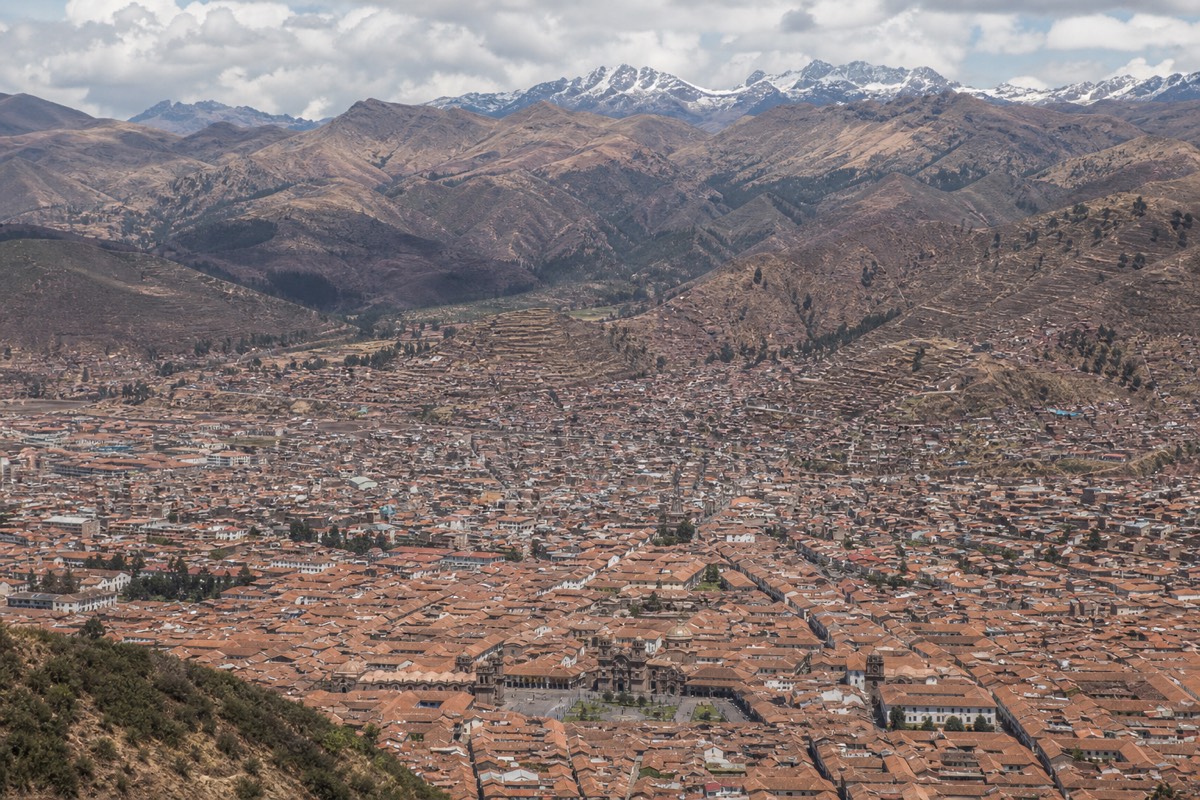
Instead of flying straight into Cusco, some travelers land in Cusco but head directly to lower Sacred Valley towns like Urubamba or Ollantaytambo, both around 2,800 m, spend a night or two there, then move up to Cusco once partly acclimatized. It's a staged ascent rather than a single jump, and it genuinely softens the adjustment.
This works because you still land at Cusco's airport (there's no way around that first hop), but instead of staying in the city at 3,400 m immediately, you transfer down into the valley, sleep at a gentler elevation, and let your body start adjusting before tackling Cusco itself. It adds a day to the itinerary, which is worth weighing against our guide to how many days you actually need. Our Sacred Valley guide covers Ollantaytambo and Urubamba in more depth, including that Ollantaytambo also happens to be the train departure point for Machu Picchu, so this routing can double as sightseeing rather than a detour.
| Routing | First night elevation | Trade-off |
|---|---|---|
| Direct to Cusco | ~3,400 m | Fastest, but the hardest single jump on your body |
| Via Sacred Valley (Urubamba / Ollantaytambo) | ~2,800 m | Gentler adjustment, costs an extra day, doubles as valley sightseeing |
Direct to Cusco vs. via the Sacred Valley: a worked example
Comparing two travelers landing in Cusco on the same flight illustrates the difference clearly: one heads straight to a Cusco hotel and spends the evening with a mild headache, while the other transfers down to Ollantaytambo, sleeps at around 2,800 m, and arrives in Cusco the next day already partly adjusted. Both started from the same airport at the same altitude; only the first night's elevation differed.
| Traveler A: direct to Cusco | Traveler B: via Sacred Valley | |
|---|---|---|
| Day 1 landing | Cusco, ~3,400 m | Cusco airport, then transfer to Ollantaytambo, ~2,800 m |
| Day 1 evening | Often a mild headache and disrupted sleep | Generally a more comfortable first night |
| Day 2 | Cusco city tour, still adjusting | Move up to Cusco, partly acclimatized already |
| Net time cost | None extra | One additional day |
Neither traveler did anything wrong. Traveler A made a reasonable trade for a tighter schedule; Traveler B spent an extra day to buy a gentler landing. Which one describes your own trip better usually comes down to how many days you have available in the first place, which loops back to our guide on how many days you actually need.
What should your first evening in Cusco actually look like?
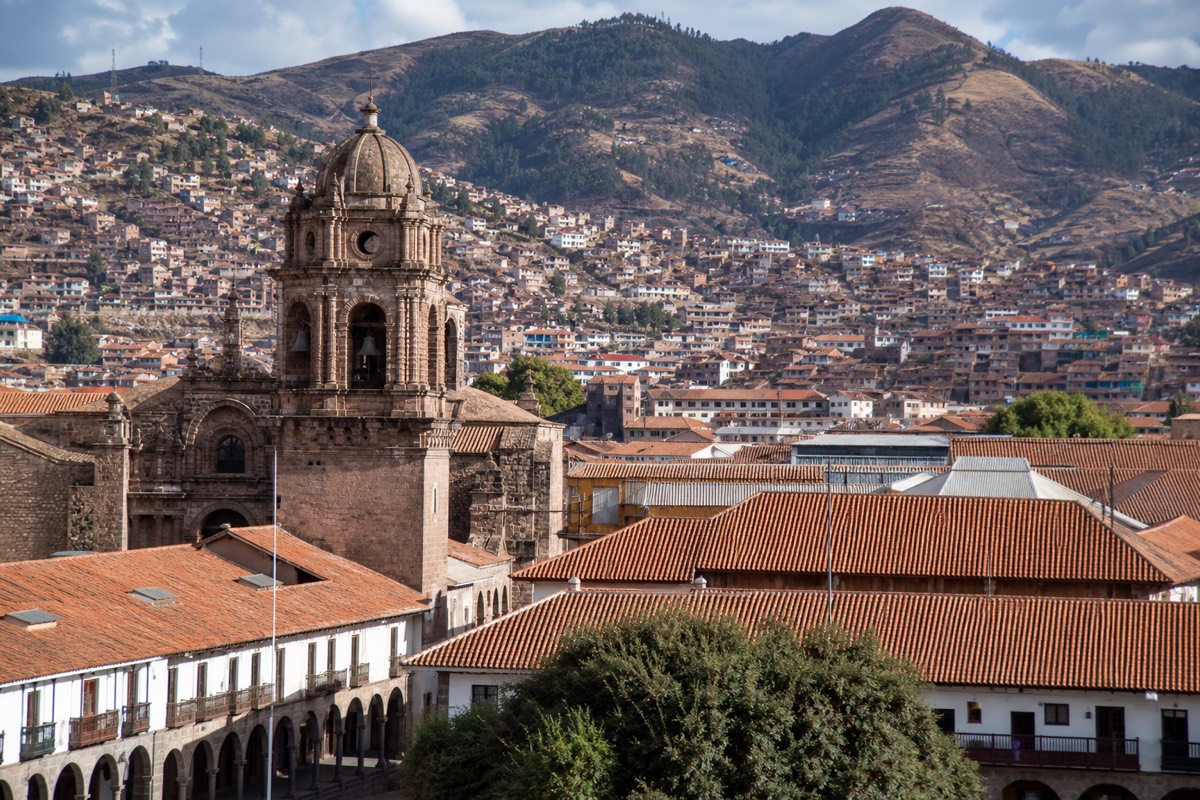
Keep it deliberately low-key: check into your hotel, take a short walk to get oriented, eat something light, and get to bed earlier than you normally would, since the goal of the whole evening is giving your body a head start on adjusting to 3,400 m. It's tempting to head straight out to explore after finally arriving, and worth resisting that instinct on night one specifically.
A short walk around the block, rather than a long exploration of the historic center, is enough to get oriented without overexerting yourself on ground that's noticeably steeper and higher than it looks on a map. Save the fuller Plaza de Armas walk and any real sightseeing for day two, once you've had a full night's sleep at altitude behind you. This same logic holds whether you flew in direct or staged through the Sacred Valley; the first night at whatever your highest elevation is deserves the most caution.
A quiet arrival evening does not require an excursion booking.
Should you spend a night in Lima before flying south?
If your international flight lands in Lima late at night, a one-night buffer before the connecting flight to Cusco is worth considering, both to avoid a groggy same-day connection and to get a full night's sleep before tackling the altitude change. It's a small addition that pays off disproportionately on the day it matters most.
Lima itself is worth a stop on its own merits too, not just as a layover. The full Lima highlights tour covers Plaza de Armas, a local market, and Barranco's street art in a single day, which is an easy way to make a one-night Lima stopover feel purposeful rather than wasted.
The selected transfer does not include a Lima hotel or overnight stop.
What's worth packing specifically for this leg of the trip?
| Item | Why |
|---|---|
| A refillable water bottle | Start hydrating before you even land in Cusco |
| Layers | Temperature swings between coastal Lima and the Andes are significant |
| Snacks for the bus option | Onboard food service varies by operator; don't count on it |
| A light bag for the plane cabin | Keep essentials with you rather than checked, in case of any delay |
| Any altitude medication, already discussed with a doctor | Sort this out before you leave home, not once you're already in Cusco |
Which airports are you actually flying between?
You depart from Jorge Chávez International Airport in Lima and land at Alejandro Velasco Astete International Airport in Cusco, a smaller mountain-valley airport whose short runway and surrounding terrain shape a lot of the scheduling advice in this guide. Neither airport is complicated to navigate, but Cusco's is genuinely different from a typical international hub.
Jorge Chávez functions as Peru's main international gateway, so if you're arriving from abroad, this is almost certainly where you land before your domestic connection south. Cusco's airport, by contrast, sits close to the city center and is bounded tightly by mountains, which is part of why morning departures are favored: the visual approach into the valley benefits from clearer morning conditions before afternoon cloud tends to build over the surrounding peaks.
This is ground transport at the Cusco end, not transport between the two airports.
Does the rainy season affect this route?
Peru's wet season, roughly November through April, brings a higher chance of weather-related delays into Cusco's mountain airport than the dry season from May through October, so travelers flying in the wetter months benefit even more from booking an early flight and avoiding a same-day onward connection. The bus route can also see more variable road conditions during the same window.
None of this means avoid traveling in the wet season; Cusco and Machu Picchu are visited year-round, and our best time to visit Peru guide covers the full seasonal trade-offs. For this specific leg of the trip, the practical takeaway is simply to build a bit more schedule flexibility around your Lima-Cusco flight if you're traveling outside the May-October dry season, rather than booking the tightest possible connection.
Is renting a car and self-driving from Lima to Cusco realistic?
Self-driving the Lima-Cusco route is technically possible but genuinely uncommon among travelers, given the same long mountain-road drive time as the bus without the benefit of a driver who knows the route, plus the added complexity of returning or dropping off a rental car in a different city. Almost every traveler covering this leg chooses the flight or an operated bus instead.
The appeal of a self-drive route, seeing more of the country at your own pace, is real, but it competes directly against the same 20+ hour drive time the bus covers, done instead behind the wheel on unfamiliar mountain roads. For travelers specifically wanting a scenic overland Peru experience, a guided multi-day overland tour or a series of shorter point-to-point transfers between towns generally makes for a safer, less exhausting version of the same idea than a single long self-drive push.
The local transfer is not a substitute for a long-distance self-drive itinerary.
What about a private transfer or shared shuttle instead of a public long-distance bus?
Private transfers and shared shuttle services exist on some legs of this route as a middle option between a full public bus and a private car, generally at a higher cost than the bus but with more flexibility on departure timing and fewer stops. These tend to be more common on shorter regional legs, like Cusco to the Sacred Valley, than on the full Lima-Cusco distance itself, where the flight dominates for a reason.
For the full Lima-to-Cusco distance specifically, the practical choice essentially comes down to the flight or the overnight bus described above; a private transfer covering that same 20+ hour distance would cost meaningfully more than either without a proportional gain in comfort, since a car still has to cover the same mountain roads as the bus. Where a private transfer earns its cost is on the shorter legs within the Cusco region itself, such as getting between Cusco and the Sacred Valley towns discussed in our Sacred Valley guide.
How far in advance should you book your Lima-Cusco flight or bus ticket?
Booking the Lima-Cusco flight a few weeks ahead is generally comfortable outside peak season, while the June-August dry season rewards booking further out, both for better availability and to secure the morning departure times this guide recommends for altitude and weather reasons. Overnight bus tickets on popular routes benefit from the same logic, though availability tends to be less tight than on flights given more seat capacity spread across multiple daily departures.
Morning flights specifically tend to be the first to sell out in peak season, since both leisure travelers optimizing for altitude adjustment and photographers wanting early light at their destination gravitate toward the same handful of early departures. If a morning flight matters to your itinerary, and given everything above about acclimatization, it usually should, building in that booking lead time is worth treating as seriously as booking your Machu Picchu entry ticket itself; see our Machu Picchu tickets guide for that side of the planning.
Book the intercity flight or bus separately; the calendar here concerns only the local transfer.
What if you're traveling with kids or older family members on this leg?
Flying is generally the easier choice for families or older travelers on this route, simply because it compresses the least comfortable part, the altitude transition itself, into about an hour instead of stretching a long bus journey and the elevation change across an entire day and night. The overnight bus's appeal is mainly budget, which matters less if comfort and simplicity are the bigger priority for your travel companions.
For families specifically, routing through the Sacred Valley for the first night or two, rather than heading straight into Cusco, tends to be an easier sell than it sounds: kids generally adapt well to the novelty of a different overnight stop, and the lower elevation reduces the odds of a rough first night complicating the rest of the trip for the whole group. Older travelers benefit from the same logic, and it's worth reading alongside our altitude sickness guide's section on who faces higher risk.
The overnight bus is worth ruling out for most families and older travelers regardless of budget considerations, simply on comfort grounds: 20-plus hours of sitting is a genuinely long ask for young children or anyone with mobility or back concerns, in a way that a roughly 80-minute flight simply isn't. Where budget is the real constraint, it's usually easier to trim costs elsewhere in the trip, an extra hotel night, a paid excursion, than to save on this specific leg by putting a family through a full day and night on the road. The time saved by flying can also be redirected toward a slower, more comfortable acclimatization pace once you've actually arrived, which tends to matter more for these travelers than for a solo backpacker on a tight budget.
Is Lima to Cusco travel itself safe?
Yes, for the areas most travelers actually pass through. Peru carries a U.S. State Department Level 2 "Exercise Increased Caution" advisory, but the flagged higher-risk areas are specific regions like the VRAEM and the Colombia border zone, not Lima, Cusco, the Sacred Valley, or Machu Picchu.
The advisory, reissued in May 2025, is worth reading in full if you want the specifics, but the short version for this route is reassuring: the State Department's Peru advisory and the U.S. Embassy in Peru's own summary both explicitly exclude the city of Cusco, the Sacred Valley, the Inca Trail, and Machu Picchu from the elevated-risk areas. For our fuller take on this, see our Peru safety guide.
A transfer booking does not certify the safety of an intercity route or flight.
What should you actually book, given all this?
If your schedule allows it, fly into Cusco and route through a Sacred Valley town for your first night rather than staying in Cusco city immediately; if time is tight, fly direct and simply protect day one as a genuine rest day. Either plan beats arriving exhausted and trying to sightsee the same afternoon.
Whichever route you choose, our full range of Cusco and Machu Picchu tours are built to slot in after your first day or two, not on top of them, including the Lima city tour if you're spending time in the capital before flying south, and the Machu Picchu train adventure once you've settled into Cusco. Cusco's elevation figure used throughout this guide is documented on its Wikipedia entry.
If you're weighing more than just this one leg, whether Peru Hop's pass, a domestic flight, or a private transfer makes sense for the rest of your trip, our full guide to getting around Peru lays out every option route by route. And if the overland option appeals for this specific leg, Peru Hop's route page lets you check current pass prices for the Lima-Cusco corridor.