Sacred Valley Guide: Pisac, Ollantaytambo, Moray, and Maras
The Sacred Valley gets treated as a drive-by add-on to Machu Picchu, which undersells it badly. Pisac, Ollantaytambo, Moray, and Maras each hold their own major sites, plus a real acclimatization benefit from sitting lower than Cusco.
Booking choice: Visit all four valley sites in a small group with buffet lunch and transport. Explore Pisac, Maras, Moray and Ollantaytambo
Affiliate links: we may earn a commission when you book.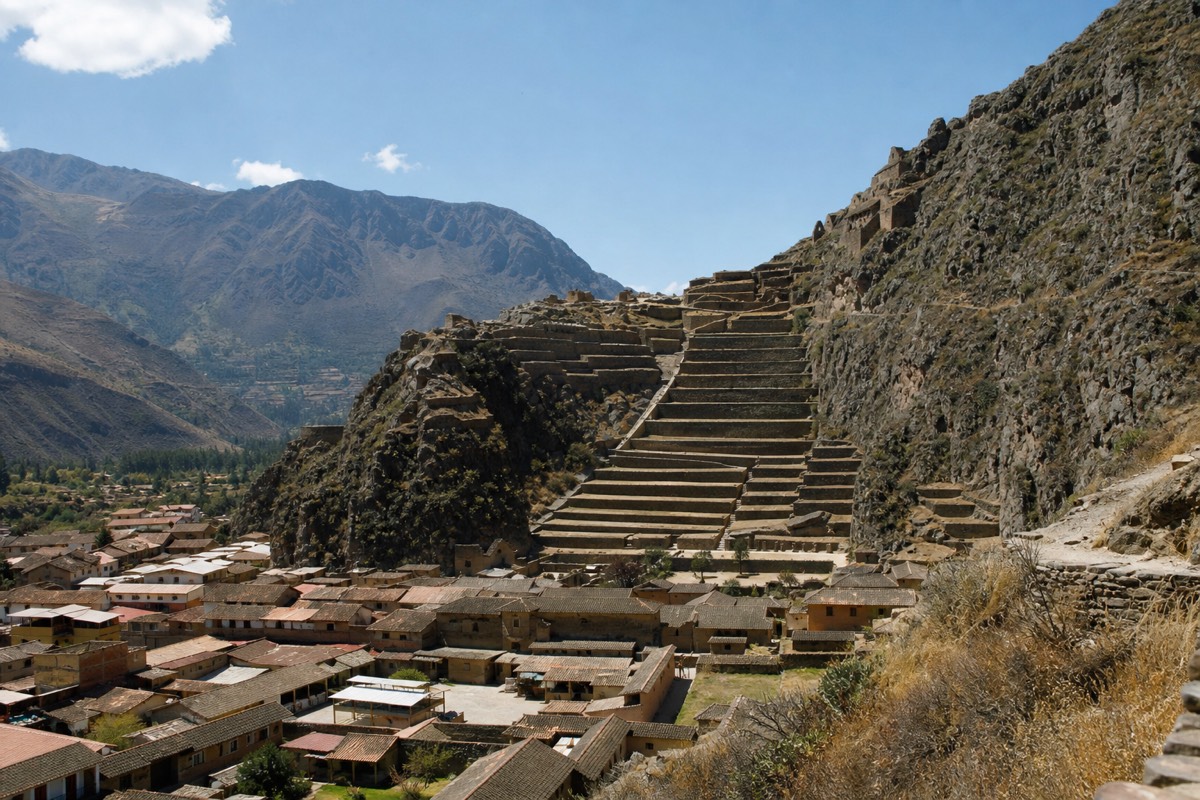
Sacred Valley: time needed by site
Time estimates are general planning guidance based on typical visit patterns at each site, not a fixed rule; groups moving slower or exploring further will need more.
The quick answer
The Sacred Valley holds four distinct highlights: Pisac's market and ruins, Ollantaytambo's fortress and living Inca town, Moray's circular terraces, and Maras's salt pans. Visit as a full day trip from Cusco, or better, stay overnight in the valley to acclimatize at a lower elevation before Machu Picchu.
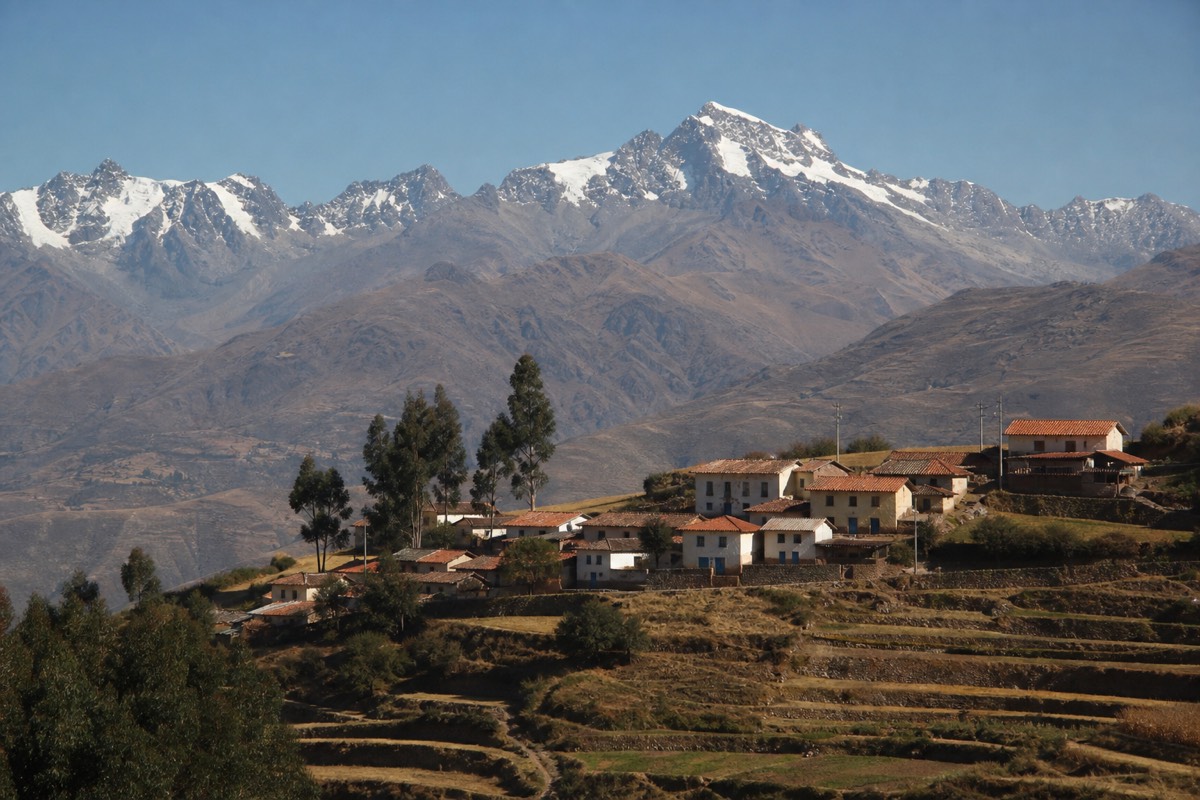
It's easy to treat the valley as scenery on the way to the train station. The sites themselves argue otherwise, and so does the elevation math.
Why does the Sacred Valley matter beyond just scenery?
Sacred Valley towns sit lower than Cusco, generally around 2,800-3,000 m against Cusco's 3,400 m, which gives the valley a real acclimatization value on top of holding major ruins in their own right. That combination, easier breathing plus genuinely significant sites, is what separates it from a filler day.
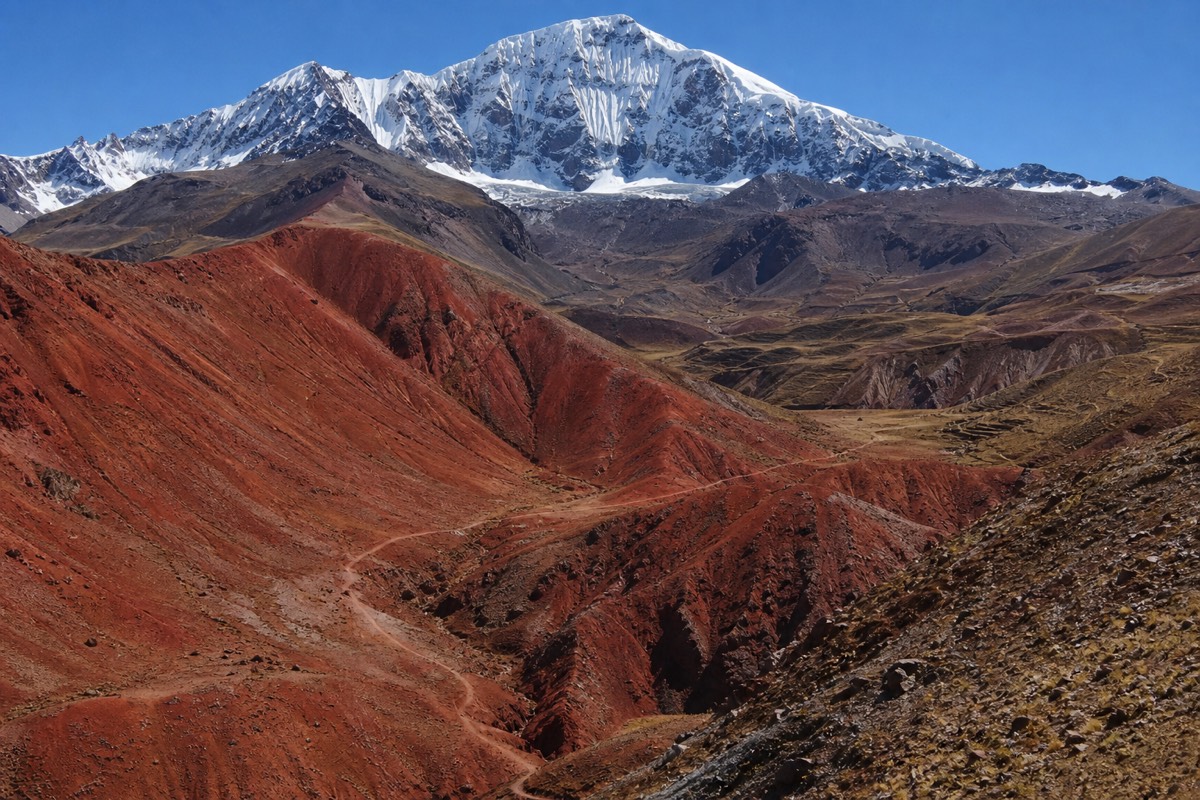
For travelers actively managing soroche, spending a day or night in the valley partway through a Cusco stay is a legitimate strategy, not just a nice-to-have. Our altitude sickness guide covers the elevation math in more depth, and our Lima to Cusco guide covers routing through the valley before Cusco itself as a staged-altitude approach for travelers arriving straight from Lima. The Sacred Valley itself isn't a stop on Peru Hop's bus route; its pass gets you to Cusco, and Sacred Valley day tours like the ones on this page depart from there.
What's at Pisac?
Pisac combines one of the region's best-known traditional markets with a hilltop archaeological complex of terraces, temples, and a ceremonial sector that rivals sites far more crowded than it. Budget roughly 2-3 hours if you want to properly cover both the market and the ruins above town.
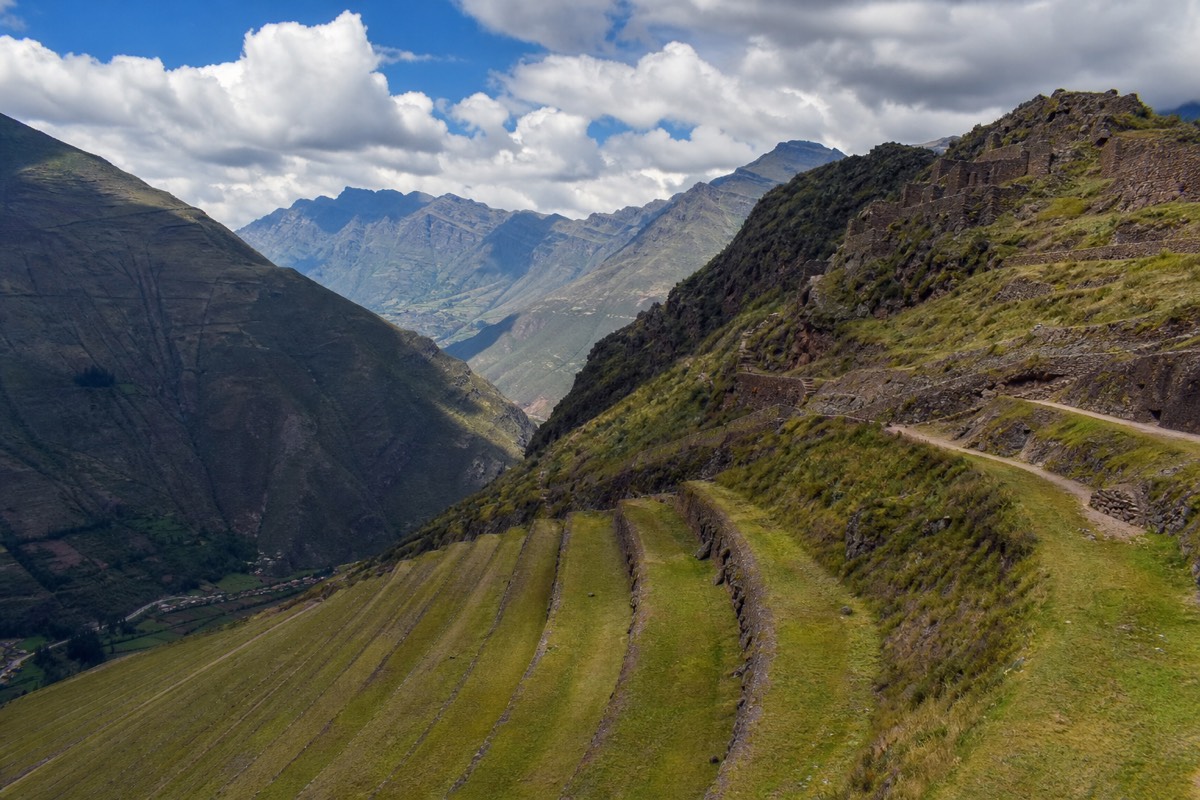
The market runs daily but is busiest and most traditional on its main market days, when vendors from surrounding villages come in to sell textiles, produce, and crafts. The ruins sit on a ridge above the modern town and are reached by a short drive or a longer uphill walk, with terracing on a scale that gives a genuine sense of Inca agricultural engineering. Many visitors are surprised at how much less crowded the ruins feel compared with the market below, especially earlier in the day.
What's at Ollantaytambo?
Ollantaytambo is both a formidable Inca fortress built into a steep hillside and one of the few Sacred Valley towns still laid out on its original Inca street grid, and it's also the train departure point most travelers use to reach Machu Picchu. Give it 1.5-2 hours for the fortress alone.
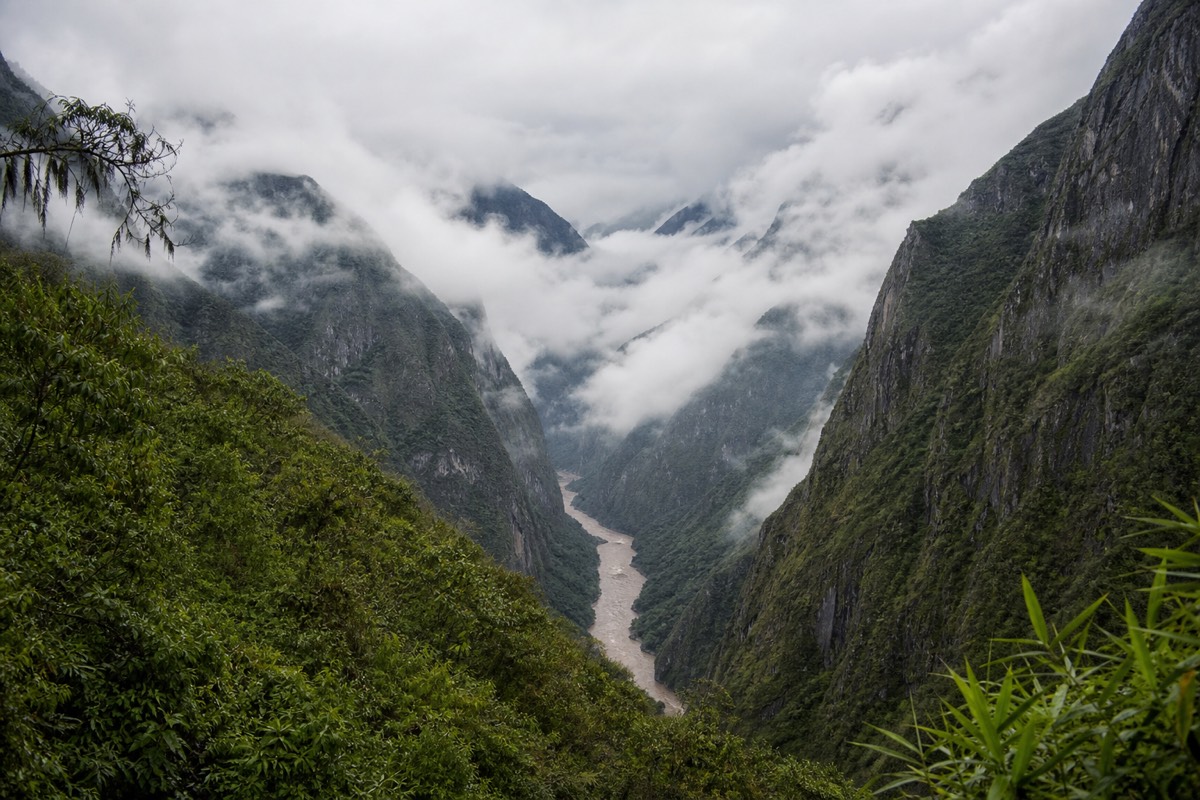
The fortress terraces climb steeply, and the views back down over the valley and town are among the best in the region. What makes Ollantaytambo distinct from a pure ruin site is that people still live and work within the old town's original walls and canals, so it reads as a living settlement rather than a museum piece. Its role as a rail hub means many itineraries naturally pass through anyway on the way to the Machu Picchu train, which makes it easy to combine sightseeing with transit rather than treating them as separate stops.
What's at Moray?
Moray is a set of enormous circular agricultural terraces cut into a natural depression in the earth, believed to have functioned as an Inca crop-testing laboratory that exploited the site's dramatic temperature differences between top and bottom. It's a quick but visually striking stop, worth around an hour.
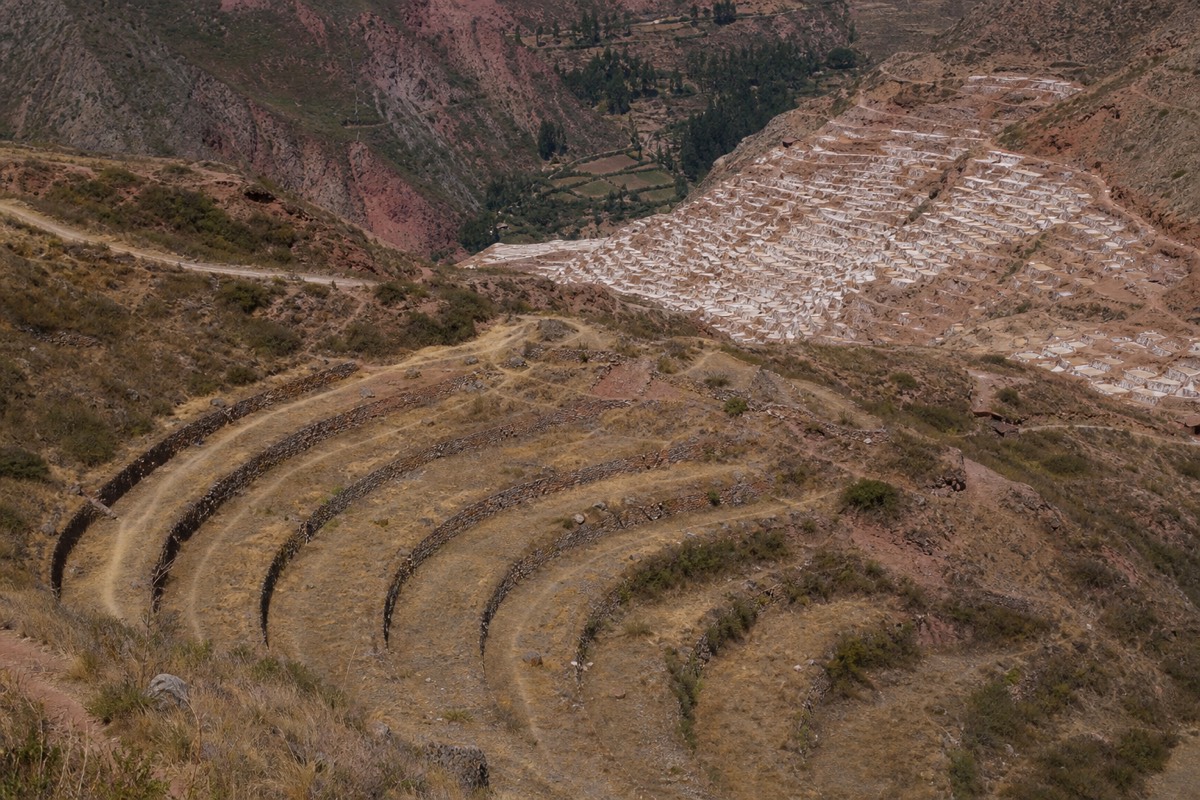
The concentric rings descend roughly 30 meters from the rim to the floor, and the microclimate difference between the top and bottom terraces is thought to have let the Inca experiment with crops at effectively different elevations within a single site. It photographs unlike anywhere else in the valley, and the scale is hard to appreciate from photos alone until you're standing at the rim looking down.
What's at Maras?
Maras is a network of thousands of small salt evaporation pools cut into a hillside, fed by a natural underground saline spring, and still actively worked by local families today, not preserved as a museum. A visit runs around 45 minutes, quick but genuinely worthwhile given how close it sits to Moray.
The pools cascade down the slope in irregular terraces of white, tan, and pink, and the salt harvested here is still sold locally, including at small stands near the site itself. Because Maras and Moray sit close together, most itineraries pair them in the same stop, making the pairing one of the more efficient legs of a full valley circuit.
How do the four sites compare?
| Site | Highlight | Time needed | Approx. elevation |
|---|---|---|---|
| Pisac | Traditional market + hilltop ruins | ~2-3 hours | ~2,970 m |
| Ollantaytambo | Fortress + living Inca town + train hub | ~1.5-2 hours | ~2,790 m |
| Moray | Circular agricultural terraces | ~1 hour | ~3,500 m |
| Maras | Active salt evaporation pools | ~45 minutes | ~3,380 m |
Note that Moray and Maras actually sit higher than Pisac and Ollantaytambo, closer to Cusco's own elevation. The acclimatization benefit of the valley comes mainly from the lower river-valley towns, Pisac and Ollantaytambo, not the higher plateau sites.
What can you actually buy at the Pisac market?
Pisac's market runs on textiles, alpaca wool goods, ceramics, and local produce, with genuine handmade textile work sold alongside more mass-produced souvenirs, so it rewards a bit of comparison shopping rather than buying at the first stall. Bargaining is a normal, expected part of the transaction for handicrafts, done with good humor rather than aggression.
The produce section, often overlooked by travelers focused on souvenirs, is worth a walk through on its own: stalls piled with the many varieties of Andean corn and potato that don't typically make it into supermarkets outside Peru, plus fresh herbs and regional cheeses. If you're after a genuine textile piece rather than a quick souvenir, asking a vendor directly about hand-spun versus machine-made wool is a reasonable question and usually gets a straightforward answer.
A market purchase is independent; the selected tour does not guarantee specific stalls, crafts or shopping time.
Where do you eat in the Sacred Valley?
The valley's river-fed setting makes trout a regional specialty worth trying, alongside broader Andean staples like corn, quinoa soups, and roasted or fried cuy in more traditional restaurants, generally at a noticeably lower price point than equivalent meals in central Cusco. Lunch stops built into a Sacred Valley day trip typically lean into this regional character rather than a generic tourist menu.
Ollantaytambo and Urubamba both have a reasonable spread of restaurants catering to the day-trip crowd passing through, from simple set-menu lunch spots to slightly more polished options aimed at travelers staying overnight. If you're building your own itinerary rather than joining a guided tour with lunch included, budgeting a bit of extra time around midday in Ollantaytambo, given its role as the natural lunch stop on the loop, is a reasonable default.
How do you get between the four sites?
Most day trips run a loop: Pisac first since it's closest to Cusco, then Ollantaytambo, then Moray and Maras together on the way back, since those two sit close to each other on the higher plateau above the valley floor. Driving the loop in this order avoids doubling back.
| Order | Site | Why this position in the loop |
|---|---|---|
| 1 | Pisac | Closest to Cusco on the eastern side of the valley |
| 2 | Ollantaytambo | Further along the valley floor; also the natural lunch stop |
| 3 | Moray | Up on the plateau above the valley, a short drive from Ollantaytambo |
| 4 | Maras | Close to Moray; often the last stop before heading back to Cusco |
Should you visit as a day trip or stay overnight?
A full day trip from Cusco can realistically cover all four sites with an early start, but staying overnight in Ollantaytambo or Urubamba spreads the pace out, adds acclimatization value, and sets up a calmer early train to Machu Picchu the next morning.
| Approach | Pros | Trade-off |
|---|---|---|
| Day trip from Cusco | No extra hotel night, fits a tight schedule | Long day, less time to linger at any single site |
| Overnight in the Valley | Lower-elevation sleep, calmer pace, easy early train to Machu Picchu | Adds a day; worth checking against our itinerary length guide |
Ollantaytambo, Urubamba, or a Cusco day trip: which base is best?
Ollantaytambo suits travelers prioritizing the train connection and a compact, walkable old town; Urubamba offers a bit more lodging variety and a quieter base; a Cusco day trip suits anyone unwilling to add an extra hotel night to the itinerary. None of the three is wrong, they just serve slightly different priorities.
| Base | Best for | Trade-off |
|---|---|---|
| Overnight in Ollantaytambo | Easy early train to Machu Picchu, compact walkable town | Fewer high-end lodging options than Urubamba |
| Overnight in Urubamba | More lodging variety, a quieter, more spread-out base | A short additional transfer to reach the Ollantaytambo train station |
| Day trip from Cusco | No extra hotel night, simplest logistics | Long single day, and no acclimatization-night benefit |
Travelers already committed to the Machu Picchu train from Ollantaytambo often find it simplest to just stay there rather than in Urubamba, since it removes a transfer on the morning that matters most. Travelers who value a wider range of hotel styles, from simple guesthouses to larger countryside properties, tend to lean toward Urubamba instead.
What does a sample one-day Sacred Valley circuit look like?
| Time | Stop |
|---|---|
| Early morning | Depart Cusco |
| Mid-morning | Pisac market and ruins |
| Midday | Lunch in the valley |
| Early afternoon | Ollantaytambo fortress |
| Late afternoon | Moray and Maras |
| Evening | Return to Cusco, or overnight in Ollantaytambo |
This same corridor is also where the Humantay Lake day trip departs from, so travelers spending several days in the region often combine a Sacred Valley circuit with a separate high-altitude lake day rather than cramming both into one.
What does a two-day version, ending at Machu Picchu, look like?
A two-day version covers the same four sites at a more relaxed pace on day one, overnights in Ollantaytambo, then catches an early train to Machu Picchu on day two rather than backtracking to Cusco first. It's an efficient way to combine the valley and the citadel without doubling back on the same road twice.
| Day | Plan |
|---|---|
| Day 1 | Pisac, Ollantaytambo, Moray, Maras at an unhurried pace; overnight in Ollantaytambo |
| Day 2 | Early train from Ollantaytambo to Aguas Calientes, then up to Machu Picchu |
Independent visit or guided tour?
A guided tour handles transport, timing, and site context in one booking, which matters in a valley where the four highlights are spread across a fairly wide area; an independent visit gives more flexibility but requires arranging your own transport between each stop.
| Approach | Pros | Trade-off |
|---|---|---|
| Guided tour | Transport and pacing handled, historical context from a guide | Fixed schedule |
| Independent | Full control over pace and order | Arranging transport between four spread-out sites takes more effort |
Most first-time visitors find the guided option straightforward given how spread out Pisac, Ollantaytambo, Moray, and Maras actually are; the driving alone between all four adds up over the course of a day.
Could you get altitude sickness at Moray or Maras even if you felt fine in the valley towns?
It's possible, since Moray and Maras sit close to Cusco's own elevation, higher than the river-valley towns of Pisac and Ollantaytambo, so a traveler who felt comfortable lower in the valley can still notice some breathlessness climbing around the Moray terraces later the same day. It's rarely severe given how brief the stops are, but it's worth knowing the elevation isn't uniform across the four sites.
This is one more reason the Sacred Valley works well as an acclimatization day when sequenced thoughtfully: starting the loop at lower-elevation Pisac and Ollantaytambo before finishing at higher Moray and Maras gives your body a gentler ramp than tackling the higher sites first. See our altitude sickness guide for the fuller picture on managing this across the wider trip.
This itinerary reaches higher sites and is not an altitude-treatment or descent service.
Does the season change what the valley actually looks like?
The wet season, roughly November through April, turns the valley's terraces and surrounding hillsides a deeper green, while the dry season from May through October brings the browner, dustier look more commonly seen in postcard shots of the region alongside clearer skies for photography. Neither season is objectively better for a visit; it's a genuine trade-off between color and weather reliability.
Travelers chasing the classic bright-green terrace photos common on social media are often seeing wet-season shots, which comes with a higher chance of a rained-out afternoon. Dry-season visitors trade that lush color for more dependable weather and the clearer mountain views the region is equally known for. Our best time to visit Peru guide covers this trade-off in more depth across the wider trip.
Maras's salt pans hold up well in either season, since their color comes from mineral deposits rather than vegetation, which makes them one of the more reliably photogenic stops on the loop regardless of when you visit. Moray's terracing photographs best in clear, harsher light, which the dry season delivers more consistently.
How crowded does the Sacred Valley get, and when?
Pisac and Ollantaytambo see the heaviest crowds during the May-October dry season and around midday, when tour buses from Cusco tend to arrive in clusters; an early start puts you ahead of most of that traffic at both stops. Moray and Maras generally stay quieter throughout the year simply because they're smaller sites with less foot traffic capacity.
Our best time to visit Peru guide covers the fuller seasonal picture, but for the valley specifically, the practical move is the same one that helps with altitude pacing anyway: start early. Groups departing Cusco at first light reach Pisac before the bulk of the day's tour buses, and that early-start advantage compounds through the rest of the loop.
Is the Sacred Valley worth it if you've already toured Cusco's ruins?
Yes, the sites are genuinely distinct: Cusco's ruins like Sacsayhuaman are built from massive interlocking stonework close to the city, while the Sacred Valley's highlights, Ollantaytambo's terraced fortress, Moray's agricultural rings, Maras's salt pans, show a different, more spread-out side of Inca and pre-Inca engineering. Skipping the valley because "you've already seen ruins" undersells how different these particular sites are from each other.
Moray and Maras in particular have no real equivalent among the ruins directly in Cusco; there's nothing in the city itself that resembles either the agricultural terracing experiment at Moray or the still-working salt pools at Maras. Travelers who've done the half-day Cusco ruins circuit and assume they've covered the region's highlights are usually surprised by how different the valley feels once they actually get there.
Why is it called the "Sacred Valley" in the first place?
The name refers to the fertile valley of the Urubamba River, considered especially significant by the Inca both for its agricultural productivity and for the concentration of major settlements and ceremonial sites built along its length, of which Pisac, Ollantaytambo, Moray, and Maras are among the best preserved. The valley functioned as a genuine core of the Inca heartland, not just a scenic corridor between Cusco and Machu Picchu.
That history is part of why treating the valley as a mere waypoint undersells it. The concentration of major Inca sites along a single, relatively short stretch of river valley reflects deliberate settlement choices, not coincidence, and it's part of what makes a dedicated day, or two, here worthwhile beyond just the individual sites' visual appeal.
What should you pack for a Sacred Valley day?
Layers matter more here than almost anywhere else on a Peru itinerary, since the valley floor around Ollantaytambo sits noticeably warmer than the exposed plateau at Moray and Maras, and temperatures drop fast once the sun starts dropping behind the mountains in the late afternoon. A day that starts in a light shirt at 9 a.m. can end in a fleece by 5 p.m.
Sun protection deserves equal attention: the thinner air at this elevation means stronger UV exposure than the same sunny day would produce at sea level, even when the temperature itself feels mild. A hat, sunscreen, and sunglasses are worth having in your bag regardless of how the morning looks when you set out. Comfortable walking shoes matter too, particularly at Ollantaytambo and Pisac, where the ruins involve genuine stone stairs and uneven terracing rather than flat paved paths. Our Peru packing list guide covers the fuller list for a broader trip beyond just this one day.
How does the Sacred Valley connect to the Inca Trail trailhead?
The classic Inca Trail begins at KM 82, a trailhead reached by driving through the Sacred Valley from Cusco, so trekkers heading out on the trail pass directly through this same corridor, often glimpsing Ollantaytambo and the valley floor on the way to the start point. It's a detail that connects this guide directly to travelers planning the multi-day trek rather than just a day trip.
For trekkers with a day or two of flexibility before their Inca Trail departure, spending time in the valley beforehand does double duty: real sightseeing plus a lower-elevation night that helps with acclimatization heading into a physically demanding trek. Our Inca Trail permits guide covers the booking side of that trek in more depth, including how far ahead permits typically need to be secured.
The selected valley day trip is not a transfer to the Inca Trail checkpoint or an Inca Trail permit.
Is the Sacred Valley safe to visit?
Yes. The Sacred Valley, along with Cusco itself, the Inca Trail, and Machu Picchu, is explicitly excluded from the elevated-risk areas named in the U.S. State Department's Peru advisory. The flagged regions are elsewhere in the country, far from this corridor.
See the State Department's current Peru advisory for the full detail, and our Peru safety guide for a fuller regional breakdown.
For the wider set of guided options through this corridor and beyond, our full lineup of Cusco-area tours includes both the half-day Cusco ruins circuit and multi-day options that route through the valley on the way to Machu Picchu. Background on the valley's geography is available on its Wikipedia entry.
Guided transport does not establish that weather, roads or personal health conditions are safe.
What do first-time visitors most often skip that they shouldn't?
Moray and Maras are the two sites travelers most often cut for time, usually because they sit slightly off the main Pisac-Ollantaytambo road, but skipping them means missing the valley's most photogenic and least crowded stops. Both sites pair naturally into the same half-day loop, and the drive between them runs through open countryside that's a highlight in its own right, not just a transit segment between two ruins.
The other common oversight is treating the valley purely as a transit corridor toward Machu Picchu rather than a destination in its own right. Travelers who allocate a full day, or better, an overnight stay, consistently report a noticeably richer visit than those who squeeze it into a rushed half-day add-on between Cusco and the train station.