Inca Trail Permits: How the Lottery Works and When to Book
The Inca Trail is not a first-come, first-served hike you can decide on next week. Peru's Ministry of Culture caps the classic 4-day route at 500 permits a day, sells them only in blocks to licensed operators, and demand for peak months routinely outstrips supply. Here's how the real allocation system works and when to lock in a spot for 2026.
Booking choice: Walk the classic Inca Trail with camping, a group-only portable toilet and personal porter allowance. Explore Four-day Inca Trail with camp toilet
Affiliate links: we may earn a commission when you book.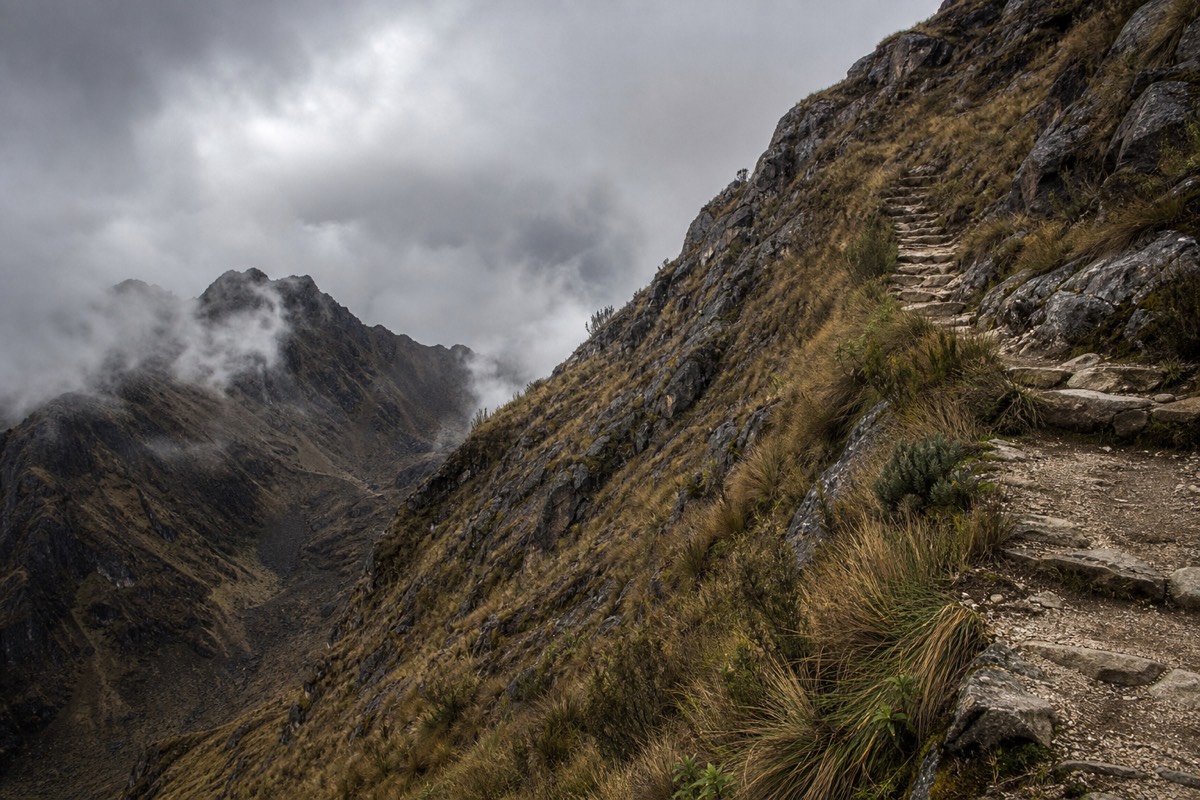
500 permits a day: who actually gets one
Daily quota structure per Peru's Ministry of Culture; the roughly 200/300 tourist-to-staff split reflects widely reported figures from licensed trekking operators.
The quick answer
The classic 4-day Inca Trail is capped at 500 permits per day total, roughly 200 for trekkers and 300 for guides, porters, and cooks, and individuals cannot book directly. A licensed operator must purchase the permit on your behalf, tied to your exact passport number, so book through an agency, not a general date search. 2026 permits opened October 27, 2025, and peak season (May-September) dates can sell out within a few months of release.
How does the Inca Trail permit system actually work?
Peru's Ministry of Culture sells a fixed daily allocation of 500 permits for the classic 4-day trail, and only licensed trekking agencies can purchase them, never individual hikers. That single rule surprises a lot of first-time planners who assume they can reserve a trail date the way they'd book a hotel room.
In practice this means you choose an operator first, then the operator buys your specific permit using the exact name and passport number you give them at the time of booking. The permit is non-transferable: if your passport is renewed or you make a typo in the number, the fix has to happen before departure, not at the trailhead checkpoint. This is one of several reasons the trail differs so much from a straightforward train-and-entrance-ticket day trip to Machu Picchu, where you can buy directly from the government platform.
Why is the daily quota split between tourists and staff?
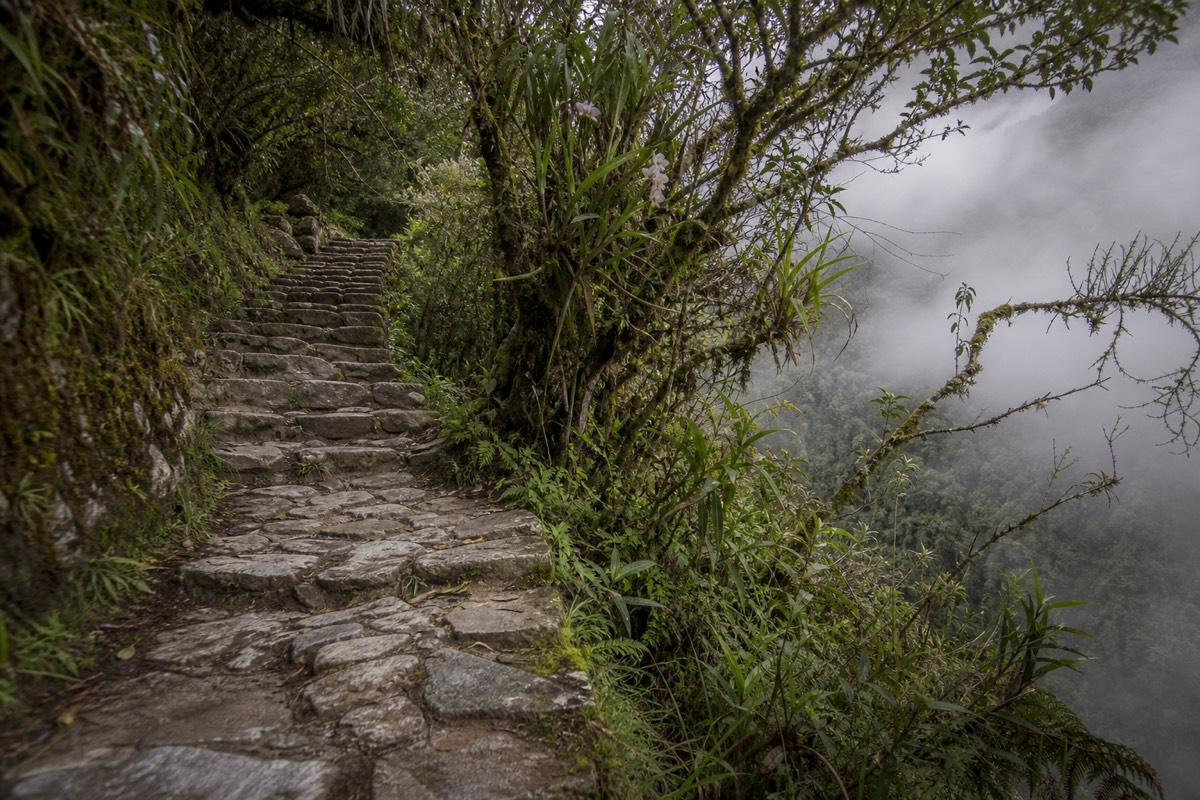
Of the 500 daily permits, roughly 200 go to trekkers and the remaining 300 cover the guides, porters, and cooks who support each group, a split with strong agreement across operator and Ministry sources. The trail is physically narrow in places, and the quota exists to limit total foot traffic on a centuries-old stone path, not just to ration tourist spots.
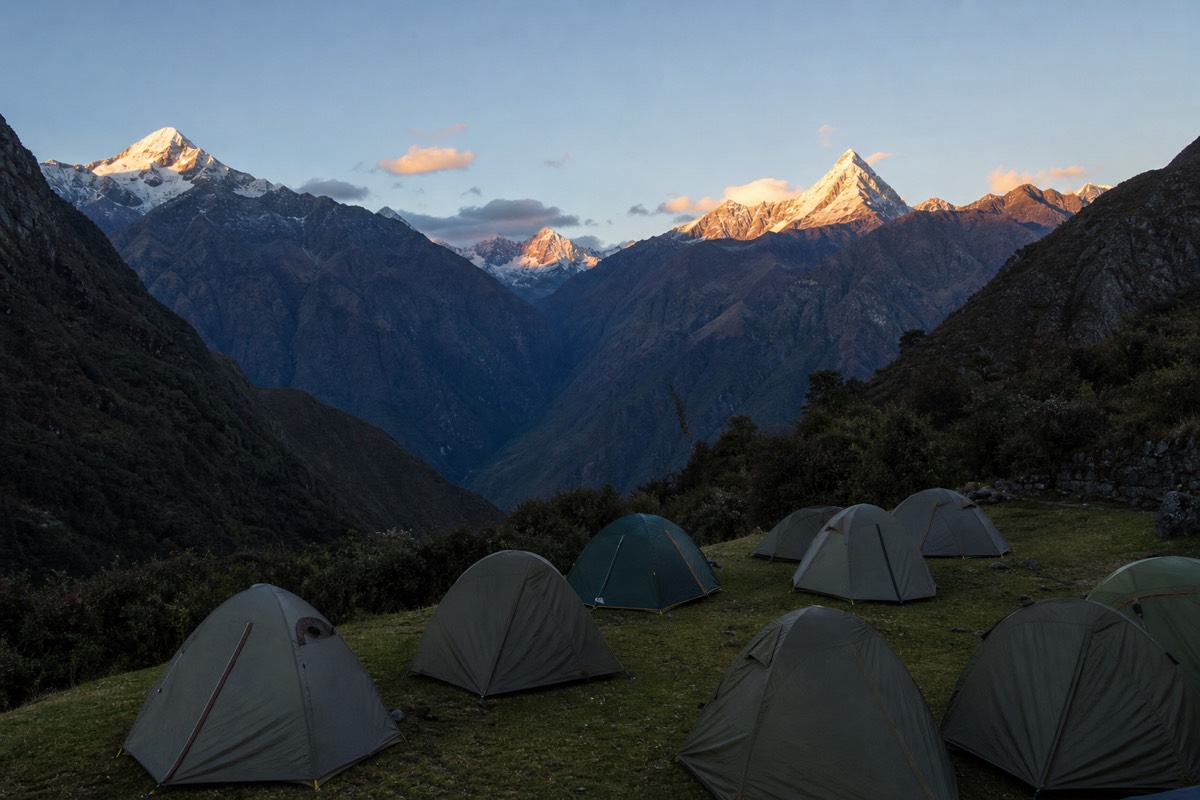
That ratio also explains why a "group" hiking the Inca Trail often looks larger than the number of paying trekkers suggests. A crew of porters carries camping gear, food, and cooking equipment ahead of the group each day, which is part of what makes the multi-day trek logistically different from a single-day circuit.
When do Inca Trail permits go on sale for 2026?
2026 Inca Trail permits opened for booking on October 27, 2025, and popular dates in the May-September dry season can sell out within a few months of that release, sometimes faster for specific high-demand weekends. Waiting until a few weeks before your trip is the single most common way travelers end up unable to hike the classic route at all.
| Milestone | Timing |
|---|---|
| 2026 permit release window opens | October 27, 2025 |
| Peak season dates (May-Sept) typically sell out | Within weeks to a few months of release |
| Shoulder season dates (Apr, Oct) | Often available 2-4 months out |
| Trail closed for maintenance | Every February (Jan 31 - Feb 28) |
| Trail reopens | March 1 |
Source: TREX Peru's 2026 permit release announcement.
A schedule is not live permit inventory or a permit-release announcement. Confirm the current sale process separately.
How far ahead should I actually book?
Book 3-6 months ahead for June-August travel, 2-3 months ahead for April, May, September, and October, and as early as reasonably possible for any date near a national holiday. The margin for waiting shrinks every year as the trail's popularity grows and the fixed 500-permit cap stays the same.
| Travel month | Demand level | Recommended booking lead time | Sell-out risk if you wait to 6-8 weeks out |
|---|---|---|---|
| June - August | Peak (dry season, Northern Hemisphere summer holidays) | 3-6 months | Very high |
| May, September | High shoulder | 2-4 months | High |
| April, October | Moderate shoulder | 2-3 months | Moderate |
| November | Lower | 4-8 weeks | Low to moderate |
| December, January (excl. holidays) | Rainy season, lower demand | 4-6 weeks | Low |
| February | Trail closed entirely | N/A | N/A, no departures run |
Why does the Inca Trail close every February?
The trail closes for the entire month of February by Ministry of Culture mandate, reopening March 1, to allow maintenance work and because February falls in the heart of the Andean rainy season. This is not a one-off event or a recent policy, it happens annually and every licensed operator plans around it.
The closure lets trail crews repair stone steps and drainage, clear campsites, and manage erosion damage that builds up from both foot traffic and heavy rain the rest of the wet season, which runs roughly December through March according to Alpaca Expeditions' explanation of the annual closure. If your trip lands in February, the trail simply isn't an option that month; the Salkantay Trek stays open year-round and is the standard substitute.
What documents do I need for the trail?
You need the same original passport, matching the exact number your operator used to purchase your permit, checked at KM 82 on day one and again partway through the trek. A photocopy or digital scan is not accepted at the checkpoints.
- Original passport, not expired, matching your permit exactly (a renewed passport after booking requires updating the permit with your operator, ideally weeks before departure)
- Your operator-issued trek confirmation or voucher
- Student ID if you booked a discounted student rate, matching your booking name
According to real trekker itineraries from licensed operators, the trek begins with an early pickup, often around 4:00-4:30 AM, ahead of a checkpoint entry that requires this exact document set, so confirm your paperwork the night before rather than the morning of.
What if the Inca Trail is sold out for my dates?
If permits for your travel window are gone, the most common alternative is the Salkantay Trek, an unpermitted route with no daily quota that reaches Machu Picchu on a similar timeline with different, often more dramatic, high-altitude scenery. It's a genuinely comparable trek, not a consolation choice.
See the full breakdown in Salkantay Trek vs. Inca Trail for how the two compare on difficulty, scenery, and cost. Travelers less committed to a multi-day trek at all can also reach the citadel by train and bus with the Machu Picchu Full-Day Train Adventure, which has no permit allocation at all since it doesn't use the trail. Whichever way you go, sort your entrance ticket and circuit separately, since trek packages typically bundle it in but it's worth double-checking before you book.
What does a licensed operator actually include with the permit?
A trek like the Inca Trail 4 Days to Machu Picchu bundles the permit itself with camping gear, meals, porters, and a guide, though the permit fee (roughly $50-120 depending on the operator and season) is sometimes itemized separately from the base tour price rather than fully bundled, so it's worth confirming exactly what's included before paying a deposit. Group sizes on the classic route are typically kept modest given the daily cap, and most itineraries follow the same four-day arc: KM 82 to Huayllabamba on day one, the grueling climb over Warmiwañusca (Dead Woman's Pass, 4,215m) on day two, ruins at Runcurakay and Phuyupatamarca on day three, and a pre-dawn hike to the Sun Gate for first light over the citadel on day four.
What does the 4-day itinerary actually look like, day by day?
The classic route runs KM 82 to Huayllabamba on day one, the hardest climb over Dead Woman's Pass on day two, a long archaeology-rich walk through Phuyupatamarca on day three, and a pre-dawn finish at the Sun Gate on day four. Each day has a distinct character, and knowing the shape of the trek ahead of time helps with realistic expectations about difficulty.
| Day | Route | Terrain / effort | Highlights | Overnight |
|---|---|---|---|---|
| Day 1 | KM 82 to Huayllabamba | Moderate, gradual ascent, roughly 2 hours of initial walking to the first ruins | Patallacta ruins, first views of the Sacred Valley | Huayllabamba camp |
| Day 2 | Huayllabamba to Pacaymayo | Hardest day, sustained climb to Warmiwañusca (Dead Woman's Pass) at 4,215m | Highest point of the trek, panoramic Andes views | Pacaymayo camp |
| Day 3 | Pacaymayo to Wiñaywayna | Long day, roughly 15 km, more gradual but sustained walking | Runcurakay, Phuyupatamarca ("City Above the Clouds") | Wiñaywayna camp |
| Day 4 | Wiñaywayna to Machu Picchu | Short, pre-dawn hike, moderate effort | Sun Gate (Inti Punku) sunrise, first citadel view, 2.5-hour guided tour | Return to Cusco same night |
This structure is fairly consistent across licensed operators, since it's shaped by where camps are permitted along the route, not by any single company's design choice.
What does a permit package actually include, and what doesn't it cover?
A licensed Inca Trail package typically includes the Machu Picchu entrance and guided tour, round-trip train and bus tickets, porters, a chef, camping gear, and most meals, while the permit fee itself, tips, and travel insurance are usually separate. Reading the fine print on inclusions matters more here than on a standard day tour, since a multi-day trek has far more moving pieces.
| Typically included | Typically NOT included |
|---|---|
| Machu Picchu entrance ticket & guided tour | Inca Trail permit fee itself (roughly $50-120, sometimes itemized separately) |
| Round-trip train & bus tickets back to Cusco | Sleeping bag & walking sticks (usually rentable) |
| Porters, chef & professional guide | Tips for the trekking team (expected, not mandatory) |
| All camping gear (tents, foam mattresses) | First breakfast and last lunch of the trip |
| Meals during the trek (commonly around 4 lunches / 3 breakfasts / 3 dinners plus snacks) | International travel insurance |
This inclusion pattern is drawn directly from a real licensed operator's published package for the Inca Trail 4 Days to Machu Picchu tour, and it's broadly representative of how most agencies structure the trek, though always confirm the exact list with whichever operator you book, since specifics vary.
A worked booking timeline example
Say you want to hike in the second week of July 2026, squarely in peak season. Realistically you'd want to start the process as soon as the annual window opens, in this case October 27, 2025, roughly nine months ahead, particularly if you have a fixed group of friends or family who all need consecutive permits together. If that's not possible, aim for no later than March or April 2026, three to four months out, which is still workable for July dates in most years but leaves less flexibility if your first-choice operator is already sold out for that week.
From there, the sequence is straightforward: choose a licensed operator (check they're actually authorized to sell Ministry of Culture permits, not just a booking intermediary), confirm the exact passport details for every member of your group, pay the deposit that secures the permit purchase, and only then start locking in flights, since flight dates should follow permit availability, not the other way around. Permits are non-transferable once purchased, so any late change to your traveler list, a friend dropping out and being replaced by someone else, for instance, needs to happen before the operator submits your names to the Ministry, not after.
What should I pack for a 4-day trek?
Beyond standard hiking gear, the Inca Trail's altitude swings and shifting weather make layering, sun protection, and a reliable rain shell the highest-priority items. Porters typically carry the group's tents and shared equipment, but each trekker still carries a daypack with the essentials for the day.
| Item | Why it matters on this trek |
|---|---|
| Waterproof rain jacket & poncho | Weather shifts quickly at altitude, even outside the rainy season |
| Layered clothing (base layer to warm outer layer) | Camp nights can drop near freezing while midday sun is strong |
| Broken-in hiking boots | Uneven stone steps and steep descents on days 2 and 3 |
| Trekking poles | Reduces knee strain on the steep descent from Dead Woman's Pass |
| Headlamp | Pre-dawn start on day 4 toward the Sun Gate |
| Sun hat & high-SPF sunscreen | UV exposure is stronger at altitude |
| Cash in soles | Tipping the trekking team, small purchases in Aguas Calientes after the trek |
See the site's broader Peru packing list for a fuller trip-wide checklist beyond what's specific to the trail itself.
How does the classic Inca Trail compare to the alternative treks?
The classic 4-day Inca Trail is the only route that enters Machu Picchu through the Sun Gate on foot and the only one requiring a permit; alternative multi-day treks like Salkantay reach the same destination without a quota system, usually over a similar or slightly longer timeframe. The permit requirement is really the core difference driving most people's decision between the two.
Salkantay in particular has become the default alternative specifically because it has no daily cap and can typically be booked with far less lead time. The trade-off is that it doesn't finish with the Inca Trail's specific Sun Gate arrival, replacing it with different, often higher-altitude mountain scenery instead. The full comparison lives in Salkantay Trek vs. Inca Trail, worth reading in full if permit availability or trek difficulty is still an open question for your trip.
How fit do I need to be for the Inca Trail?
A moderate level of fitness is genuinely necessary, not just a formality: day two's climb over Dead Woman's Pass at 4,215m is the hardest stretch, and the combination of altitude and sustained stone steps catches unprepared trekkers off guard more than raw distance does. You don't need to be an athlete, but regular walking or hiking fitness beforehand makes a real difference to how much you enjoy the trek rather than endure it.
Altitude is the bigger variable most people underestimate. Cusco itself sits at roughly 3,400 meters, and the trail spends most of four days above that, peaking well over 4,000 meters on day two. Spending at least two full days acclimatizing in Cusco before starting the trek is standard advice among licensed operators, and it matters more for how the trek feels than any amount of gym training back home. See the altitude sickness in Cusco guide for what actually helps versus what's mostly folklore. Trekking poles, a slower pace on the day-two ascent, and staying well hydrated make a bigger practical difference than pre-trip conditioning for most travelers.
A named permit does not establish fitness or readiness for altitude.
What is the trekking team actually like?
A licensed group typically travels with a professional guide, a chef, and a team of porters who carry the camping gear, food, and cooking equipment ahead of the group each day, which is part of why the total daily headcount on the trail (around 300 staff, per the Ministry's quota) outnumbers trekkers. This isn't a luxury add-on, it's how the trek is structured for every licensed operator, budget or premium.
Porters on the classic route are almost entirely local Andean men, many of whom have worked the trail for years and know its terrain intimately, often outpacing trekkers considerably despite carrying heavier loads. Tipping the trekking team at the end of the trek is customary and expected, even though it's typically excluded from the base package price, and most operators provide informal guidance on typical amounts as the trek wraps up. The chef prepares full meals at each camp, a detail that surprises some first-time trekkers who expect backcountry camping food and instead get freshly cooked multi-course meals at altitude.
Environmental rules and etiquette on the trail
The trail runs through a protected area, and licensed operators are required to follow pack-in, pack-out waste rules, designated campsites only, and marked-trail-only walking, all enforced as part of the same permit system that limits daily numbers. These rules exist for the same reason the daily quota does: protecting a centuries-old stone path and the ecosystem around it from the wear of heavy foot traffic.
Practically, this means campfires are not permitted at the official campsites, all trash (including biodegradable waste) is carried out by the trekking crew rather than buried or left behind, and wandering off the marked trail to shortcut a switchback is both discouraged and, in the more fragile archaeological zones, restricted. None of this changes the trekking experience meaningfully, but it explains some of the structure travelers notice, like why every group camps at the same handful of designated sites each night rather than choosing their own spot.
A guided booking does not exempt anyone from trail or waste rules.
What's the weather and trail condition like month by month?
May through September is the dry season and the most popular window to trek, with clearer skies and firmer trail conditions; December through March is the rainy season, wetter and muddier underfoot, on top of the trail being fully closed in February. Weather is a real factor in both comfort and how the classic photos at the Sun Gate actually turn out.
| Months | Season | Trail conditions | Booking pressure |
|---|---|---|---|
| June - August | Peak dry season | Clear, firm trail, coldest nights at camp | Highest, book 3-6 months out |
| April - May, September | Shoulder, still mostly dry | Good visibility, milder temperatures | High, book 2-4 months out |
| October - November | Late shoulder | Occasional rain beginning | Moderate |
| December, January, March | Rainy season | Wetter, muddier stone steps, lush green scenery | Lower, easier to book close to travel |
| February | Trail closed | N/A, maintenance closure | N/A |
A genuinely underappreciated trade-off: the rainy season shoulder months bring noticeably greener, more dramatic scenery along the trail, since the cloud forest sections are at their lushest, even though the hiking itself is wetter and the stone steps demand more caution.
What if my travel plans change after permits are purchased?
Permits are tied to a specific date, operator, and passport number, and changing any of these after purchase is difficult to impossible, since the Ministry of Culture issues them against a fixed traveler list for a fixed day. This is one of the starkest differences from a standard flexible hotel or flight booking, worth building into how far in advance you commit.
Most licensed operators build some flexibility into their own cancellation policies (a partial refund window before departure, for instance), but the underlying government permit itself is generally non-refundable and non-transferable to a different date once issued. If there's real uncertainty about your travel dates, it's worth confirming your chosen operator's specific change and cancellation policy before paying a deposit, rather than assuming standard travel-industry flexibility applies here the way it might for a standard day tour.
How does the trail end, and what happens after day four?
The trek finishes with a pre-dawn hike to the Sun Gate for sunrise over the citadel, followed by a roughly 2.5-hour guided tour inside Machu Picchu itself, before descending to Aguas Calientes for the train and bus back to Cusco the same day. It's a genuinely long final day layered on top of three days of hiking, worth planning around rather than treating as a formality.
By the time the group reaches the Sun Gate, most trekkers have already covered close to 40 km over three days, so the final descent into the citadel and the guided tour that follows happen on tired legs, even if the terrain itself is easier than the earlier days. The return trip via train and bus back to a Cusco hotel typically means the fourth day runs well past 12 hours door to door, similar in overall length to the standard train-based day tours covered in the Machu Picchu tickets guide. Most trekkers describe this final stretch as worth the exhaustion for the arrival through the Sun Gate specifically, a first view of the citadel that train-based day visitors simply don't get. Whichever route ends up fitting your plans, the operators behind the guided Peru tours featured on this site sell both the trekking and the train-based options, so it's worth comparing the two before locking in either one.