Salkantay Trek vs. Inca Trail: Which One to Choose
Both routes end at Machu Picchu, but they get there through completely different logic: one is a scarce, permit-locked historical pilgrimage, the other is a higher, wilder mountain trek that books far more flexibly.
Booking choice: Walk the classic Inca Trail with camping, a group-only portable toilet and personal porter allowance. Explore Four-day Inca Trail with camp toilet
Affiliate links: we may earn a commission when you book.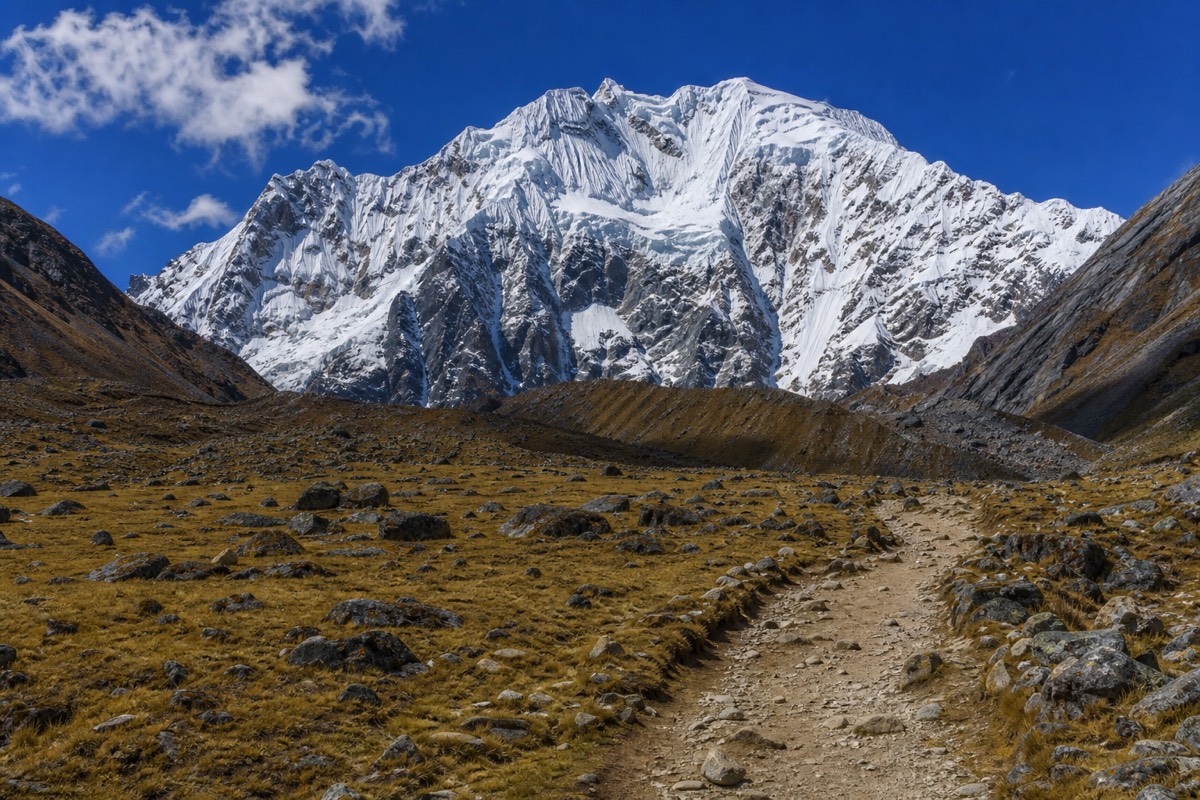
Salkantay vs. the classic Inca Trail, head to head
Figures reflect the two specific guided itineraries this comparison is built on: a 4-day/3-night classic Inca Trail and a 5-day/4-night Salkantay route ending on the panoramic train.
The quick answer
Choose the Inca Trail if walking through the Sun Gate on foot and following the actual Inca road matters more to you than anything else, and choose Salkantay if you want higher, more dramatic mountain scenery, an easier booking process, and don't mind one extra day on the trail. Both end at Machu Picchu; they just get you there through very different terrain and logistics.
Both treks are two of the highlight products in our lineup of guided Peru tours, and this comparison exists specifically because the decision between them is a real one worth getting right before you book, not an afterthought.
How do the two treks actually compare?
The Inca Trail is shorter, permit-capped and historically loaded, while Salkantay is a day longer, higher at its peak, and bookable on far shorter notice. The table below lines up the two specific guided itineraries this comparison is built on, so the numbers are not generic averages, they are what each operator actually runs.
Worth noting upfront: this comparison uses one specific guided itinerary for each trek, not an average across every operator in Cusco. Departure times, exact camp locations and small itinerary details vary between agencies running either route, though the core structure, the permit requirement, the pass crossed, and the overall length, holds steady across virtually every operator selling either trek.
| Factor | Inca Trail (4 days) | Salkantay Trek (5 days) |
|---|---|---|
| Length | 4 days / 3 nights | 5 days / 4 nights |
| Permit required | Yes, government-issued, capped at 500 people/day | No permit allocation; booking is limited only by operator availability |
| Highest point | 4,215m (Dead Woman's Pass / Warmiwañusca) | 4,630m (Salkantay Pass) |
| Difficulty | Moderate to strenuous; one very hard climbing day | Moderate to strenuous; higher single pass, more gradual overall |
| Scenery type | Inca ruins en route (Patallacta, Phuyupatamarca, Wiñaywayna), cloud forest, arrival via the Sun Gate | High glacial pass beneath Nevado Salkantay, descent into tropical cloud forest, coffee-growing valley |
| Cost tier | Around $780 for the guided 4-day departure | Around $700 for the guided 5-day departure |
| Booking lead time | 3-6 months ahead recommended; longer for peak season | Weeks to a couple of months is usually workable |
| Group size | Small groups, permit-limited | Small groups, capped around 16 travelers |
What makes the Inca Trail special?
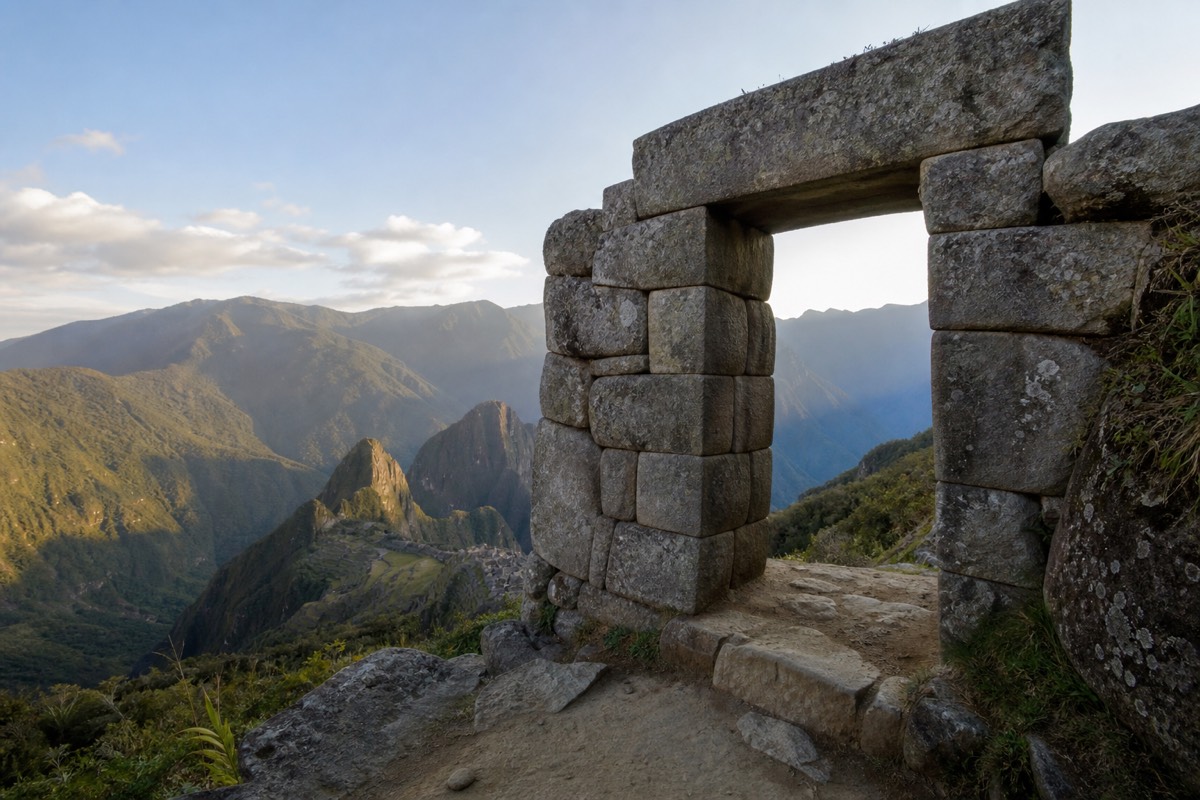
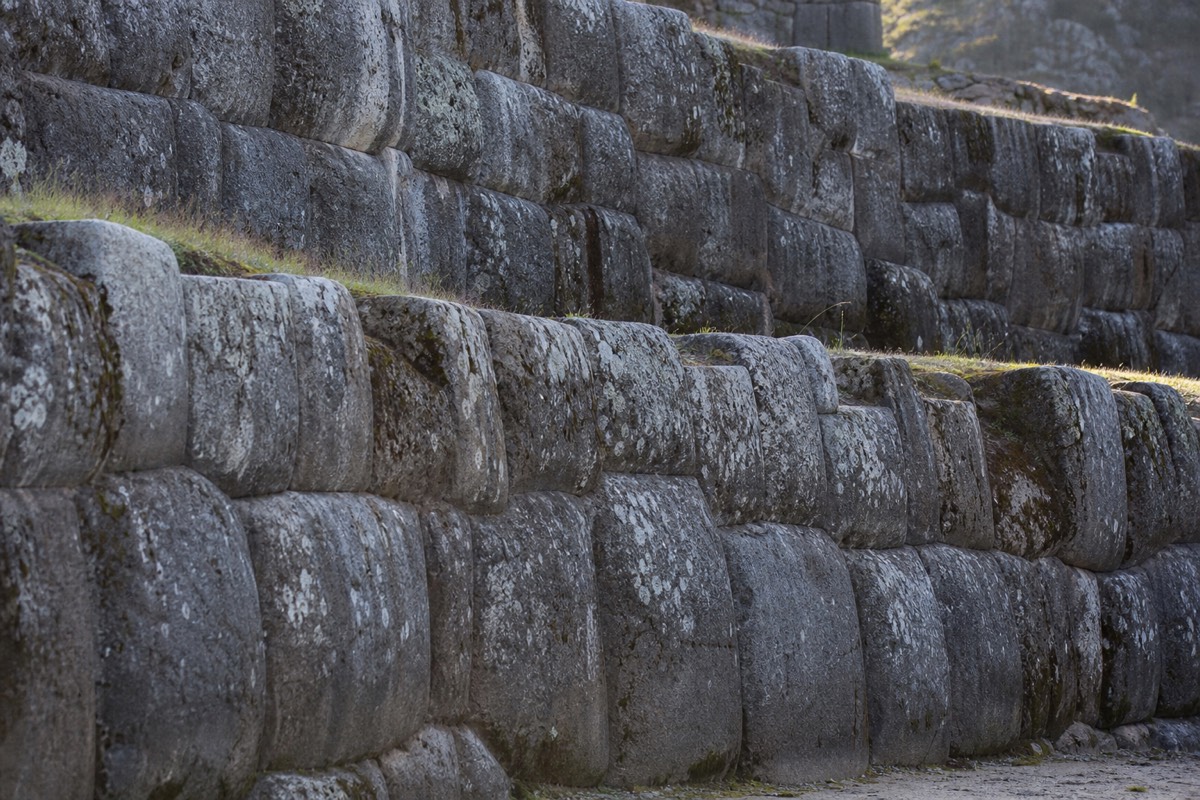
The Inca Trail's real draw is not just the mountains, it is walking the actual stone road the Inca built, and arriving at Machu Picchu through the Sun Gate on foot instead of by bus. The route follows sections of the historic Qhapaq Ñan, the Inca road network, past ruins that only trekkers on foot ever see up close: Patallacta on day one, the cloud-wrapped terraces of Phuyupatamarca on day three, and Wiñaywayna, one of the most architecturally intact sites on the whole route, on the final night. The operator's own itinerary data describes reaching Wiñaywayna as a "10/10 vertical standard of ancient architecture," and while that is marketing language, the underlying claim checks out: nothing on the Salkantay route offers the same density of Inca stonework between trailhead and citadel.
The permit system itself is part of what makes the experience feel earned. Only 500 people a day, including guides, porters and cooks, are allowed on the trail, which means every departure is genuinely capped rather than crowded by default. That scarcity is also the trail's biggest practical constraint, covered in full in how the Inca Trail permit allocation works, but for travelers who get a spot, the payoff is a pre-dawn hike to Inti Punku, the Sun Gate, and the first view of the citadel from above exactly as Hiram Bingham's era of explorers would have seen it.
Different booking counts do not establish why one route sells more, and they do not show current permits. Compare the actual itinerary and named departure for your dates.
| Inca Trail day | What happens |
|---|---|
| Day 1 | 4:20 AM Cusco pickup, checkpoint at KM 82, pass Patallacta ruins, camp at Huayllabamba |
| Day 2 | The hardest climbing day: ascend to Dead Woman's Pass (4,215m), descend to Pacaymayo camp |
| Day 3 | 15km through Runcurakay and Phuyupatamarca, overnight at Wiñaywayna |
| Day 4 | Pre-dawn hike to the Sun Gate, first view of Machu Picchu, guided 2.5-hour tour of the citadel |
What makes Salkantay special?
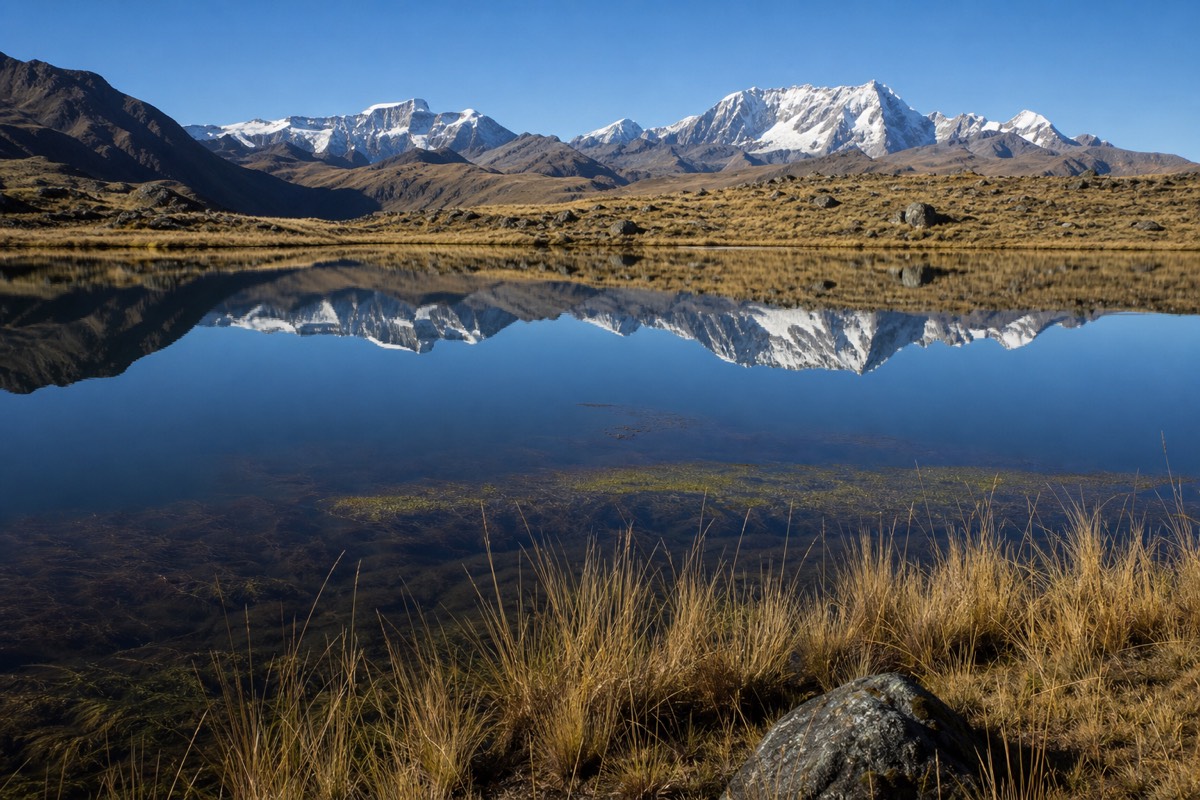
Salkantay trades the historical density of the Inca Trail for bigger, higher mountain scenery, an easier booking process, and generally more comfortable overnight setups. The route climbs to 4,630 meters at the Salkantay Pass itself, more than 400 meters higher than the Inca Trail's peak at Dead Woman's Pass, with the glacier-capped Nevado Salkantay looming directly overhead. From there the trail drops dramatically into cloud forest, a genuine ecological shift within a single trekking day, passing through coffee and fruit-growing country before reaching Aguas Calientes on foot along the Urubamba River.
Because Salkantay does not run through the same government permit system as the classic trail, it is bookable far closer to your travel dates, which makes it the practical choice for travelers who decide on a trek to Machu Picchu less than three months out. The operator running this specific 5-day route also builds in comforts the Inca Trail's fixed camping style doesn't offer: glamping-style tents on night one near Humantay Lake, Andean huts by night two, a traditional Pachamanca feast and coffee tasting at Lucmabamba, and an optional soak in hot springs at Aguas Calientes before the final day's citadel visit. The trek finishes on the scenic Vistadome or panoramic train back to Cusco rather than another day of walking out.
That panoramic train ride is worth calling out as part of what makes the trek distinct, not just a transportation afterthought. Riding the Vistadome or 360-degree panoramic train back to Cusco after four days of trekking gives Salkantay travelers a scenic, comfortable close to the trip, with wide glass viewing panels built specifically for the ride through the Sacred Valley. Inca Trail travelers also return by train and bus from Aguas Calientes, but the itinerary doesn't build in quite the same dedicated window of rest and scenery on the way back.
| Salkantay day | What happens |
|---|---|
| Day 1 | 4:30 AM Cusco pickup, hike to Humantay Lake (4,200m), overnight glamping |
| Day 2 | Cross Salkantay Pass (4,630m), descend into cloud forest, overnight at Collpapampa |
| Day 3 | Pachamanca feast and coffee tasting at Lucmabamba, hike to Llactapata with a distant Machu Picchu view |
| Day 4 | Hike to the hydroelectric station, follow the river to Aguas Calientes, optional hot springs |
| Day 5 | Sunrise citadel visit, guided 2-3 hour tour, return to Cusco on the panoramic train |
How do fitness and altitude demands compare?
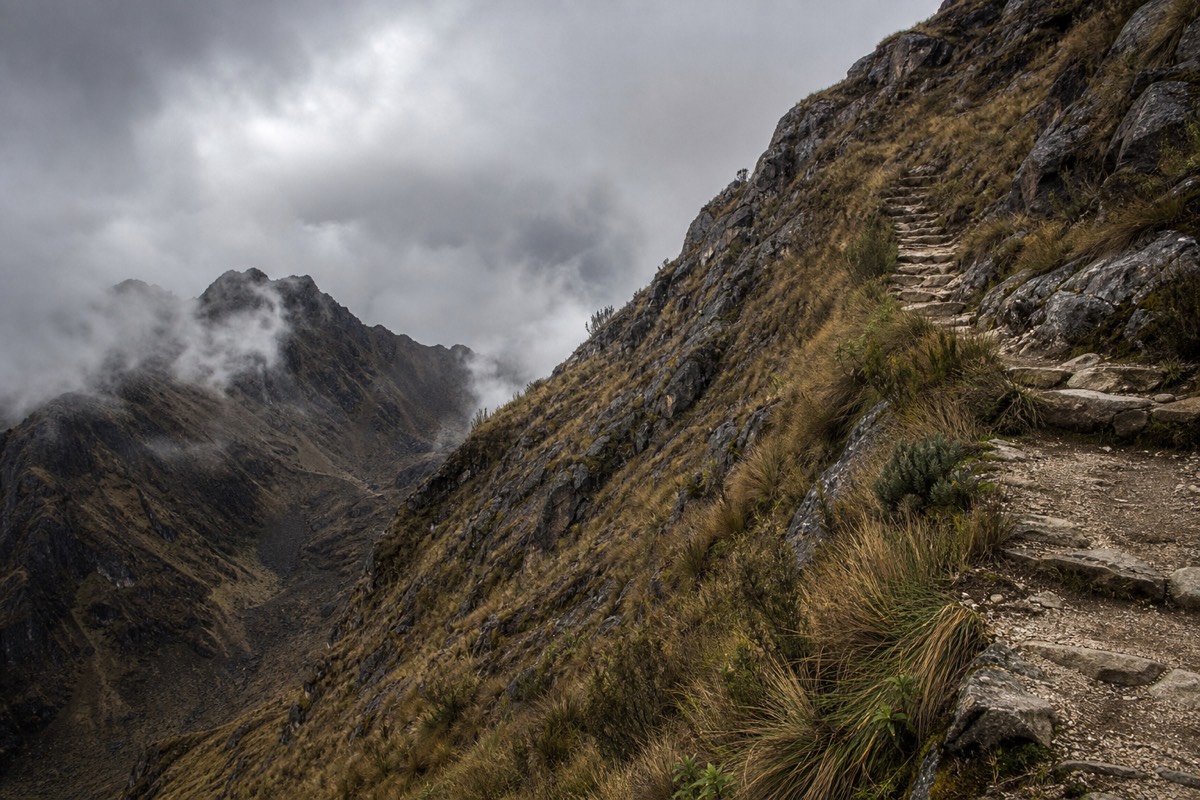
Salkantay's single pass sits higher than anything on the Inca Trail, but the Inca Trail packs its hardest climbing into a shorter, steeper window, so "which is harder" depends on what kind of hard you mean. The Inca Trail's second day is widely considered the trek's most physically demanding stretch: a sustained, steep ascent to Dead Woman's Pass at 4,215 meters, done in a single push. Salkantay's high point is genuinely higher at 4,630 meters, and the thinner air at that elevation is a real factor, but the ascent to it is more gradual, spread across a longer first two days rather than concentrated into one brutal climb.
Neither trek is appropriate to attempt straight off a flight into Cusco. Both routes start from a city that already sits at 3,400 meters, and the operators for both treks build in at least a partial acclimatization day around Cusco before departure. See what actually helps with soroche for a full breakdown of acclimatization strategy, since the single biggest factor in how either trek feels is not raw fitness, it's how many days your body has had at altitude before you start climbing.
Both operators also carry a support system for altitude problems that do arise: oxygen and basic first aid are standard equipment on guided departures for either trek, and guides are trained to recognize early symptoms of altitude sickness and adjust pace or, in serious cases, arrange an early descent. That safety net is one more reason going guided beats attempting either route independently, a point that applies just as much here as it does on the Huayhuash Trek cost and difficulty further north.
| Factor | Inca Trail | Salkantay |
|---|---|---|
| Peak altitude | 4,215m | 4,630m |
| Hardest single day | Day 2 (Dead Woman's Pass) | Day 2 (Salkantay Pass) |
| Daily distance | Roughly 12-16km/day, steeper stone steps | Roughly 15-22km/day, more gradual grading |
| Camping style | Standard tents, all nights above 3,000m | Glamping/huts on some nights, one warmer cloud-forest night |
Neither booking establishes fitness or readiness for high altitude. Allow separate acclimatization time.
How does the food and overnight camp experience compare?
Both treks feed you well by trekking standards, but the overnight setup differs enough to matter if comfort weighs into your decision: the Inca Trail sticks to a standard tent-and-foam-mattress camping model for all three nights, while Salkantay mixes glamping-style tents, Andean huts, and a hotel night in Aguas Calientes into its five days. The Inca Trail's meal count runs four lunches, three breakfasts and three dinners plus snacks, cooked by a trekking chef at each campsite, a genuinely well-regarded part of the experience given how remote the trail is. Salkantay's operator leans further into comfort, with full board built into all five days including a traditional Pachamanca feast, meat and vegetables cooked in a pit of hot stones, alongside a coffee-roasting demonstration at a working farm in Lucmabamba.
| Factor | Inca Trail | Salkantay |
|---|---|---|
| Meals | 4 lunches / 3 breakfasts / 3 dinners + snacks | Full board across 5 days, including a Pachamanca feast |
| Night 1 | Standard tent, Huayllabamba camp | Glamping tent near Humantay Lake |
| Mid-trek nights | Standard tents throughout | Andean huts at Collpapampa |
| Final night before Machu Picchu | Standard tent, Wiñaywayna camp | Hotel in Aguas Calientes, optional hot springs |
| Gear support | Porters carry camp gear; trekkers carry daypacks | Mules carry a 7kg duffel per trekker plus camp gear |
What do trekkers commonly underestimate about each route?
The most common Inca Trail mistake is underestimating day two, the climb to Dead Woman's Pass, because the trail's overall reputation as "moderate" undersells how steep and sustained that single ascent actually is at altitude. Trekkers who arrive in Cusco the day before departure, without any acclimatization buffer, are the ones who struggle hardest on that climb, not because the trek is unreasonable but because their bodies haven't had time to adjust to 3,400 meters before adding a serious climb on top. The second most common miscalculation is packing weight: the Inca Trail's porters carry camp equipment, not personal items beyond a modest allowance, so an overloaded daypack becomes the trekker's own problem for four straight days of walking.
On Salkantay, the common underestimate runs the other direction: because the trek is marketed around comfort, some travelers assume it's meaningfully easier than the Inca Trail and are surprised by how demanding the Salkantay Pass crossing actually feels at 4,630 meters, genuinely higher than anything on the classic route. The mule-carried duffel bag removes a real physical burden, but it doesn't remove the altitude, and the pass crossing itself remains a serious effort regardless of what's in your pack.
| Trek | Common mistake | Why it matters |
|---|---|---|
| Inca Trail | Arriving in Cusco with no acclimatization buffer | Day 2's climb to Dead Woman's Pass is far harder without a few days already spent at altitude |
| Inca Trail | Overpacking the daypack | Porters carry camp gear, not personal items beyond a set allowance; a heavy daypack is yours to carry |
| Salkantay | Assuming "more comfortable" means "easier" | The Salkantay Pass (4,630m) is higher than anything on the Inca Trail regardless of camp comfort |
| Both | Skipping properly broken-in hiking boots | Blisters compound quickly over multi-day treks with no easy way to bail out mid-route |
Supported luggage does not remove the walking or altitude demands of either trek.
How do you actually book each trek, and through whom?
Both treks are sold as fully guided, all-inclusive packages by trekking agencies based in Cusco, but the Inca Trail's permit system adds an extra layer most travelers haven't dealt with on other treks: the operator must purchase your named permit from the Ministry of Culture using your exact passport details, months before departure, and that permit is non-transferable. A booking mistake, a typo in a passport number, a later passport renewal, a name change, can genuinely block entry to the trail even after payment, which is why reputable operators double-check passport details carefully at booking and again closer to departure. Salkantay carries none of that fragility, since there's no named government permit involved; a booking change or a late substitution in your travel party is a far simpler conversation with the operator.
Both the 4-day Inca Trail and the 5-day Salkantay trek are commonly booked as guided departures rather than through an intermediary, with listed group dates rather than fully custom private scheduling by default, though private departures are usually available on request for either route at a higher price point. Given how far in advance Inca Trail permits need to be secured, check 4-day Inca Trail dates as part of your trip-planning timeline, not as an afterthought once flights are already booked.
Is either trek a reasonable first high-altitude trek?
Yes, both are realistic first high-altitude multi-day treks for a reasonably fit traveler, provided you build in real acclimatization time in Cusco beforehand rather than treating the trek itself as your adjustment period. Neither route requires prior mountaineering experience or technical climbing skill; both are walking treks on established trails with full guide, porter or muleteer support, meaning the physical demand is sustained walking at altitude rather than anything requiring specialized gear or training beyond general fitness. What matters more than trekking history is cardiovascular fitness built up in the weeks before your trip and, ideally, at least two to three days already spent above 3,000 meters in Cusco before you set out on either trail.
Travelers who've never spent time above roughly 2,500 meters before are the ones most likely to feel the altitude hardest on day two of either route, regardless of general fitness level, since altitude tolerance doesn't correlate perfectly with how fit someone is at sea level. That's a genuine physiological reality worth taking seriously rather than a scare tactic: see what actually helps with soroche for the specific acclimatization steps that make the biggest difference before either trek. Travelers who'd rather reach Cusco gradually than fly straight in sometimes use Peru Hop's overland route through Arequipa and Puno first, which puts some acclimatization days on the calendar before either trek even starts.
A first high-altitude trek requires individual preparation; the selector does not certify fitness.
What does each trek actually include, and what will cost extra?
The packages differ in camping equipment, meals, luggage support and admission conditions. The four-day Inca Trail recommendation lists a personal porter allowance and a portable toilet for its own groups; sleeping bags, poles and air mattresses are extra. The five-day Salkantay option lists duffel support and a mixed camping/hotel itinerary. Obtain the complete permit and equipment terms for the selected option instead of relying on an assumed separate permit price.
Tipping culture is worth planning for as a real, if optional, budget line on both treks: porters, muleteers, guides and cooks on both routes work hard multi-day jobs supporting trekkers, and gratuities are the customary way that support gets recognized. Cusco-based trekking agencies can usually give a reasonable estimate of typical tipping ranges per role if asked directly when booking, so it isn't a guessing game once you're already on the trail with cash to hand out.
| What's typically not included | Inca Trail | Salkantay |
|---|---|---|
| Government permit | Confirm permit inclusion in the selected quote | Not applicable, no permit required |
| Sleeping bag | Rentable in Cusco | Rentable in Cusco |
| Huayna Picchu / Mtn. add-on | Book separately | Book separately |
| Porter/muleteer tips | Optional but customary | Optional but customary |
| Travel insurance | Not included | Not included |
Who should choose the Inca Trail, and who should choose Salkantay?
Choose the Inca Trail if the historical route itself is the point and you can commit to booking three to six months ahead; choose Salkantay if flexibility, higher mountain scenery, or comfort along the way matter more to you than the Sun Gate arrival. Travelers locked into fixed dates less than three months out effectively have their answer made for them, since Inca Trail permits sell out that far in advance during peak season. First-time trekkers who want the single most famous version of the walk, and who plan far enough ahead to lock in a permit, tend to pick the Inca Trail. Travelers who value photography of big glaciated peaks, or who are traveling with a slightly wider fitness range in the group thanks to the muleteer-supported light-daypack setup, often lean Salkantay instead. Either trek is a legitimate way to arrive at Machu Picchu on foot rather than by train alone, which is itself the real dividing line against options like a full-day tour to Machu Picchu from Cusco that skip the trek entirely.
It's also worth being honest that neither trek is inherently the "correct" choice, whatever trekking forums or influencer content might imply. Both are run by experienced operators, both get trekkers to the same final destination, and both involve genuine physical effort at real altitude. The decision comes down to which specific trade-off, historical density and a scarce permit versus higher mountain drama and easier logistics, matters more for your particular trip.
Whichever trek you choose, packing right matters as much as fitness. See a full Peru packing list for what belongs in your daypack versus your duffel on both routes, and look at Inca Trail or Salkantay dates before the last minute: neither trek is something to book the week before you fly.
If neither option quite fits, that's worth knowing too: both treks funnel into the same citadel visit, so a traveler short on time or unsure about multi-day camping isn't locked out of Machu Picchu by skipping both. A full-day Machu Picchu train tour covers the same destination with none of the multi-day trekking commitment, a legitimate third path worth considering alongside the two covered here.
Whichever route wins out, both are run by operators with real experience on their respective trails, and neither choice is a mistake. The wrong choice is really only picking based on price alone without weighing the permit, scenery, and difficulty differences covered above.