Huayhuash Trek: Cost, Difficulty, and Whether to Go Guided
The Huayhuash circuit is one of the most demanding treks Peru offers, ten days above 4,000 meters through some of the Andes' most dramatic scenery. Here is what it actually costs, what it demands physically, and a genuine shorter alternative in the nearby Cordillera Blanca.
Booking choice: Trek the full Huayhuash circuit with shared transport, meals and guiding. Explore Ten-day Huayhuash circuit
Affiliate links: we may earn a commission when you book.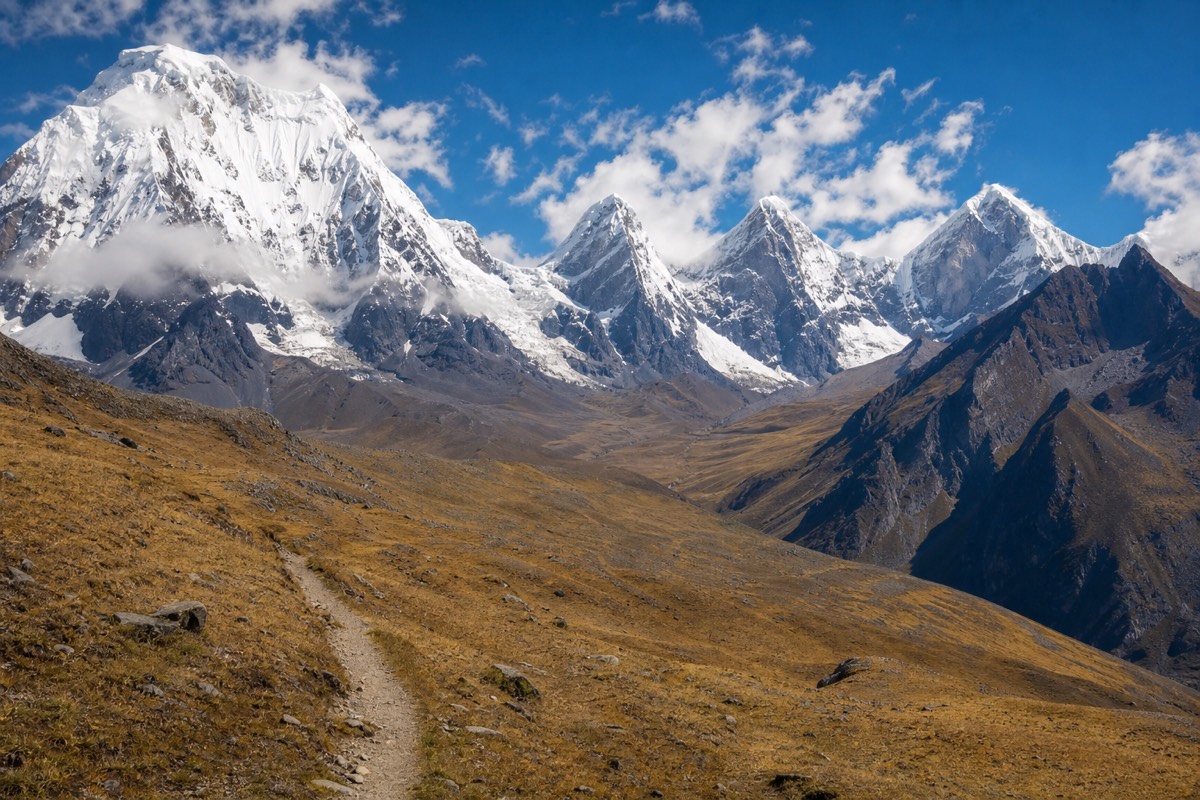
10-day Huayhuash circuit vs. the 4-day Santa Cruz alternative
Figures reflect the two specific guided itineraries this guide is built on, run out of Huaraz in the Cordillera Blanca / Huayhuash region.
The quick answer
The Huayhuash circuit is a serious 10-day high-altitude trek through the Cordillera Huayhuash near Huaraz, crossing multiple passes above 4,600 meters, and it should be done guided unless you already have real high-altitude trekking and navigation experience. If ten days is more than your schedule or fitness allows, the 4-day Santa Cruz trek covers a genuinely spectacular slice of the nearby Cordillera Blanca at a fraction of the commitment.
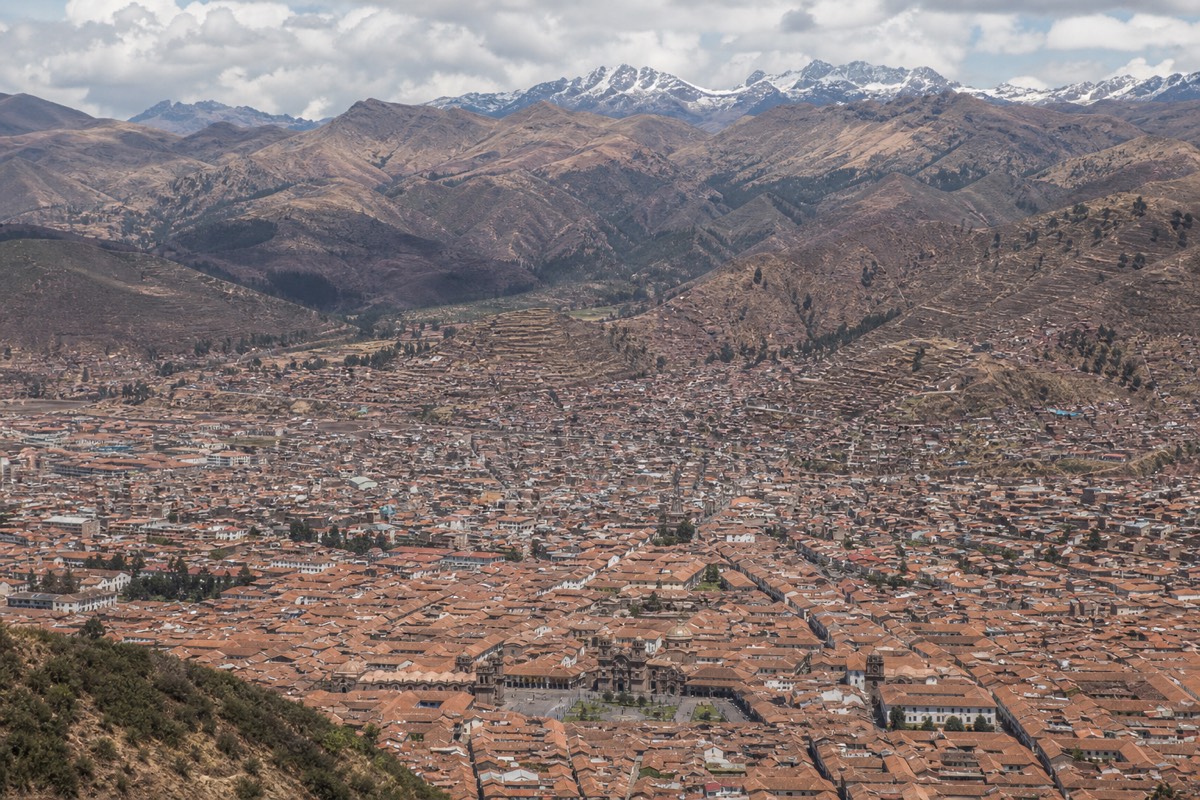
Both routes sit alongside the Cusco-area treks in our guided Peru tour lineup, run by the same kind of experienced local operators, just in a colder, higher, and considerably less-visited corner of the Andes.
What is the Huayhuash circuit, exactly?
The Huayhuash circuit is a full loop through the Cordillera Huayhuash, a compact but ferociously steep mountain range south of the better-known Cordillera Blanca, run as a 10-day guided expedition out of Huaraz. The range is centered on Yerupajá, Peru's second-highest peak, and the route strings together turquoise glacial lakes, remote high-altitude campsites, and a sequence of passes, several exceeding 4,700 meters, that make it one of the more physically serious treks offered anywhere in the country. This is genuinely different terrain from the Cusco-area treks: colder, higher on average, and far more remote, with the trail passing through small Andean communities rather than tourist-dense corridors.
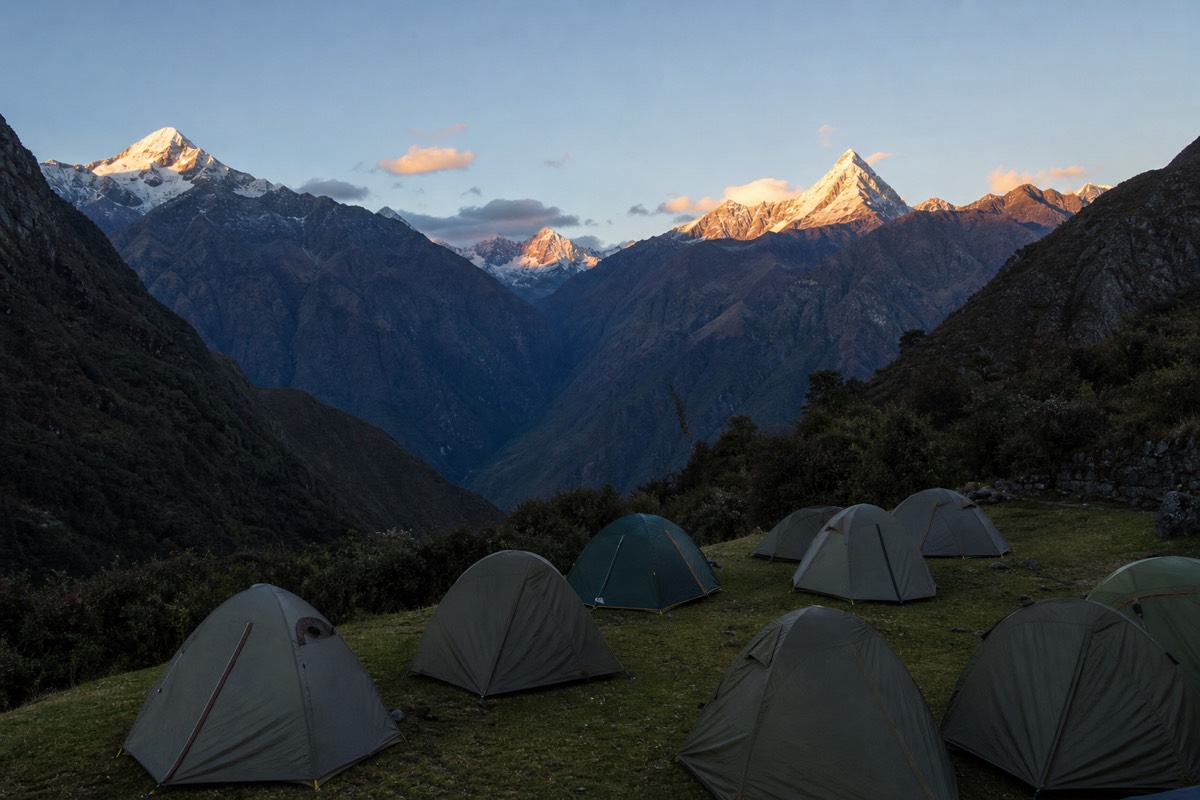
The operator's own itinerary for this route covers real named landmarks worth knowing before you commit: Carhuacocha and Mitucocha lakes early on, the Carnicero Pass and Portachuelo de Huayhuash mid-trek, a rest stop at the Viconga hot springs, and a demanding final stretch crossing the Tapush and Yaucha passes, both around 4,800 meters, before descending to the green-hued Jahuacocha Lake and the village of Huayllapa on the way back to Huaraz.
The trek has built a real reputation among serious trekkers worldwide as one of the standout multi-day routes in South America, mentioned in the same breath as routes in Patagonia by hikers who've done both. That reputation is earned mostly by scenery density: few multi-day treks anywhere pack this many turquoise lakes, glaciated peaks and high passes into a single continuous route through terrain this remote.
| Fact | Detail |
|---|---|
| Length | 10 days, all-inclusive guided departure |
| Starting point | Huaraz, in the Cordillera Blanca region |
| Typical elevation range | Consistently above 4,000m for most of the trek |
| Notable passes | Carnicero Pass (4,600m), Tapush and Yaucha (both ~4,800m) |
| Price | Around $1,410 for the guided all-inclusive departure |
| Rating on record | 4.2 stars, 710+ bookings |
What does a typical day-by-day itinerary on the full circuit look like?
The 10-day circuit breaks roughly into three phases: an opening stretch through the Pocpa Valley and the lake-studded eastern side of the range, a demanding middle section crossing the trek's highest passes with a rest stop at hot springs, and a final push through technical high passes before descending back toward Huaraz. Knowing the shape of the trek in advance, rather than just its total length, makes it easier to judge whether the pacing suits you: the itinerary front-loads dramatic lake scenery, saves its single built-in rest afternoon for roughly the midpoint, and closes with two of the hardest passes on the whole route back to back.
| Phase | What happens |
|---|---|
| Opening stretch | Transfer from Huaraz to Llamac, climb through the Pocpa Valley past Ninashanca, campsite facing Mitucocha and Carhuacocha lakes beneath Siula Grande and Yerupajá |
| Middle stretch | Ascend the Carnicero Pass and Portachuelo de Huayhuash (the trek's highest point), descend to the Viconga hot springs for a rest afternoon, continue into the Guanacpatay Valley |
| Final stretch | Technical crossings at Tapush and Yaucha passes (both ~4,800m), descend past the green-hued Jahuacocha Lake and the village of Huayllapa, drive back to Huaraz |
Because the itinerary is genuinely continuous, with no full rest days built in beyond the Viconga afternoon, trekkers who want to break up the intensity sometimes ask operators about extending the trip by a day or two to add breathing room. This isn't standard on the packaged departure but is often possible to arrange for a private group booking a custom pace.
What gear should you bring versus rent in Huaraz?
Huaraz has a genuine trekking-outfitter scene built around exactly this kind of multi-day expedition, so the honest approach for most travelers is bringing technical layers and broken-in boots from home while renting the bulky, trek-specific gear locally rather than flying it in. Sleeping bags rated for sub-zero nights are the most commonly rented item for both treks, since a bag warm enough for a 4,800m pass crossing is a specialized piece of gear most travelers don't already own and won't use again outside high-altitude trekking. Trekking poles, an insulated jacket if you're traveling light, and even boots in a pinch are typically available to rent in Huaraz's outfitter shops, though boots specifically are worth breaking in beforehand rather than relying on a rental fit for ten days of walking.
| Item | Bring from home | Rent in Huaraz |
|---|---|---|
| Hiking boots | Yes, broken in well beforehand | Possible, but fit risk over 10 days |
| Sleeping bag (sub-zero rated) | Optional | Commonly rented; specialized gear |
| Trekking poles | Optional | Widely available to rent |
| Insulated jacket / down layer | Preferred if you already own one | Available to rent |
| Headlamp, water bottles, base layers | Yes, bring your own | Not typically rented |
What does the weather do on the circuit, and when should you go?
Huayhuash runs on the same broad Andean dry-wet cycle as Cusco, with a dry season roughly May through September that represents by far the safer and more common trekking window, since wet-season conditions at 4,600-4,800m passes bring a real risk of snow, ice and reduced visibility that a dry-season crossing doesn't. Outside that window, several operators reduce departures or pause the route entirely, reflecting how much more the Cordillera Blanca and Huayhuash region's high passes depend on stable weather than lower-altitude trekking elsewhere in Peru. For the broader seasonal pattern across the country, including how this region's dry season lines up with Cusco's, see the best time to visit Peru.
Even within the dry season, nighttime temperatures at Huayhuash's high campsites regularly drop well below freezing, a genuinely different cold than a Cusco evening, since the trek spends far more consecutive nights at extreme altitude than most other guided treks in Peru. Packing for that reality, not for how the Andes feel during a shorter Cusco-based trip, is one of the more common gaps in first-time Huayhuash preparation.
What does the trek cost, and what's actually included?
The guided 10-day Huayhuash circuit runs around $1,410 per person and covers the logistics that would otherwise be genuinely difficult to arrange independently: full camping equipment, a professional guide and cook, nearly every meal, and hotel pickup and drop-off in Huaraz. What it leaves out matters just as much for budgeting: entrance fees to the Huayhuash reserve itself are paid on-site as you pass through, since several communities along the route charge separate access fees, alcoholic drinks are on you, and a sleeping bag is a rental add-on rather than a default inclusion. Gratuities for the guide and cook are optional but customary, and personal travel insurance is required separately, not bundled in.
Because several of the trek's entrance and transit fees go directly to the small Andean communities whose land the route crosses, that cash isn't simply a bureaucratic add-on, it's a meaningful part of how those communities benefit economically from a trek passing through their territory. Budgeting a reasonable cash reserve for these fees, plus optional gratuities for the guide, cook and support staff, is worth treating as a real, if modest, part of the trip's total cost rather than an afterthought handled with whatever cash happens to be left over.
| Included | Not included |
|---|---|
| All camping equipment (tents, gear) | Huayhuash entrance/community fees (paid on-site) |
| Professional guide and cook | Alcoholic drinks |
| All meals (10 breakfasts / 10 lunches / 9 dinners) | Sleeping bag (rental recommended) |
| Bottled water and afternoon tea | Gratuities (optional) |
| Hotel pickup and drop-off in Huaraz | Personal travel insurance |
Should you go guided, or attempt it independently?
Guided is the sensible default for the Huayhuash circuit, and not just as a convenience: route-finding across multiple unmarked high passes, arranging the community entrance fees that apply along the way, and having support if altitude sickness or an injury hits at 4,700 meters are all genuine safety factors, not just comfort ones. Independent trekkers do complete Huayhuash every year, usually with hired mules and a local arriero for logistics even if they skip a full guiding service, but that route still demands real backcountry navigation skill, Spanish-language logistics with remote communities, and a self-sufficient response plan for altitude problems far from any road.
The guided version removes those specific risk points: a professional guide who knows the pass sequence and the community fee system, a cook handling the nutrition and hydration that matters enormously at sustained altitude, and a built-in group safety net if someone in your party struggles. For a trek where the nearest road access can be a full day's walk away at several points along the route, that support is worth more here than it would be on a shorter, better-trafficked trek closer to Cusco.
It's also worth weighing the guided decision against real trip-cost math, not just safety. Hiring a private arriero and mules independently, buying or renting camping gear piecemeal, and navigating the community fee system without local language support often ends up costing a meaningful share of what a fully guided package costs anyway, once every piece is priced out separately, while leaving the actual navigation and safety risk squarely on the traveler. For most visitors, the guided package isn't just the safer option, it's frequently the more cost-effective one too once every independent line item is accounted for honestly.
What do trekkers commonly get wrong about Huayhuash?
The most common misjudgment is underestimating how remote the circuit actually is once you're a few days in: unlike Cusco-area treks with a road never more than a day's walk away, several stretches of the Huayhuash circuit put you multiple days from the nearest vehicle access, which changes the calculus on everything from a minor injury to a change-of-mind decision to bail out early. A second common mistake is treating the trek's single rest afternoon at Viconga hot springs as a full recovery day rather than what it actually is, a welcome but brief pause in an otherwise sustained ten days of high-altitude walking. Travelers who arrive expecting several rest days scattered through the itinerary, the way some other multi-day treks structure their pacing, are often surprised by how continuous the Huayhuash schedule actually is.
A third, more basic mistake: underestimating cash needs. Community entrance fees along the route, plus any small purchases in villages like Huayllapa, are cash-only transactions in remote settings with no card readers or ATMs, so arriving without enough Peruvian soles set aside specifically for the trek is a genuinely avoidable planning gap.
Booking a guide does not replace acclimatization or appropriate mountain preparation.
Is Huayhuash a reasonable first multi-day trek, or should you build up to it?
Huayhuash is not the trek to pick as a first-ever multi-day hike; it rewards trekkers who have already done at least one shorter multi-day trek, ideally at altitude, and know how their body responds to several consecutive days of exertion above 4,000 meters before committing to ten. The Santa Cruz trek, or a Cusco-area route like the classic Inca Trail or Salkantay, is a sensible proving ground: shorter, still genuinely challenging, but with an easier exit if something goes wrong and a lower total commitment if the pacing or altitude turns out to be more demanding than expected. Trekkers who've completed one of those routes comfortably, and want to go further, are Huayhuash's natural next step rather than its ideal starting point.
This isn't a hard rule, and genuinely fit, experienced hikers from other high-altitude environments, the Alps, the Rockies, the Himalayas, can reasonably take on Huayhuash as an early Peru trek if they've already proven their own altitude tolerance elsewhere. The honest self-assessment that matters is less about general fitness and more about specific prior experience with multiple consecutive days above 4,000 meters, which is a different physiological demand than a single big day hike or a shorter trek that dips below 4,000m most nights.
This ten-day circuit is not a verified beginner alternative. Prepare for sustained high-altitude walking before considering it.
How does the shorter Santa Cruz trek compare?
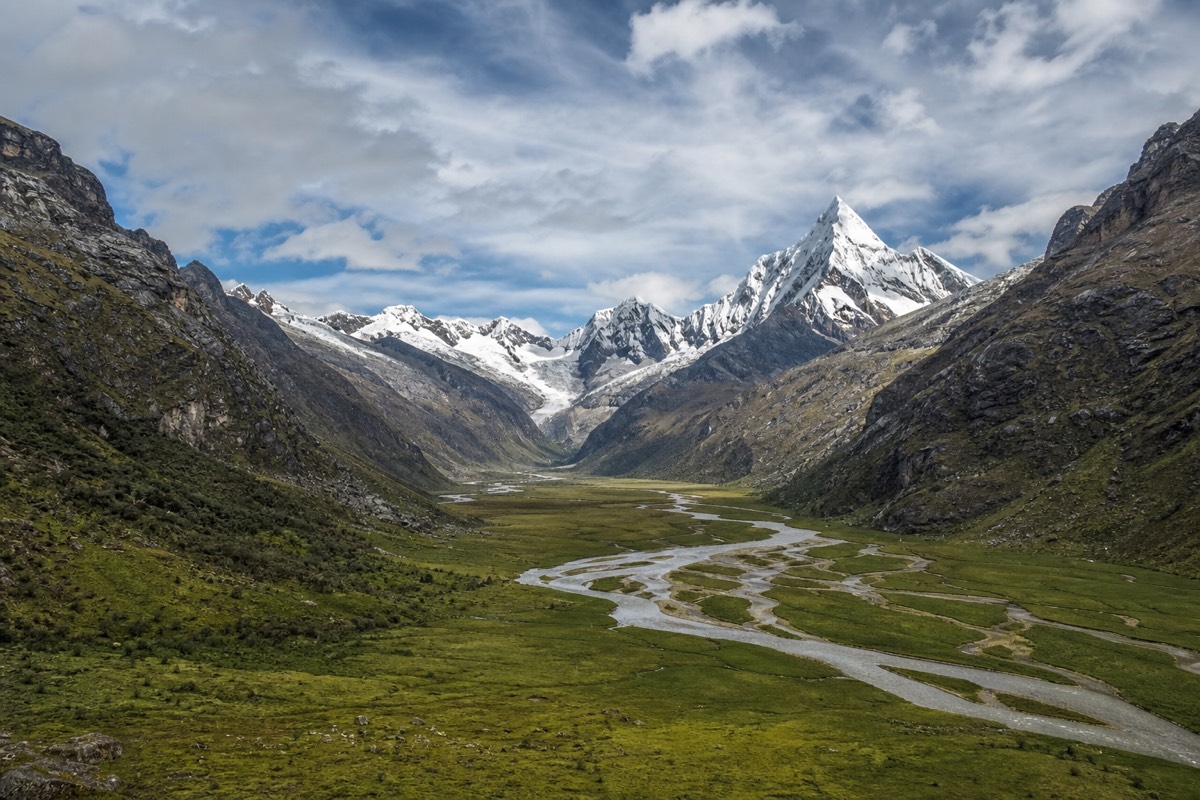
The Santa Cruz trek covers 42km over 4 days through the Cordillera Blanca, crossing one major pass, Punta Unión at 4,750 meters, and it delivers a genuinely spectacular slice of the same broader mountain region without the 10-day commitment. It's frequently cited as one of the most beautiful hikes in the world in its own right, not just a consolation version of Huayhuash: the route passes ancient Inca trails and quenual forests, the Ichiccocha and Hatuncocha lagoons, and a side visit to the Alpamayo Base Camp at 4,330 meters to view what's often called the most beautiful mountain in the world. The pass crossing on day three, a 3-hour zigzag ascent to Punta Unión, is the trek's hardest single push and delivers panoramic views of peaks including Artesonraju and Taulliraju.
Santa Cruz includes donkey support carrying up to 8kg of your gear per person, a certified walking guide and an arriero, and all meals across the 4 days, running around $585 per person. It's the realistic choice for travelers who want the Cordillera Blanca's high-altitude scenery without ten straight days above 4,000 meters, or who simply don't have the schedule for the full circuit.
Santa Cruz is also a legitimate acclimatization run for travelers planning the full Huayhuash circuit later in their trip, or a standalone trek in its own right for anyone whose schedule simply doesn't allow ten days. Either way, it delivers the same Cordillera Blanca scenery style, snow-capped peaks, glacial lagoons, a serious high pass, in a package that fits far more easily into a broader Peru itinerary alongside Cusco and Machu Picchu.
| Santa Cruz day | What happens |
|---|---|
| Day 1 | Transfer through Callejón de Huaylas, trailhead walk, camp at Llamacorral (3,760m) |
| Day 2 | Past Ichiccocha and Hatuncocha lagoons, side trip to Alpamayo Base Camp (4,330m), camp at Taullipampa (4,250m) |
| Day 3 | Ascend Punta Unión pass (4,750m), descend to Cachinapampa camp (3,750m) |
| Day 4 | Short descent to Vaquería, private transport back to Huaraz |
10-day circuit or 4-day Santa Cruz: how do they stack up directly?
The two treks share a region and a trailhead city but differ enormously in scope, and the honest way to choose is by matching the trek to your actual time and conditioning rather than picking the "bigger" option by default. The full circuit demands roughly ten consecutive days of high-altitude walking with no rest days built in beyond the Viconga hot springs stop, which is a real physical and logistical commitment most travelers only take on once they know they want the full immersion. Santa Cruz delivers one legitimate high-pass day and several more of steady, beautiful trekking, compressed into a schedule that fits far more easily around the rest of a Peru trip.
| Factor | Huayhuash Circuit (10 days) | Santa Cruz Trek (4 days) |
|---|---|---|
| Distance/duration | 10 days, consistently above 4,000m | 42km over 4 days |
| Highest pass | Multiple, several around 4,600-4,800m | Punta Unión, 4,750m |
| Rest built in | One afternoon at Viconga hot springs | None needed at this length |
| Price | Around $1,410 | Around $585 |
| Best for | Experienced trekkers with 10+ days to spend | Strong hikers with a tighter schedule |
Neither option is a downgrade from the other; they simply serve different trips. A traveler with two weeks in Peru and a specific goal of completing the full Huayhuash circuit will plan their whole itinerary around it. A traveler layering a few days of serious mountain trekking onto a broader Cusco-and-Machu-Picchu trip is far better served by Santa Cruz's four days, which leaves the rest of the itinerary intact.
Four available days do not fit the ten-day circuit. The comparison is useful editorial context, not a matching booking.
How should you prepare and acclimatize before either trek?
Both treks start from Huaraz, which sits at roughly 3,050 meters, and both climb well above that almost immediately, so the standard advice is the same: spend several days in Huaraz doing day hikes before you start either trek, not just resting at altitude. The operator's own guidance for the full circuit recommends 4 to 5 days in Huaraz beforehand performing acclimatization day hikes, since jumping straight from sea level or from Lima into ten days above 4,000 meters is a real risk factor for altitude sickness, not just a comfort issue. The same logic applies to Santa Cruz, just compressed: even a shorter trek benefits enormously from a few days already spent above 3,000 meters before you add serious elevation gain on top.
Fitness preparation matters too, and it's worth being honest about the difference between general fitness and trekking-specific conditioning. Multi-day training hikes with a loaded pack in the weeks before your trip, even at lower elevation, translate directly to how either Huayhuash trek feels on the ground. See what actually helps with soroche for acclimatization strategies that apply just as much in the Huaraz region as in Cusco, and a full Peru packing list for cold-weather gear specific to multi-day camping above 4,000 meters, since nighttime temperatures at these elevations drop well below what a typical Cusco packing list accounts for.
It's worth timing that acclimatization block deliberately rather than treating it as dead time before the "real" trip starts. Day hikes around Huaraz, to spots like Laguna 69 or Laguna Parón, both real day-trip destinations in the same region, double as genuine acclimatization tools and worthwhile experiences on their own, so the days spent adjusting to altitude aren't wasted, they're simply a different, lower-commitment kind of Cordillera Blanca trekking before the main event.
Whichever trek you ultimately choose, the Huaraz region rewards travelers who treat the days before departure as part of the trip rather than a delay before it starts. Between acclimatization hikes, gear rental, and simply adjusting to a town that sits well above 3,000 meters itself, a realistic Huayhuash-region itinerary is closer to two weeks total once travel to and from Huaraz is factored in, not just the ten or four days the trek itself occupies on paper.
Whichever version you choose, the Cordillera Blanca and Huayhuash ranges reward the planning effort. This isn't a trek to book on impulse a week before you fly; it's the kind of trip that earns a proper spot on the calendar, with acclimatization days respected and gear sorted well in advance.
For travelers still deciding between the Huaraz region entirely and the more famous Cusco-area treks, the honest distinction is crowds versus solitude: the Inca Trail and Salkantay see far more foot traffic and infrastructure, while Huayhuash and Santa Cruz reward travelers who specifically want a quieter, more remote mountain experience even if it means fewer creature comforts along the way. Neither region is the objectively "better" trekking destination in Peru; they simply answer a different version of the same question.
Allow separate acclimatization days; the tour duration does not include a personalized adjustment period.