Machu Picchu Tickets: How to Buy, Circuits, and Prices (2026)
Machu Picchu tickets are not sold at the gate. Every entry runs through the Ministry of Culture's own platform on a fixed circuit and a fixed time slot, and the system that decides what you actually get to see changed in 2024. This guide covers how the current 3-circuit system works, what it costs, and how far ahead to book for 2026.
Booking choice: Combine Expedition rail, buses and a guided Machu Picchu visit in one day. Explore Machu Picchu by Expedition train
Affiliate links: we may earn a commission when you book.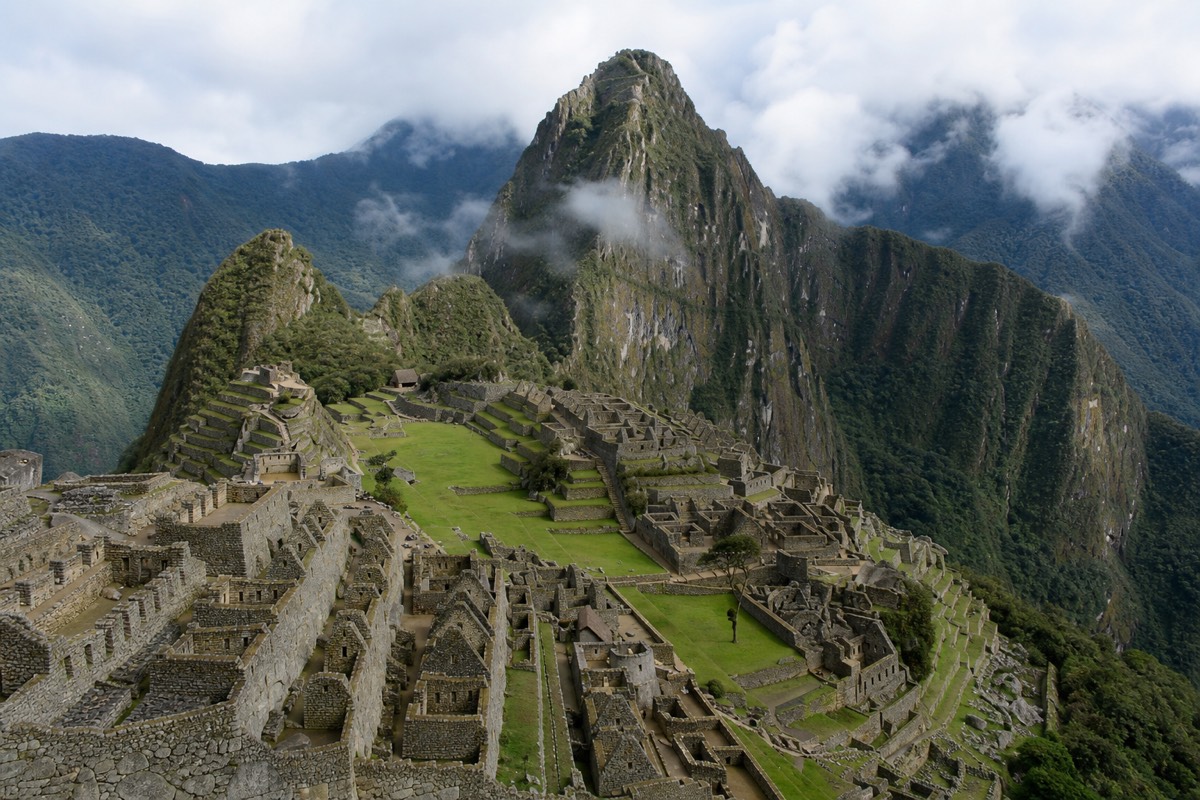
The 3 circuits at a glance: what you see and how crowded it gets
Circuit structure and sub-routes per Peru's Ministry of Culture reorganization (June 2024), current through the official booking platform tuboleto.cultura.pe.
The quick answer
Buy Machu Picchu tickets on the official platform, tuboleto.cultura.pe, choosing one of three circuits: Circuit 2 (Clásico) for the full temple sector, Circuit 1 (Panorámico) for the classic photo and the Sun Gate, or Circuit 3 (Realeza) if you're adding the Huayna Picchu hike. Standard entry runs around $40 for foreign adults, Huayna Picchu or Machu Picchu Mountain add-ons run roughly $53-62 more, and both should be booked at least 1-3 months ahead for 2026, earlier for June-August.
How does the Machu Picchu ticket system actually work?
Every visitor books a specific circuit and a specific entry time slot in advance, on the Ministry of Culture's own site, not at the entrance. There is no walk-up ticket window that reliably has availability, and the citadel caps how many people can be inside at once. In June 2024 the Ministry scrapped the old numbered "Circuit 1 through 4" system and replaced it with three main circuits split into ten sub-routes, each mapped to a different part of the ruins. If you've read an older blog post referencing "Circuit 4," ignore it: that circuit no longer exists.
The reorganization was meant to spread foot traffic more evenly and stop bottlenecks at the narrow stone paths, since the old routes let too many people converge on the same viewpoints at once. It also means your circuit choice now genuinely changes what you can and can't see that day, which is the single most common source of visitor disappointment when people book without checking. Choosing the wrong circuit is by far the easiest way to end a long-planned trip to the days-in-Machu-Picchu region without seeing the Temple of the Sun.
What do the three circuits actually cover?
Circuit 1 (Panorámico) gives the classic postcard view from the upper terraces and can extend to the Sun Gate; Circuit 2 (Clásico) is the most complete route through the urban sector, including the main temples; Circuit 3 (Realeza) covers the lower royal sector and is the only circuit that connects to the Huayna Picchu hike. Each has sub-routes that unlock specific add-ons.
| Circuit | Full name | What you see | Notable sub-routes | Who it suits |
|---|---|---|---|---|
| Circuit 1 | Panorámico | Upper terraces, the classic elevated overlook | 1-A Machu Picchu Mountain (18+), 1-C Sun Gate / Inti Punku, 1-D Inca Bridge (18+) | Photographers, first-timers who want the iconic view |
| Circuit 2 | Clásico | Full urban sector: Temple of the Sun, Intihuatana, Sacred Plaza | Most sub-routes bundled in | History-focused visitors, most-booked circuit |
| Circuit 3 | Realeza | Lower royal sector and residential terraces | 3-A Huayna Picchu hike | Hikers adding Huayna Picchu |
A common trade-off worth knowing before you book: Circuit 1 gives the wide panoramic view most people picture when they imagine Machu Picchu, but on some sub-routes it does not enter the temple sector, so photographers get their shot while history-focused travelers can come away having missed the Intihuatana stone. If seeing the temples matters more to you than the postcard angle, Circuit 2 is the safer pick.
Neither selected package guarantees a specific circuit for every date; a fixed circuit requirement needs verified inventory.
How do I buy tickets on tuboleto.cultura.pe?
Create a free account on tuboleto.cultura.pe with your passport number and email, then select your date, circuit, and entry time slot, and pay by card. The platform is the Ministry of Culture's own booking system and the only fully official source; third-party resellers and "skip the line" sites exist but typically just mark up the same official ticket or route you through a tour operator.
A few practical details make the process smoother. The name and passport number on the ticket must match the ID you carry at the entrance gate exactly, since staff check both against the booking. Tickets are tied to a specific 1-hour entry window (not a full-day pass), and once you're inside there's no re-entry, so plan your circuit walk before you go up. If the official site is slow to load or times out during checkout, which happens during high-demand release windows, refreshing and retrying is normal and rarely means tickets sold out in that moment.
Buying directly remains an independent option; the package recommendations include additional services.
How much do Machu Picchu tickets cost in 2026?
Standard circuit tickets for foreign adults run around $40, with a small conservation-fee increase that applied from May 2026. Prices are typically listed in Peruvian soles on the official platform and vary slightly by circuit and by whether you qualify for a student or regional discount.
| Ticket type | Who it's for | Approx. price (2026) |
|---|---|---|
| Standard circuit (1, 2, or 3) | Foreign adult | Around $40 |
| Student (with valid ISIC or student ID) | Foreign or Peruvian student | Discounted, check platform |
| Peruvian / Andean Community national | Citizens of Peru, Bolivia, Colombia, Ecuador | Lower national rate |
| Children under 8 | With adult | Free, still requires a ticket record |
These are base circuit prices only. If a guided day tour like the Machu Picchu Full-Day Train Adventure quotes a higher total, that figure usually bundles the entrance ticket with round-trip train fare, bus transfers, and a guide, which is worth comparing against booking each piece separately if your schedule is flexible.
What about Huayna Picchu and Machu Picchu Mountain?
Huayna Picchu and Machu Picchu Mountain are separate, additional tickets on top of your base circuit ticket, not included by default, and Huayna Picchu is capped at 400 hikers a day across two entry times. Both require booking a compatible base circuit alongside them.
| Add-on | Linked circuit | Approx. price (2026) | Daily cap | Entry slots |
|---|---|---|---|---|
| Huayna Picchu hike | Circuit 3 (3-A) | Roughly $53-62 | 400/day | 7:00 AM and 9:00 AM groups |
| Machu Picchu Mountain hike | Circuit 1 (1-A), 18+ only | Roughly $53-62 | Separate quota, less demand than Huayna Picchu | Morning entry windows |
| Inca Bridge | Circuit 1 (1-D), 18+ only | Included in base circuit fee | No extra add-on cost | Same window as circuit |
These add-on tickets are non-transferable and tied to the exact passport number used at booking, so there's no changing hands with a travel companion on the day. Huayna Picchu in particular is the tightest bottleneck in the whole system: with only 400 spots and strong demand from hikers who've seen its silhouette in a hundred photos, it can sell out within days of its booking window opening during June-August, so if the steep 45-60 minute climb up the peak behind the citadel is a must-do for your trip, treat it as the first thing you lock in, not the last.
These selected day packages do not establish Huayna Picchu or Machu Picchu Mountain availability.
How far ahead should I book?
Book base circuit tickets at least 1-2 months ahead in shoulder season, 3-6 months ahead for June-August peak season, and Huayna Picchu even earlier given its 400-person cap. The gap between "available" and "sold out" narrows fast as your travel date approaches.
| Travel month | Season | Recommended booking lead time | Huayna Picchu risk |
|---|---|---|---|
| June - August | Peak dry season | 3-6 months ahead | High; can sell out within days of release |
| April - May, September | Shoulder, good weather | 1-3 months ahead | Moderate |
| October - November | Late shoulder | 3-6 weeks ahead | Moderate to low |
| December - March | Rainy season | 2-4 weeks ahead usually workable | Lower, but weather can affect the trail up |
Even outside peak months, don't leave it entirely to the week of travel. Peru's daily visitor cap sits at 4,500 standard, rising to 5,600 on designated 2026 peak dates according to the Machu Picchu Sanctuary's own visitor figures, and popular time slots on Circuit 2 fill first regardless of season.
What if tickets are sold out for my dates?
If the official platform shows no availability for your dates, a licensed tour operator is often your best remaining route, since agencies hold blocks of pre-purchased tickets that sometimes show inventory the public site doesn't. This isn't a workaround or a gray-market trick, it's simply how allocation works when demand outpaces the daily cap.
Booking a full-day tour from Cusco, such as the Cusco to Machu Picchu Full-Day Group Tour, folds the entrance ticket, train, and guide into one booking, which removes the risk of juggling three separate systems that all need to line up on the same date and time. It's also simply less stressful for a first Peru trip. If your dates are flexible at all, shifting by even a few days can open circuits and add-ons that looked fully booked a week earlier, since cancellations trickle back into the pool.
For travelers weighing the trek route instead of the train, the Inca Trail permit system runs on an entirely separate, even tighter allocation, worth checking well before you commit to a route.
A tour calendar does not prove access to sold-out entry inventory. Do not assume a package bypasses admission limits.
Should I book directly or through a tour operator?
Booking directly on tuboleto.cultura.pe is cheaper and gives you full control over your exact circuit and time slot, while booking through a licensed operator costs more but bundles the ticket with transport, a guide, and someone else managing the logistics if something changes. Neither is objectively better; it depends on how much planning you want to do yourself.
| Book direct (tuboleto.cultura.pe) | Book through an operator | |
|---|---|---|
| Cost | Lowest, base circuit price only | Higher, bundles train/bus/guide into one price |
| Control over circuit & time | Full control, you choose exactly | Often set by the tour's fixed schedule |
| Guide requirement | You must separately arrange a licensed guide (mandatory since 2019) | Guide included |
| Logistics if something changes | You manage rebooking yourself | Operator typically handles rescheduling |
| Best for | Independent travelers comfortable managing several bookings | First-time visitors, tighter schedules, less planning time |
A genuinely common mistake is booking the entrance ticket first and only afterward realizing the mandatory guide requirement, the train schedule, and the bus queue up to the citadel all need to line up on the same day. If you're already looking at comparing PeruRail and Inca Rail for the train leg, it's worth deciding your circuit before you lock in a train time, since a Circuit 3 booking with the Huayna Picchu add-on generally needs an earlier arrival than a straightforward Circuit 2 visit.
What should I bring on ticket day?
Bring your original passport (the same one used at booking), your printed or downloaded ticket confirmation, cash in Peruvian soles for small purchases in Aguas Calientes, and rain gear regardless of season. The checkpoint staff check the passport number against your ticket record, and a photocopy is not accepted.
- Original passport matching your booking exactly, not a photocopy or photo on your phone
- Printed or downloaded ticket confirmation, in case connectivity at the entrance is unreliable
- A light rain jacket or poncho; the microclimate around the citadel shifts quickly even in the dry season
- Cash in soles for the shuttle bus up from Aguas Calientes and for lunch afterward, since not every vendor takes cards
- Sun protection: hat and sunscreen, since midday sun at this elevation is stronger than it feels
Re-entry is not allowed once you leave, so plan to complete your chosen circuit's walk in one pass rather than expecting to step out and come back for something you missed.
How does Machu Picchu's ticket system compare to visiting other major world sites?
Machu Picchu's timed-entry, circuit-based system with a mandatory guide is stricter than most comparable archaeological sites, closer in spirit to a national park permit system than a museum ticket. The combination of a hard daily visitor cap, fixed entry windows, and no re-entry is designed specifically to protect stonework that has stood for over 500 years against foot traffic from several thousand visitors a day.
For travelers used to buying same-day tickets at other historic sites around the world, the extra planning required here can feel unfamiliar. In practice it rewards travelers who treat the ticket booking as one of the first things they lock in for a Peru trip, alongside flights or an overland pass like Peru Hop's, rather than something to sort out once they've already arrived in Cusco. If you're still mapping out how many days to allow for the region overall, the how many days in Cusco and Machu Picchu guide is a useful next stop, and pairing the visit with a wider look at the Sacred Valley makes for a fuller itinerary than a single rushed day. For the full range of guided Peru tours that bundle this ticketing and transport into one booking, the tour pages linked throughout this guide are the fastest starting point.
A comparison with other world sites does not change Machu Picchu’s entry rules.
What do the sub-routes actually add or restrict?
Each named sub-route unlocks or restricts a specific part of the sanctuary on top of its parent circuit, and mixing them up is one of the most common booking mistakes. Knowing what each sub-route actually buys you helps avoid paying for an add-on that doesn't match what you came to see.
| Sub-route | Parent circuit | What it adds | Age restriction | Best for |
|---|---|---|---|---|
| 1-A | Circuit 1 | Machu Picchu Mountain hike, the highest viewpoint over the citadel | 18+ | Fit hikers wanting the widest aerial view |
| 1-C | Circuit 1 | Sun Gate / Inti Punku, the classic Inca Trail arrival point | None | Travelers who want the trekkers' first-view spot without hiking the full trail |
| 1-D | Circuit 1 | Inca Bridge, a narrow cliffside Inca stone bridge | 18+ | Travelers wanting a shorter, striking side walk |
| 3-A | Circuit 3 | Huayna Picchu hike, the steep peak behind the citadel | None specified, but a strenuous climb | Hikers chasing the classic overlook photo of the ruins |
None of these sub-route add-ons cross-combine freely. Booking 1-A does not also grant you access to 3-A on the same ticket, since they sit on different circuits with different entry windows, so decide in advance which single add-on matters most rather than assuming you can chain several together in one visit.
Exact sub-route access must be established on the issued ticket, not inferred from a general tour name.
What booking mistakes actually derail a Machu Picchu trip?
The most common mistakes are booking a circuit that doesn't include the part of the ruins you actually want to see, mismatching your train time with your entry slot, and waiting too long to add Huayna Picchu once the base circuit is already secured. Every one of these is avoidable with a few minutes of double-checking before you pay.
| Mistake | Why it happens | How to avoid it |
|---|---|---|
| Booking Circuit 1 expecting to see the Temple of the Sun | Assuming all circuits cover the same ground | Confirm which sector each circuit covers before booking; Circuit 2 is the fuller temple route |
| Passport number typo at checkout | Rushed booking, autofill errors | Double-check the passport number against the physical document, not memory |
| Buying the base ticket first, discovering Huayna Picchu is sold out | Treating add-ons as an afterthought | Decide on Huayna Picchu or Machu Picchu Mountain first, since they sell out faster than base circuits |
| Train arrives after the ticketed entry window | Booking train and entrance separately without cross-checking times | Confirm your bus-to-citadel and entry time allow enough buffer after your train lands |
| Assuming re-entry is allowed after lunch in Aguas Calientes | Confusing this with attractions that allow same-day re-entry | Plan to complete your circuit in one pass; there is no re-entry |
What does booking actually look like, start to finish?
A typical booking sequence runs: pick your travel date, choose a circuit and time slot, decide whether to add Huayna Picchu or Machu Picchu Mountain, enter passport details for every traveler, then pay and download your confirmation. Walking through a realistic example makes the process less abstract.
Say you're planning a trip for the last week of July 2026, peak dry season. Ideally you'd start this process around February or March, four to five months out, given how fast Huayna Picchu fills for that window. First you'd check tuboleto.cultura.pe for a morning Circuit 2 slot on your target date, since Circuit 2 is both the most complete route and the first to sell out. If Huayna Picchu is part of the plan, you would add the 3-A sub-route under Circuit 3 as a second, separate booking for a different member of your itinerary that day, or choose Circuit 3 as your primary circuit if the hike matters more to you than the full temple sector. Entering passport numbers for every traveler at this stage, not later, avoids a scramble close to the trip. Once paid, download and save the confirmation locally, since relying on a live link the morning of your visit is unnecessary risk if signal at your hotel is weak. Finally, cross-check this entry time against whichever train departure you book, building in at least an hour of buffer for the shuttle bus queue up from Aguas Calientes.
What are the photography and bag rules inside the citadel?
Standard cameras and phones are welcome throughout, but tripods, drones, and large professional rigs are generally restricted or banned without special authorization, and bag size is limited at the entrance checkpoint. These rules exist to keep foot traffic moving through the narrow terraced paths and to protect centuries-old stonework from equipment damage.
Drones in particular are prohibited without prior authorization from the Ministry of Culture, a rule that catches some travelers off guard given how common drone footage of the site is online; most of that footage comes from licensed film permits, not casual visitors. Large backpacks are typically required to be checked or left at the entrance storage area rather than carried through the circuit, so pack a smaller daypack for the actual visit if you're arriving with a full trekking bag. None of this affects a typical visitor with a phone or a standard camera, but it's worth knowing if photography is a serious part of your plan for the day.
A guide does not provide exemptions from photography or bag rules.
Does the weather change which circuit I should book?
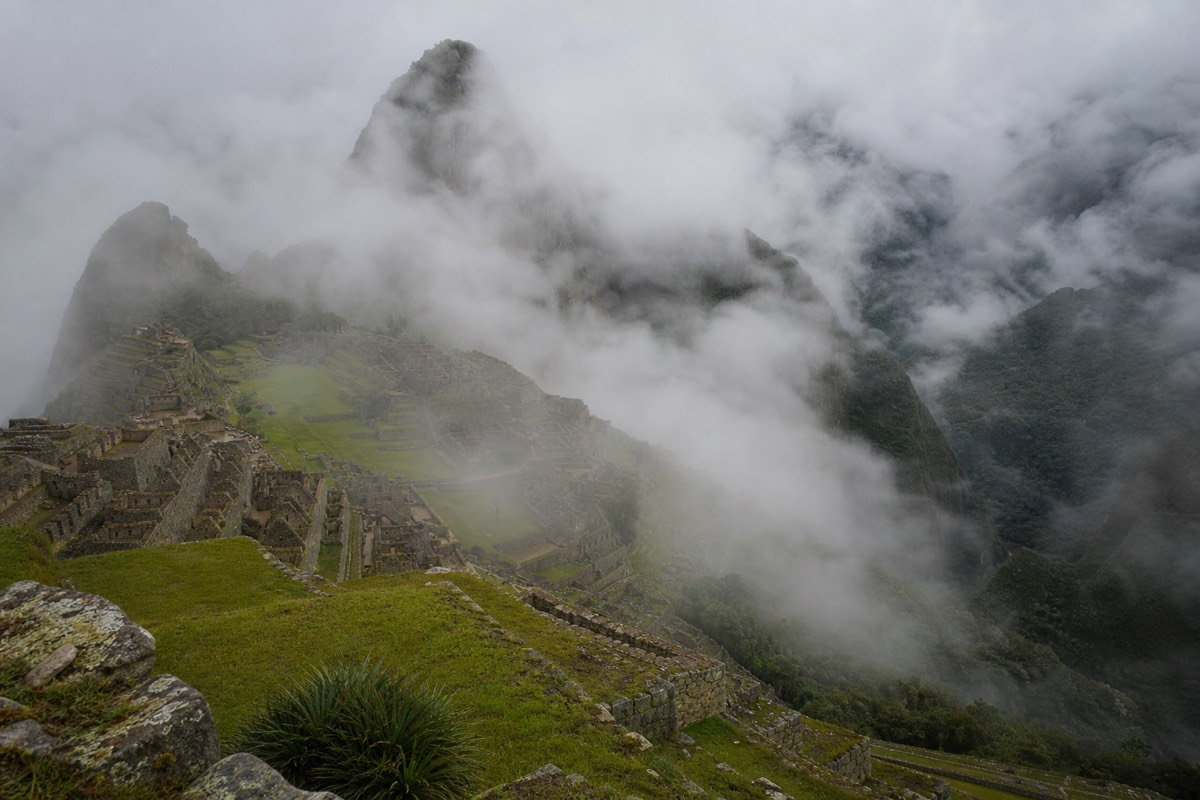
Rainy season, roughly December through March, doesn't close any circuit, but it does affect visibility, especially on Circuit 1's upper panoramic terraces, so travelers visiting in the wetter months sometimes lean toward Circuit 2's lower, more sheltered temple sector. Neither circuit is meaningfully safer or riskier in the rain; this is purely about what you'll actually be able to see and photograph.
Morning entry slots, particularly the earliest ones, tend to have the clearest visibility year-round before afternoon cloud builds up over the surrounding peaks, which is part of why the most popular time slots on Circuit 2 are typically the first ones released each day. If your travel dates fall in the wetter months, packing a proper rain layer matters more than which circuit you choose, since afternoon showers are common regardless of the route.