Who Owns Machu Picchu Now?
The short answer is simple: the Peruvian state. The longer answer involves a private hacienda, a family that once suggested the government take the site, and a lawsuit that reached Peru's Supreme Court in 2004.
Booking choice: Combine Expedition rail, buses and a guided Machu Picchu visit in one day. Explore Machu Picchu by Expedition train
Affiliate links: we may earn a commission when you book.
The quick answer
Machu Picchu is Peruvian state property. Under Peruvian law, all pre-Columbian archaeological sites belong to the nation regardless of who holds surface land title around them. The citadel sits inside the Machu Picchu Historic Sanctuary, a protected area formally established by Supreme Decree No. 001-81-AA on January 8, 1981, and it's administered by the Ministry of Culture, with Cusco's regional government handling local operations.
But wasn't the land privately owned at some point?
Yes, the surrounding hacienda land had real private ownership history, though the archaeological site itself was never legally separable from state ownership once Peru's laws on pre-Columbian heritage applied. The land story and the ruins' legal status are two different threads that eventually intersected.
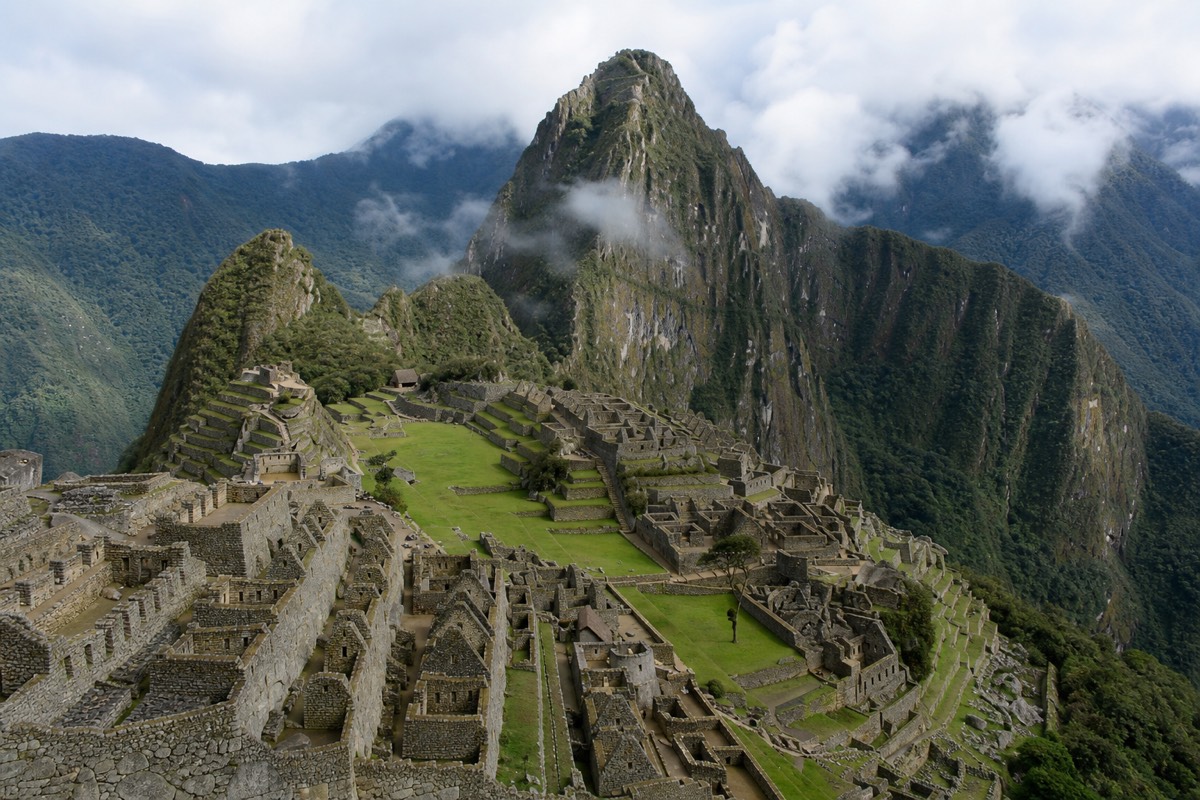
The estate around Machu Picchu traces back to Mariano Ignacio Ferro, who purchased the hacienda land between 1904 and 1910, years before Hiram Bingham's 1911 expedition brought the ruins to international attention. Ferro's daughter Tomasa and her husband Emilio Abrill later managed the property, and it was actually Abrill himself who suggested, in 1928, that Peru expropriate the citadel, a genuinely notable detail given how ownership disputes over famous heritage sites usually go. In 1944, Abrill sold most of the surrounding estate to the Zavaleta family, though the Inca citadel land itself was later expropriated by Peru's agrarian reform authority sometime in the 1960s to 1970s, per Fertur Travel's account of the ownership history.
What was the 2004 lawsuit about?
In 2004, descendants of the Zavaleta family sued the Peruvian state for roughly $50 million, arguing they were owed compensation for lost income from the site's tourism revenue; Peru's Supreme Court rejected the claim, ruling Machu Picchu belongs to the nation. The case is the clearest modern legal test of who actually owns the site, and it settled firmly on the side of state ownership.

The Zavaleta descendants' argument rested on the family's historical purchase of the surrounding hacienda land in 1944, well before the site's tourism boom turned it into one of South America's most visited landmarks. The court's rejection reaffirmed a principle already written into Peruvian heritage law: archaeological patrimony belongs to the nation as a matter of public interest, independent of any private surface land transaction that happened around it. Coverage of the ruling, including the family's arguments and the court's reasoning, is detailed in Remezcla's reporting on the Supreme Court decision.
Who actually manages the site day to day?
Ownership and management are separate questions. Peru's Ministry of Culture holds overall authority over the Historic Sanctuary and the archaeological zone, including the ticketing system that controls entry through the current circuit structure. The Cusco regional government handles more local operational matters, and the site's dual status as a UNESCO World Heritage Site since 1983 adds an additional layer of international oversight and conservation expectation on top of Peru's own domestic protections.
For visitors, the practical result of this ownership history is mostly invisible day to day. The tightly controlled circuit system, the passport-matched tickets, the guide requirement, all trace back to a site the state actively manages and has fought, successfully, to keep as public patrimony rather than private property. Booking through an operator running a trip like the Machu Picchu Full-Day Train Adventure plugs directly into that same state-run ticketing and access system, whichever company sells you the train seat.
Why did Emilio Abrill suggest expropriation in the first place?
The 1928 suggestion from Emilio Abrill, who managed the hacienda through his marriage to Tomasa Ferro, is a genuinely unusual detail in the history of contested heritage sites, since it's rare for a private landholder to proactively recommend that a government take control of a valuable asset under their management. The specifics of his reasoning aren't fully documented in available sources, but the timing lines up with the growing international attention Machu Picchu received after Hiram Bingham's 1911 expedition, when the site began attracting serious archaeological and tourism interest well beyond its earlier status as a remote hillside ruin on private farmland.
Whatever his motivation, the suggestion predates the actual expropriation by several decades. The citadel land wasn't formally taken over by Peru's agrarian reform authority until sometime in the 1960s to 1970s, decades after Abrill first floated the idea, and well after the 1944 sale of most of the surrounding estate to the Zavaleta family. That gap between the 1928 suggestion and the eventual 1960s-70s expropriation is part of what made the ownership question complicated enough to eventually reach Peru's Supreme Court in 2004.
Does the ownership history affect visitors today?
Not in any way a typical visitor would notice day to day. The site's management, ticketing, and circuit system all run through the Ministry of Culture regardless of this earlier land history, and the 2004 Supreme Court ruling closed the door on any competing private claim to income or control. What the history does explain is why Machu Picchu's legal status feels so settled today: it's not just a matter of longstanding state ownership on paper, it's a status that's already been tested in court and upheld, with no live legal challenge outstanding against it.
For travelers more interested in the practical side of visiting than the legal history, the Machu Picchu tickets guide and the site's 1983 UNESCO listing cover the two things that actually shape a visit today: how you book entry, and the international framework that protects the site alongside Peru's own domestic law. And when the history and the ticketing logistics are both sorted, this site's own guided Peru tours handle the actual trip to the sanctuary the state has spent decades protecting.